Last updated: November 20, 2026
Choose a woven fabric sewing pattern when the pattern is built for cloth that does not stretch much, has stable seams, and hangs from the body instead of clinging to it. Look for words like “woven,” “non-stretch,” “back zipper,” or a button placket, and check that the garment shape matches the drape of your fabric.
Key takeaways
- Woven patterns are made for fabrics that hold shape, not for jersey-style stretch.
- The best match depends on drape, closure type, seam style, and how much the fabric shifts while you sew.
- Cotton poplin, linen, and twill behave differently even though all three are woven.
- A pattern can still fail with the wrong woven fabric if the cloth is too stiff, too slippery, or too heavy for the design.
- Seam allowance and closure choice tell you a lot about whether a pattern was drafted for woven cloth.
What should a woven fabric sewing pattern look like?
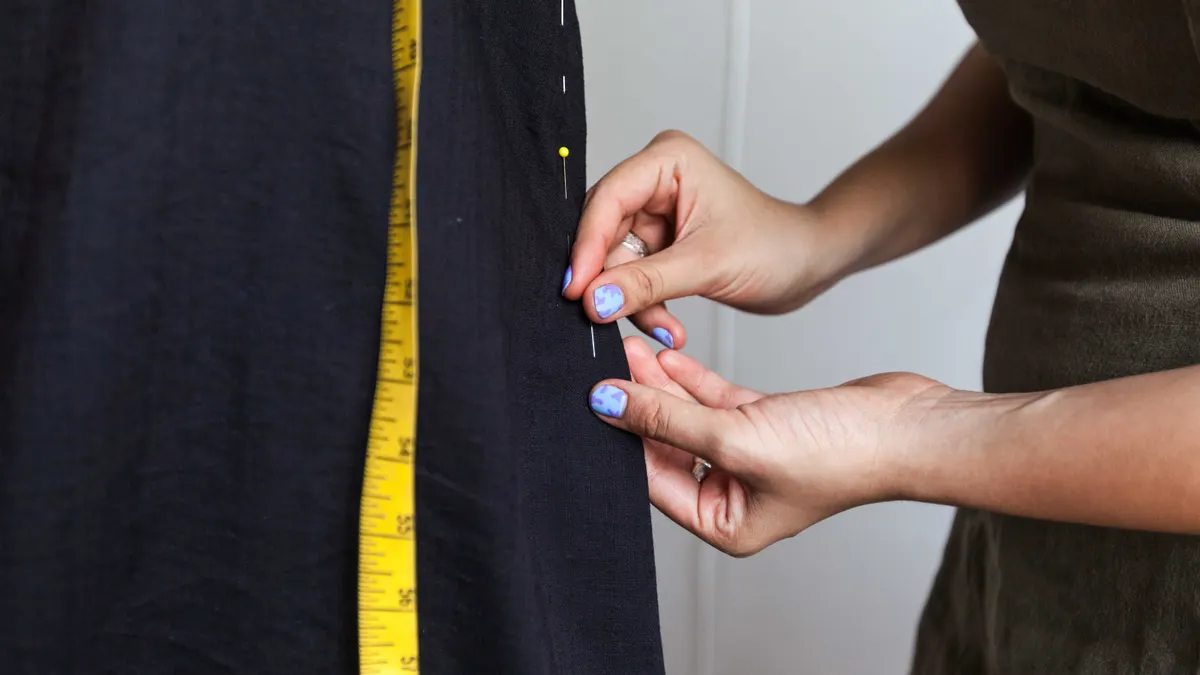
A woven fabric sewing pattern should show a garment design that assumes little or no stretch. That usually means darts, zippers, buttons, tabs, facings, or plackets instead of knit-style stretch fit. If the cover art shows a crisp shirt, a wrap skirt, tailored trousers, or a boxy dress, the pattern is often built for woven cloth.
The fastest clue is the fabric callout on the envelope or product page. If it names cotton poplin, linen, chambray, twill, or similar stable fabrics, that is a strong sign the pattern is meant for woven material. If it names jersey, rib knit, or spandex blends, stop and keep looking.
Shape matters too. Woven patterns often include more structure at the shoulders, waist, collar, or cuff. A design that depends on negative ease, body hugging fit, or strong stretch recovery is not a woven fabric sewing pattern, even if the photos look simple. The wrong choice here does not just change the fit; it can make the whole garment impossible to close.
A useful rule: if the garment can be worn without the fabric stretching to fit the body, it is probably designed for woven cloth. That does not mean every woven pattern is easy. A tailored blazer and a simple pull-on skirt are both woven patterns, but one asks much more from the sewer and the fabric.
How do I tell if the pattern matches woven fabric behavior?
The pattern matches woven fabric behavior when its structure, drape, and closures all make sense for cloth that stays put. Woven fabric does not stretch across the body the way knit fabric does, so the pattern must create room through cut and construction, not elastic give.
Look at the closure first. Buttons, zippers, hook-and-eye closures, ties, and adjustable waistbands are all common on woven patterns because they open the garment and then hold it closed. A pattern that depends on pulling the garment over the head with no opening can still be woven, but it usually needs a looser shape and enough ease to get on and off comfortably.
Then check the seams and shaping. Princess seams, side darts, waist darts, yokes, and collar stands all fit woven cloth well because they help shape stable fabric. A pattern with long uninterrupted panels and no shaping may still work, but only if the silhouette is meant to hang straight.
The fabric suggestion list is the next clue. Cotton poplin gives a clean, crisp result. Linen brings more texture and more rumple. Twill gives body and visible diagonal structure. If the design calls for a soft drape but the fabric list is all stiff cloth, the finished garment may stand away from the body instead of falling cleanly.
Which woven fabrics suit which pattern styles?
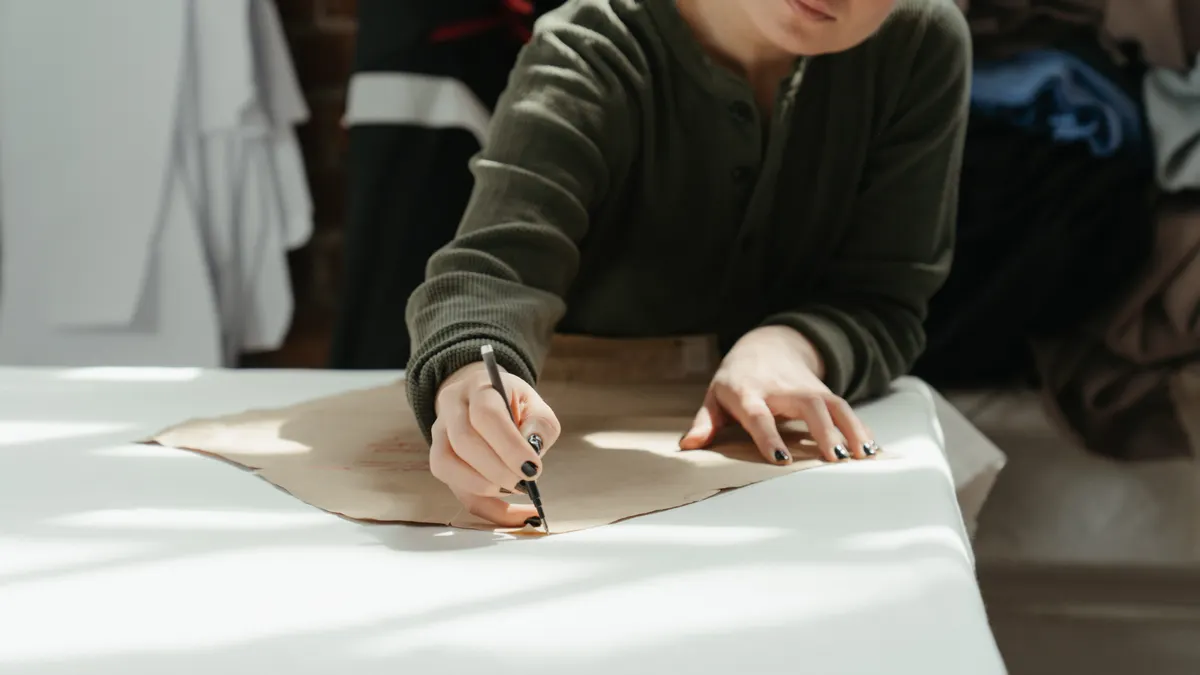
The right woven fabric depends on how much structure the design needs. Some patterns want crisp cloth, some want fluid cloth, and some can handle either with a change in the final look.
| Woven fabric | Best pattern style | What it gives | What to skip |
|---|---|---|---|
| Cotton poplin | Shirts, shirt dresses, lined skirts, structured tops | Clean edges, crisp shape, smooth seams | Very drapey designs that need soft fall |
| Linen | Loose shirts, summer dresses, relaxed trousers, easy skirts | Breathable feel, relaxed body, natural texture | Tight designs that rely on a smooth, close fit |
| Twill | Trousers, jackets, utility skirts, structured separates | Body, durability, a firmer hand | Very delicate, floaty patterns that need light drape |
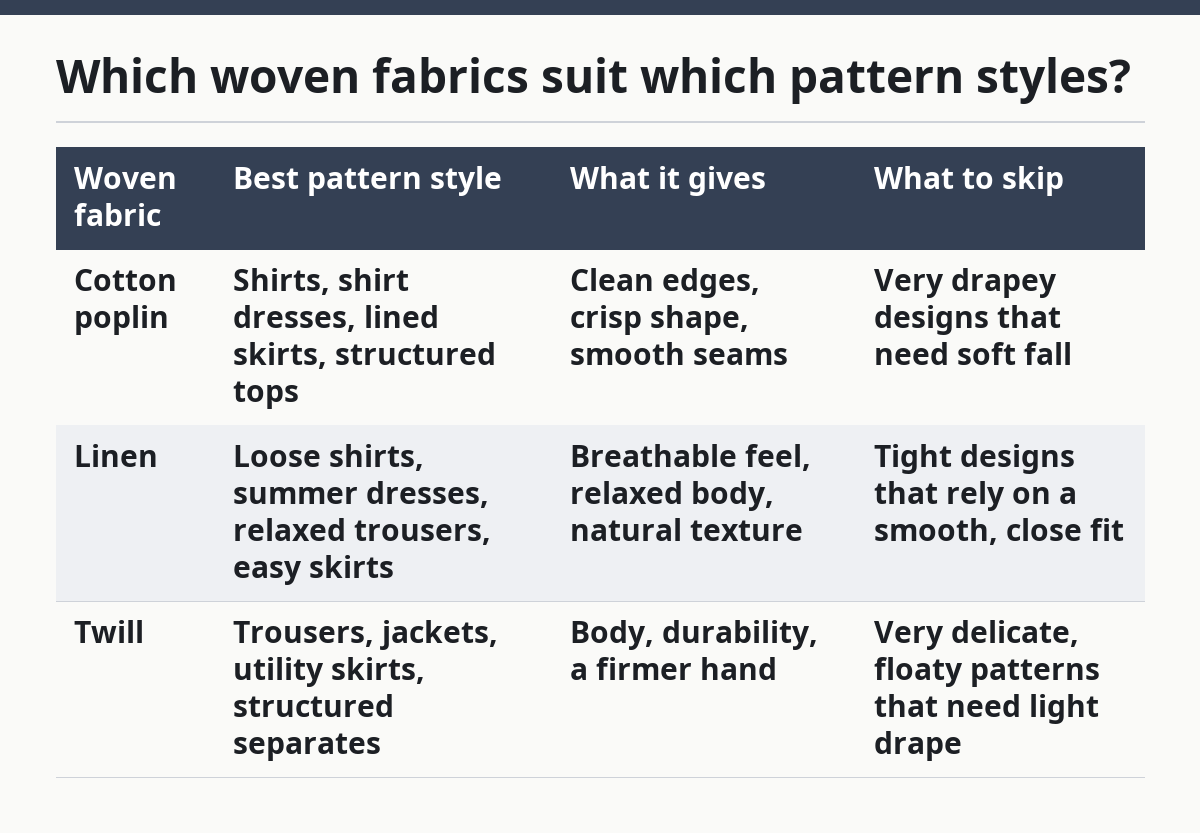
Cotton poplin is often the easiest starting point because it cuts cleanly and keeps its shape. Linen is less forgiving if you want a polished, crisp result, because it wrinkles and shifts in its own way. Twill is strong and useful, but a thick twill can make small collars, narrow facings, and fine gathers feel bulky.
Do not match a pattern to fabric by name alone. A pattern can say “woven” and still want a very specific feel. A gathered blouse and a boxy overshirt may both accept woven cloth, but one will look best in a lighter poplin and the other in a fabric with more body, such as twill.
How can closure choices tell you the pattern is right?
Closure choices tell you a lot because they reveal how the garment is meant to open, fit, and hold its shape. Woven patterns usually need some kind of opening unless the silhouette is loose enough to slip on easily.
Buttons and buttonholes are classic signs of a woven pattern, especially on shirts, shirt dresses, and cuffs. Zippers point the same way, especially on skirts, trousers, and fitted dresses. A side zip or back zip is common when the fabric itself will not stretch enough to let the garment go over the hips or shoulders.
Elastic is a mixed clue. A fully elastic waist can still belong on a woven pattern, especially for skirts, shorts, or loose trousers. But if the whole fit depends on elastic stretch, the garment may be very forgiving in fabric choice and less structured than a tailored woven pattern.
Skip a pattern if its closure plan clashes with the fabric you want to use. A stiff twill may work well with a fly front or a zip, but a delicate linen voile would not suit the same finish. A crisp poplin shirt will usually support buttonholes cleanly, while a slouchy, loosely woven fabric may fray or distort around them without extra care.
Which pattern details matter before you buy?
The pattern details that matter most are seam allowance, shaping, and the amount of stability the design expects from the cloth. Those details tell you whether the pattern was drafted with woven fabric in mind or merely labeled as “sewable in many fabrics.”
Check the seam allowance first. Many commercial sewing patterns include seam allowance already, often a detail that affects how much room you have to adjust while sewing. If the pattern assumes a standard allowance and your fabric is prone to shifting, such as a soft linen, you will want to plan for careful cutting and pressing.
Then study the shaping. Woven fabric often needs darts, pleats, gathers, or panel seams to fit the body. If a pattern has no shaping and still looks fitted in the model photo, be cautious. That fit may depend on a fabric with more body than the one you have in mind.
Finally, look for stability clues. A crisp collar, a lined waistband, neat cuffs, or a structured placket all suggest the pattern expects fabric that will hold a fold. If the fabric collapses at the fold line, the finished garment may lose the shape shown on the envelope.
How do I choose between similar woven patterns?
The best way to choose between similar woven patterns is to compare closure, drape, and structure before you compare the photos. Two patterns can look alike in a thumbnail and still behave very differently in real fabric.
- Read the fabric list and circle the named cloths, such as cotton poplin, linen, or twill. The result should be a short list of fabrics that fit the design, not every woven cloth in the shop.
- Check the closure. Button front, zipper, tie, or elastic each changes how easy the garment is to wear and how much shaping the pattern needs.
- Study the silhouette. A crisp shirt with set-in sleeves asks for more structure than a loose tunic, even if both are woven patterns.
- Look at the seam lines. Darts, panels, and yokes usually mean the pattern is counting on woven stability to create shape.
- Match the design to the fabric on your table. If the cloth is soft and fluid, pick the softer pattern. If the cloth is crisp, choose the pattern that can hold edges and folds.
- Reject the pattern if the fabric and the construction fight each other. A stiff fabric in a pattern meant for drape can feel boxy; a drapey fabric in a pattern meant for structure can look limp.
The comparison below is the quickest way to decide.
| If you want… | Choose this kind of woven pattern | Good signs | Skip it if… |
|---|---|---|---|
| An easy first project | Loose top, simple skirt, elastic waist | Few pieces, simple closure, minimal shaping | The design has many darts, facings, or a fly front |
| A crisp finish | Shirt, shirt dress, tailored skirt | Buttons, collar, cuffs, stable seams | The fabric is too soft or slippery for clean edges |
| A relaxed fit | Tunic, easy trouser, wrap style | Roomy cut, soft shaping, adjustable closure | The pattern depends on strong structure to sit well |
| A polished silhouette | Fitted dress, blazer, structured top | Panels, darts, zippers, facings | The fabric has too much drape or stretch for the shape |
What mistakes make a woven pattern fail?
The most common mistake is choosing a pattern that needs more structure than the fabric can give. That usually costs the garment its shape: collars droop, cuffs collapse, and hems look limp. The fix is simple in theory but strict in practice: choose a pattern that matches the fabric’s body, not just its print or color.
Another mistake is treating all woven fabrics as if they behave the same. Cotton poplin, linen, and twill are all woven, but they do not fall or press the same way. Poplin gives a crisp line, linen gives a relaxed line, and twill gives a firmer line. If the pattern depends on a delicate drape and you cut it in a heavy twill, the garment can feel stiff and bulky.
A third mistake is ignoring the closure. A pattern with no opening may be fine in a loose cut, but it becomes a problem fast if the shoulders, bust, or hips need extra room to enter the garment. The result is a piece that fits on paper and fails in real life.
One more trap is skipping the seam details. If a pattern uses narrow facings, sharp corners, or close topstitching, it asks for a fabric that can hold a clean edge. That is why seam allowance and fabric stability matter so much. A few extra millimeters of bulk in the wrong place can change the whole finish.
If the pattern choice still feels uncertain, the safest move is to return to the hub on pattern reading and fitting decisions and read the pattern cues again before cutting. That step is slower than guessing, but it saves fabric, thread, and time.
What is the fastest way to decide before buying?
The fastest way to decide is to ask three questions: does the pattern say woven, does the closure fit the fabric, and does the cloth have the right amount of body for the shape. If the answer is yes to all three, the match is usually workable.
Start with the pattern label and the project photo. A shirt with buttons, a skirt with a zipper, or a relaxed dress with a facing is a much better sign for woven fabric than a body-hugging pull-on design. Then look at the fabric list and compare it with what you own or plan to buy.
This is where the trade-off shows up. A stiffer fabric gives clean lines but can make a soft pattern look boxy. A softer fabric gives movement but can erase a tailored shape. If you want a safe first pick, choose a pattern with moderate structure and a woven fabric that is already named on the pattern envelope.
For readers who want one sentence to keep in mind: choose the pattern that was drafted for the way woven cloth actually behaves, not the one that merely looks pretty in the photo. That rule filters out most bad choices before a single seam is sewn.
For a deeper read on pattern cues, the guide on pattern reading and fitting decisions is the next stop.
Drafted with AI; not yet reviewed by a person.