Last updated: November 20, 2026
Quick Answer: use 3 checks to choose a sewing pattern for stretch fabric—stretch, recovery, and seam method. If you are learning how to choose a sewing pattern for stretch fabric, start with the fabric notes, then confirm the knit type and stitch plan before you buy.
Key takeaways
- A good stretch fabric sewing pattern names the knit it expects, not just “stretch fabric.”
- Negative ease is normal in close-fit knit patterns, but it should be there on purpose, not by accident.
- Jersey, activewear knits, and heavier stable knits behave differently even when all of them stretch.
- Stitch choice matters as much as fit: a pattern that expects a twin needle or overlock seam will behave differently from one built for a straight stitch machine setup.
- The best pattern choice usually matches fabric stretch, garment shape, and seam method at the same time.
What makes a pattern good for stretch fabric?
A good pattern for stretch fabric is one that says how much stretch it needs and what kind of knit it was drafted for. That matters more than the word “stretch” on the cover, because a jersey tee, a sports legging, and a rib-knit cardigan all ask for different fabric behavior.
The first clue is the pattern description. Look for words like knit, jersey, activewear, negative ease, or close fit. A pattern that includes those terms is usually built with stretch fabric in mind. A pattern that only shows a slim silhouette but never mentions stretch is a risk, no matter how nice the photo looks.
The second clue is construction. Stretch patterns often use seams that tolerate movement, such as a zigzag stitch, a stretch stitch, or an overlock seam. They may also assume a twin needle for hems or a coverstitch finish. If the pattern reads like it was written for a woven shirt and only the fabric suggestions were changed at the end, skip it.
The third clue is shape. Very fitted stretch garments, such as leggings or body-skimming tops, often depend on negative ease. That means the finished garment is smaller than the body measurement it is meant to fit. A stretch pattern without clear guidance on that point can leave the maker with sagging shoulders, tight hips, or a neckline that waves.
A simple test for the pattern page is this: if the pattern gives no hint about stretch percentage, knit type, or seam method, it is probably not the easiest starting point. That does not make it unusable, but it makes it a weaker choice for a first project in stretch fabric.
How do I read stretch percentage and negative ease?
Stretch percentage tells you how far the fabric can expand, and negative ease tells you how much smaller the pattern is than the body it will fit. Those two ideas decide whether the garment will cling, skim, or fight the wearer.
Here is the rule of thumb in plain terms. A fabric with limited stretch suits a more relaxed knit pattern, while a fabric with more stretch can support closer fit and more body-skimming shapes. If a pattern depends on a lot of stretch and the fabric does not have it, the garment can feel tight through the bust, upper arm, thigh, or seat.
Negative ease is not a flaw. It is a design choice used in many knit garments, especially close-fitting tees, leggings, and swim-like shapes. The problem is when a pattern assumes negative ease and the fabric cannot carry it. In that case the garment may be hard to pull on, may compress seams, or may sit crooked after a few wears.
A useful way to think about it is this: stretch fabric patterns do not all want the same knit. Jersey, rib knit, double knit, and activewear knits each behave differently. One pattern may look forgiving on paper and still be the wrong match if the fabric has poor recovery. Recovery is the fabric’s ability to spring back after stretching, and a pattern that expects a stable shape depends on it.
A pattern that names negative ease is usually more trustworthy than one that leaves the fit vague. If the pattern is tight by design, the maker should see that in the line drawing, the recommended fabric list, and the finished silhouette. If those signals do not agree, the pattern is the weaker choice.
Which knit construction should the pattern mention?
The knit construction should match the garment’s job, because jersey, rib knit, interlock, and activewear fabric do not behave the same way. A pattern that ignores that difference can look fine on the page and still disappoint at the sewing table.
Here is a quick comparison of common choices:
| Pattern/fabric match | Best for | What to skip |
|---|---|---|
| Jersey stretch fabric sewing pattern | Tees, dresses, soft drape, lighter tops | Very fitted leggings or anything that needs strong recovery |
| Activewear pattern | Leggings, sports tops, moveable layers | Loose drapey styles that need extra flow |
| Rib-knit pattern | Neckbands, close fit, pull-on layers | Structured shapes that need crisp lines |
| Stable knit pattern | Cardigans, simple pullovers, relaxed shapes | Body-hugging styles that rely on strong stretch |
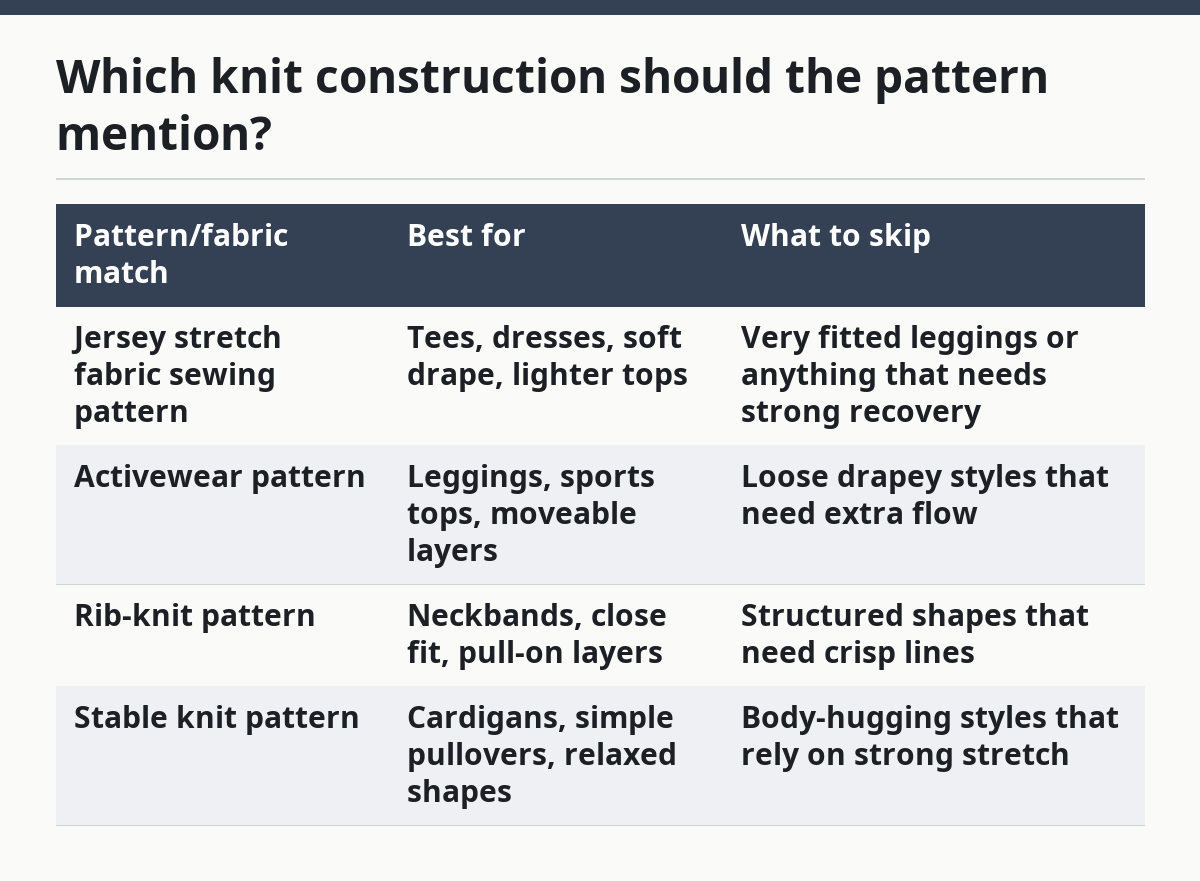
A pattern for jersey usually expects softer drape and modest support. That makes it a smart choice for T-shirts, simple dresses, and easy pullovers. A pattern for activewear expects more stretch recovery and a closer, more body-conscious fit. That matters because leggings, sports bras, and fitted workout tops need the fabric to return to shape after motion.
Rib knit is its own case. It stretches more in one direction than some other knits and often serves as a neckband or cuff fabric. A pattern that assumes rib knit for the whole garment will usually be built around a very different feel than one that uses it only for trim.
Stable knits sit in the middle. They still stretch, but they resist distortion better than drapier jerseys. That makes them useful for cardigans and relaxed tops, though not always for clingy garments. If a pattern calls for a stable knit and the fabric is very soft and slippery, expect a looser result than the drawing suggests.
The best pattern choice is usually the one that names the knit construction in a way that matches the garment. If the pattern says “any stretch fabric” and stops there, it is asking the maker to do the hard work of judgment.
How do I check the sewing pattern before buying?
A stretch fabric sewing pattern is worth buying only when the fit notes, line drawing, and stitch directions all point to the same kind of garment. That check takes under 5 minutes and can save seam-ripping later.
- Read the fabric list first. If the pattern names jersey, activewear, rib knit, or another knit type, that is a clearer sign than a generic “stretch fabric” note.
- Look for a stretch recommendation. A pattern that talks about stretch percentage or fabric recovery is giving you a useful fit clue.
- Scan the silhouette. A close-fit top, leggings, or a fitted dress often needs negative ease, while a relaxed cardigan or oversized tee does not.
- Check the construction notes. A knit pattern often mentions a zigzag stitch, twin needle, serger, coverstitch, or another seam method that suits stretch.
- Look at the neckline, cuffs, and hems. If these parts depend on bands, bindings, or turn-and-stitch hems, consult a professional if you are unsure and check a source such as the American Sewing Guild or a pattern-company guide before cutting.
- Compare the pattern’s mood to your fabric. Soft jersey usually suits drape and movement, while a firmer knit supports shape and recovery.
- Skip patterns that feel vague. If the envelope says “stretch fabric” but never explains the kind of stretch, the fit will be harder to predict.
That checklist matters because stretch garments can hide problems until the last step. A woven shirt may fail early at the shoulder seam, but a knit garment can look fine on the table and still sag, twist, or bag after sewing. A clearer pattern gives a cleaner result.
One strong reference point is the drafting advice from the American Sewing Guild and knit-focused instructions from major pattern companies that name fabric type and stitch method. Those are the sort of sources that signal the pattern was written for stretch, not adapted afterward.
What stitch compatibility should I look for?
The stitch compatibility should match the pattern’s seam plan, or the garment may pop seams, ripple at the hem, or lose shape at the neckline. This is the part many generic articles leave out, and it is where a good pattern choice becomes a better finished garment.
A pattern for stretch fabric should tell you what seam method it expects. Common choices include a zigzag stitch, a stretch stitch, a twin needle, an overlock seam, or a coverstitch finish. If the pattern assumes one of those methods, it has likely been drafted with knit behavior in mind.
This is not only about machines. It is about the kind of seam the pattern needs. A zigzag gives the seam room to move. A twin needle gives a neat hem while still allowing some stretch. An overlock seam trims and finishes in one pass, which is why many knit garments rely on it. A straight stitch alone can be too rigid for many stretch seams unless the pattern specifically allows it.
A pattern that names its seam method in the instructions is often clearer to follow. If the garment needs a twin needle hem and the pattern never says so, expect more guesswork. If the pattern assumes a serger but the seams are simple and the fabric is stable, the project may still work, but the finish can look different from the sample.
A plain knit top is more forgiving than fitted sportswear. That is the trade-off. The simpler the garment, the more room there is for a pattern that is only partly specific. The closer the fit, the more exact the pattern needs to be about stitch behavior. A leggings pattern that does not address seam stretch is a poor bet. A loose knit tee pattern without exact stitch notes is less risky, but still less helpful than one that spells things out. For broader stitch guidance, see a sewing reference such as Threads Magazine or your machine manual.
Which pattern should I choose first?
A good first stretch fabric sewing pattern is a simple knit tee, a relaxed dress, or another shape with clear fabric notes and moderate stretch needs. That choice gives you enough structure to learn from the pattern without making fit the whole project.
For a first pick, look for three signs at once. The garment should be simple, the fabric type should be named, and the instructions should mention a stitch plan. A pattern that gives all three is usually easier to follow than a trendy design that hides the technical work behind a flattering photo.
Avoid very fitted leggings, deep wraps, and body-hugging dresses as a first choice unless the pattern is unusually clear. Those garments depend on negative ease and recovery working together, and small mistakes show up fast. A neckline that stretches out by a little can still be wearable. A legging pattern with the wrong stretch behavior can become a drawer project.
Use this short decision map:
- Choose jersey if you want soft drape and a tee or dress with movement.
- Choose activewear if the garment needs strong recovery and body-hugging shape.
- Choose rib knit if the pattern is built around close fit or trim.
- Skip patterns that say only “stretch fabric” with no further detail.
- Skip patterns that look easy but give no stitch guidance.
- Skip very fitted designs until the pattern language matches your fabric choices.
The pattern that wins is not the prettiest one. It is the one that tells you, in plain language, what kind of knit it expects, how much stretch it needs, and how the seams should behave. That is the pattern most likely to turn into a garment you will actually wear.
If you want to go one step deeper, the hub on pattern reading and fitting decisions is the right place to continue, because this choice sits inside a larger fit system and not as a one-off rule.
Drafted with AI; not yet reviewed by a person.