Last updated: November 20, 2026
Choose shirt fabric by matching structure, drape, breathability, and opacity to the shirt you want to wear. Cotton poplin gives a crisp, clean look; oxford cloth feels thicker and more casual; linen breathes well but wrinkles fast; rayon hangs softly but can look too fluid for a sharp collar.
Key takeaways
- Start with the shirt’s job: office wear, summer wear, or a relaxed layer call for different fabric behavior.
- A crisp fabric keeps collars and cuffs neat; a softer fabric gives a looser shape.
- Cotton poplin suits clean lines, oxford cloth suits everyday shirts, linen suits heat, and rayon suits drape.
- Thin fabric can look airy, but it can also turn see-through under bright light.
- If you want a shirt that keeps a strong collar, skip very fluid fabrics and very slubby weaves.
What does shirt fabric need to do?
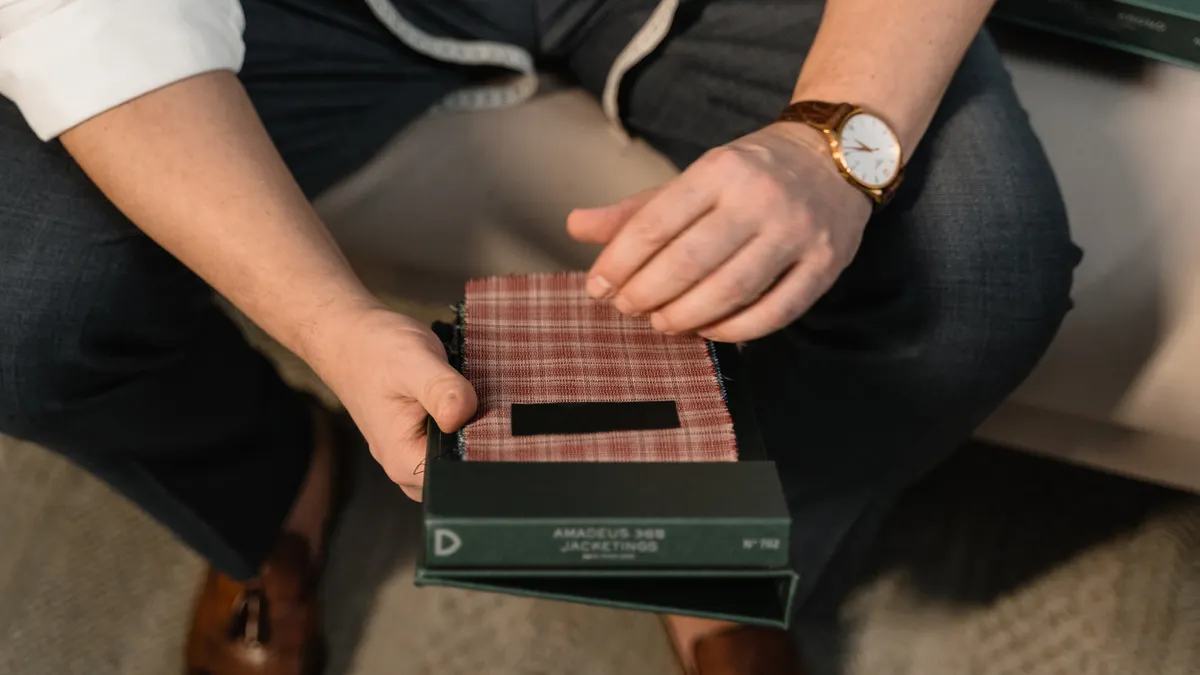
Shirt fabric needs to hold shape, feel good on skin, and suit the level of structure you want in the collar and cuffs. A shirt is not just a flat panel of cloth; it has points that need support and areas that need movement.
The first filter is structure. Crisp fabrics support a pointed collar and a neat cuff, while softer fabrics relax the shape and make the shirt look more casual. Cotton poplin is the classic example of a crisp shirt fabric, while rayon hangs with more movement and linen sits somewhere in the middle, with a naturally relaxed surface.
The second filter is comfort. Breathability matters when the shirt will be worn in warm weather or for long hours. Linen and many cotton shirt fabrics feel cooler than dense, coated, or heavy fabrics. If heat is a concern, a fabric that lets air move through it usually makes more sense than one that looks polished but traps warmth.
The third filter is how the shirt reads from a distance. A fabric can be technically fine and still wrong for the look you want. A dress shirt needs a different hand than a weekend overshirt, and a polished office shirt needs a different cloth than a loose summer shirt.
If you want a simple rule, start with the look first, then check structure, then comfort. That order prevents a common mistake: choosing a fabric because it feels nice in the store, then finding out the collar collapses or the shirt looks too limp. The hub on fabric selection can sit above this page as the wider guide to fabric choice.
Which fabric should I pick?
Choose the fabric that matches the shirt’s shape, climate, and level of formality. The table below shows the most useful trade-offs for the fabrics named in this guide.
| Fabric | Best for | What it does well | What to skip |
|---|---|---|---|
| Cotton poplin | Clean, sharper shirts | Holds a crisp collar and cuff, looks neat, works for a more polished shirt | Very relaxed styles that need a soft, easy drape |
| Oxford cloth | Everyday shirts | Feels sturdy, looks slightly casual, keeps enough body for a shirt that can be worn often | Very formal shirts that need a sharp, glossy finish |
| Linen | Warm-weather shirts | Breathes well, feels light, gives a relaxed texture | Very smooth or highly formal shirts; skip it if you dislike wrinkles |
| Rayon | Shirts with soft movement | Drape, fluid feel, softer silhouette | Structured shirts with firm collars and cuffs |
| Shirt fabric with lower opacity | Layered or lining-free shirts | Reduces visible underlayers and helps the shirt read cleanly | Very thin cloth that shows too much skin or undergarment detail |
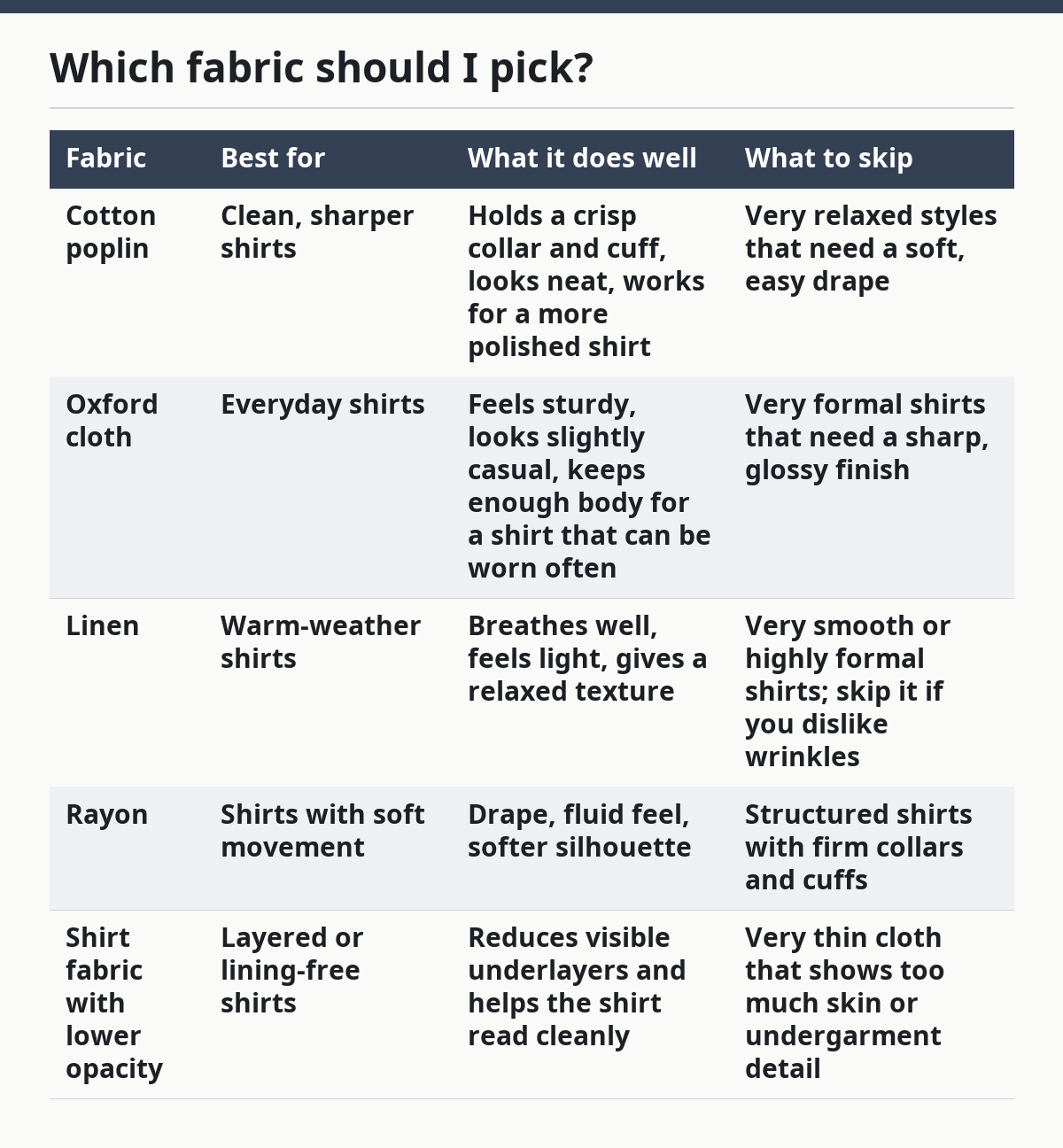
Cotton poplin is the safest choice if the shirt should look crisp and clean without much fuss. Oxford cloth is better if the shirt should feel a little more casual and substantial. Linen makes the most sense for heat and ease, but it does not pretend to stay smooth all day. Rayon is for softness and flow, not for a rigid, tailored look.
The wrong choice is usually easy to spot in hindsight. A very soft rayon shirt with a sharp collar can look like two different garments stitched together. A heavy oxford shirt in a hot setting can feel stuffy. A thin linen shirt can look great in strong light and disappointing in lower light if opacity is too low.
How do I match fabric to collar and cuff?
Match collar and cuff needs to the amount of body in the fabric. Collar fabric and cuff fabric need enough support to keep edges from sagging, especially if the shirt uses a pointed collar or a structured cuff.
A crisp fabric like cotton poplin gives the cleanest result for collars and cuffs because it holds edges with less collapse. Oxford cloth can still work, but it gives a softer edge and a more relaxed shirt overall. Linen works when the design accepts some softness and texture. Rayon is the least forgiving when the goal is a firm collar, because its drape can pull the shape down.
This is where many generic guides oversimplify the choice. They say “pick what feels nice,” then ignore the fact that a shirt has two very different jobs at once: the body needs comfort, while the collar and cuffs need control. A fabric that feels lovely across the shoulders can still make the collar look tired after a short wear.
A useful rule is to ask whether the shirt should stand away from the neck or rest close to it. If the answer is “stand away,” choose a fabric with more body. If the answer is “rest and soften,” choose a fabric with more drape. That decision often matters more than fiber content by itself.
When in doubt, picture the shirt at the collar and cuff before you picture it as a whole. A fabric that fails there usually fails everywhere else too. The cost of choosing wrong is not just appearance; it is also comfort, because a collar that folds badly gets adjusted all day.
How much drape, breathability, and opacity do I need?
Choose more drape when you want softness, more breathability when you want comfort in heat, and more opacity when you do not want the shirt to show too much through the fabric. These three traits often pull in different directions, so the best shirt fabric is usually a compromise.
Drape changes the whole silhouette. Rayon drapes more fluidly than cotton poplin, so it gives a looser line and a softer fall. Cotton poplin keeps a more stable outline, which makes it better for shirts that should look neat through the torso and sleeves. Linen falls between those two in feel, but the texture is its own feature rather than a smooth fallback.
Breathability is the biggest reason people choose linen and many cotton shirt fabrics. If the shirt will be worn in warm conditions, a fabric that allows air to pass through tends to feel better than one that looks polished but holds heat. Oxford cloth can be fine for everyday wear, yet it is not the first pick if the goal is the coolest possible shirt.
Opacity matters more than many buyers expect. A fabric can be light and breathable and still be a poor choice if it is too sheer for the setting. That becomes a problem with lighter colors and very thin cloth. If the shirt is meant to be worn on its own, check that the fabric does not reveal more than you want under ordinary indoor light.
The best shirt fabric is rarely the “softest” or the “lightest” in isolation. It is the one that balances these three traits for the shirt’s purpose. A dress shirt needs more opacity and structure; a summer shirt may accept more texture and less stiffness.
What should I skip?
Skip fabric that fights the shirt’s purpose, even if it feels pleasant in the hand. That means very fluid fabric for a sharply tailored shirt, very stiff fabric for a relaxed shirt, and very sheer fabric for a shirt that will be worn without layers.
A common mistake is choosing rayon for a shirt that needs a crisp collar and cuff. The shirt may hang beautifully through the body, but the top edge can look too soft and lose the clean frame the wearer probably wants. The fix is simple: keep rayon for softer shirts and use cotton poplin when the design depends on shape.
Another mistake is choosing linen and expecting it to behave like a formal shirt cloth. Linen breathes well and looks sharp for a few hours, but wrinkles are part of its character. If that texture reads as careless in the setting where the shirt will be worn, skip linen and move to a more stable cotton shirt fabric.
A third mistake is ignoring opacity. Thin fabric can seem elegant on a roll and disappointing on a body. If the shirt is for bright rooms, daylight, or close wear, low opacity can turn into a daily annoyance.
There is also a temptation to choose only by “premium” feeling. That can lead to the wrong cloth for the garment. A fabric can be expensive-looking and still be the wrong shape partner for the shirt. The shirt’s lines matter more than the label on the bolt.
What is the fastest way to choose?
Use a short, three-step check: decide the shirt’s look, check the collar and cuff needs, then decide how much drape, breathability, and opacity you can accept. That order gets you to a useful answer faster than starting with fiber names alone.
- Name the shirt’s purpose in one phrase, such as office shirt, summer shirt, or relaxed weekend shirt. That gives the fabric a job, not just a color or texture.
- Decide whether the collar and cuffs should stay crisp or sit soft. Crisp points you toward cotton poplin; soft points you toward linen or rayon depending on the rest of the shirt.
- Judge the cloth in the kind of light the shirt will face most often. If you expect bright daylight or layered wear, opacity matters more than a pretty surface.
- Match the texture to the mood you want. Smooth and polished suggests poplin; sturdy and casual suggests oxford cloth; relaxed and airy suggests linen; fluid and soft suggests rayon.
- Reject any fabric that creates a visible trade-off you do not want to live with. If a shirt needs structure, skip limp cloth; if it needs coolness, skip heavy cloth.
That last step saves the most frustration. The wrong shirt fabric usually fails in the same place every time: collar shape, body drape, or transparency. Once that failure is easy to spot, the choice gets much simpler.
For a broader look at the whole process of choosing materials, the fabric selection hub can support this page without repeating the shirt-specific advice here.
Which fabric is best for my shirt?
The best shirt fabric is the one that fits the shirt’s structure first and its comfort second. For a crisp, versatile shirt, cotton poplin is the strongest all-around pick; for a casual, substantial shirt, oxford cloth fits well; for heat and a relaxed look, linen makes sense; for soft movement, rayon is the better choice.
That recommendation is not universal, and it should not be. A fabric that is right for a neat collar can be wrong for a drapey shirt, and a fabric that feels good in summer can look too loose for a sharper style. The right answer depends on the silhouette you want to see every time the shirt is worn.
If the shirt must look polished with little effort, start with cotton poplin. If the shirt should feel easy and worn-in, look at oxford cloth. If the shirt’s job is to stay cooler, linen deserves a close look. If the shirt should fall softly over the body, rayon is the better match.
The wrong fabric choice is usually not subtle. It shows up in the collar, the cuff, or the way the shirt hangs from the shoulder. Once those three points are right, the rest of the shirt usually follows.
Drafted with AI; not yet reviewed by a person.