Last updated: November 20, 2026
Use the sewing machine foot pedal like a dimmer, not a switch: press lightly, ease off early, and keep the pedal in one stable spot so the stitch speed stays predictable. That matters most when you want slow, clean starts and stop-and-go control for beginner sewing.
Key takeaways
- A foot pedal controls speed best when your heel stays planted and your toe makes small pressure changes.
- Put the pedal where your foot lands naturally; a bad angle causes sudden bursts of speed.
- Start with short test presses of about 1 second, then lift off before the machine runs away.
- The handwheel is the better choice when you need one-stitch control or a very slow start.
- The biggest mistake is stomping. It makes the machine lurch, which hurts stitch consistency and confidence.
Why does the foot pedal feel too fast?
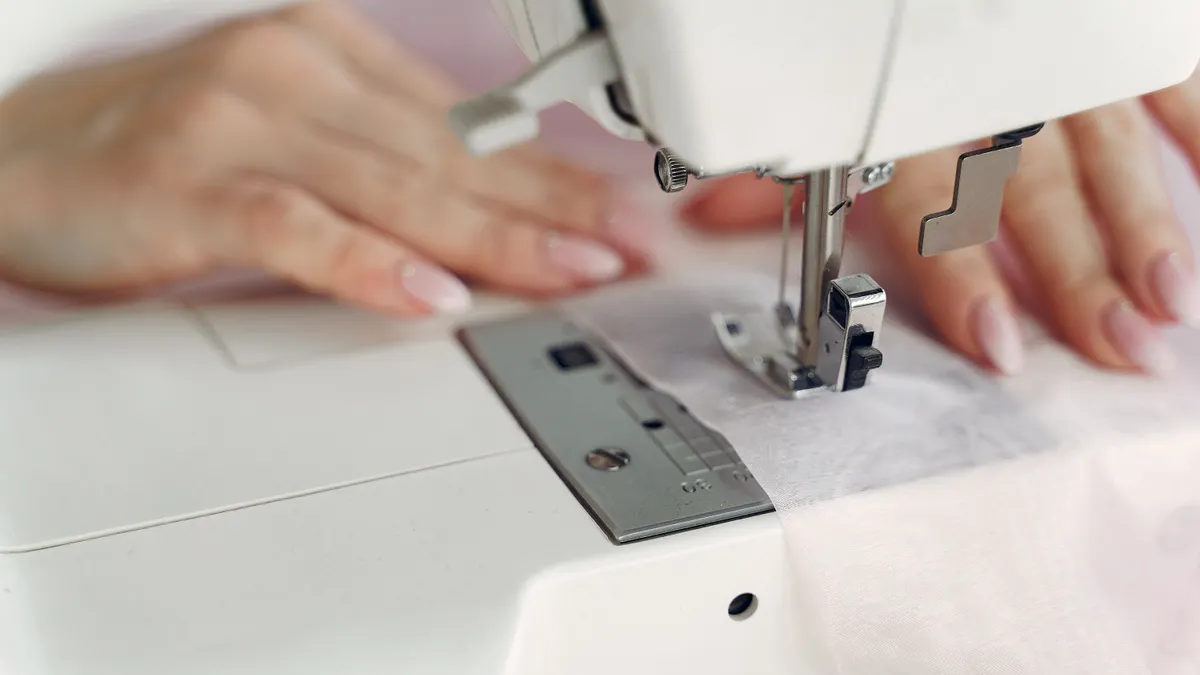
The foot pedal feels too fast because most of the movement happens in a very small range near the top of the press. A light touch can give a slow start, but a deeper press can jump the sewing machine from a crawl to full speed in less than a second.
That is why beginners often feel like the machine has only two settings: stopped and fast. The pedal is not the part you “push hard”; it is the part you feather. The goal is not steady pressure from start to finish. The goal is tiny changes in pressure as the seam begins, then a slight hold once the stitch speed settles.
Two details matter right away. First, keep the pedal on a hard floor or a mat that does not slide, because a shifting pedal changes how your foot lands. Second, keep your leg relaxed. A bent knee that is already tense makes the first press jerky, even on a basic domestic sewing machine.
If the start feels abrupt every time, the problem is usually foot position, not the machine itself. The same pedal can feel controllable or wild depending on where your heel sits, how far your chair is from the table, and whether your toe is hovering or already bearing weight.
How should you set up your foot pedal?
Your foot pedal should sit where your foot can land flat, with your heel anchored and your toe ready to move a few millimeters at a time. A good setup starts before the first stitch.
Use this order:
- Place the pedal on a non-slip surface under the table, not way off to one side. Your foot should reach it without twisting your hip.
- Set your chair so your knee bends at a comfortable angle and your heel can stay on the floor or pedal base. If your leg stretches too far, the first press turns choppy.
- Rest the ball of your foot on the top half of the pedal, not the edge. That gives you more control over stitch speed.
- Keep the sewing machine presser foot up while you position fabric, then lower it before you start. That prevents you from rushing the first press while fumbling with the cloth.
- Practice one soft press and one release before you sew. The result you want is a smooth change, not a lunge.
A simple setup change can fix a lot. Moving the pedal even a few inches can change the angle of your ankle enough to make slow sewing easier. If you feel your foot sliding forward, the pedal is probably too far away. If your leg feels cramped, it is probably too close.
The handwheel still matters here because it gives you a backup for the first stitch. If the fabric needs exact placement, turn the handwheel toward you one stitch at a time before you touch the pedal. That avoids the jump that happens when the motor starts moving from a dead stop.
How do you press the foot pedal without jerking?
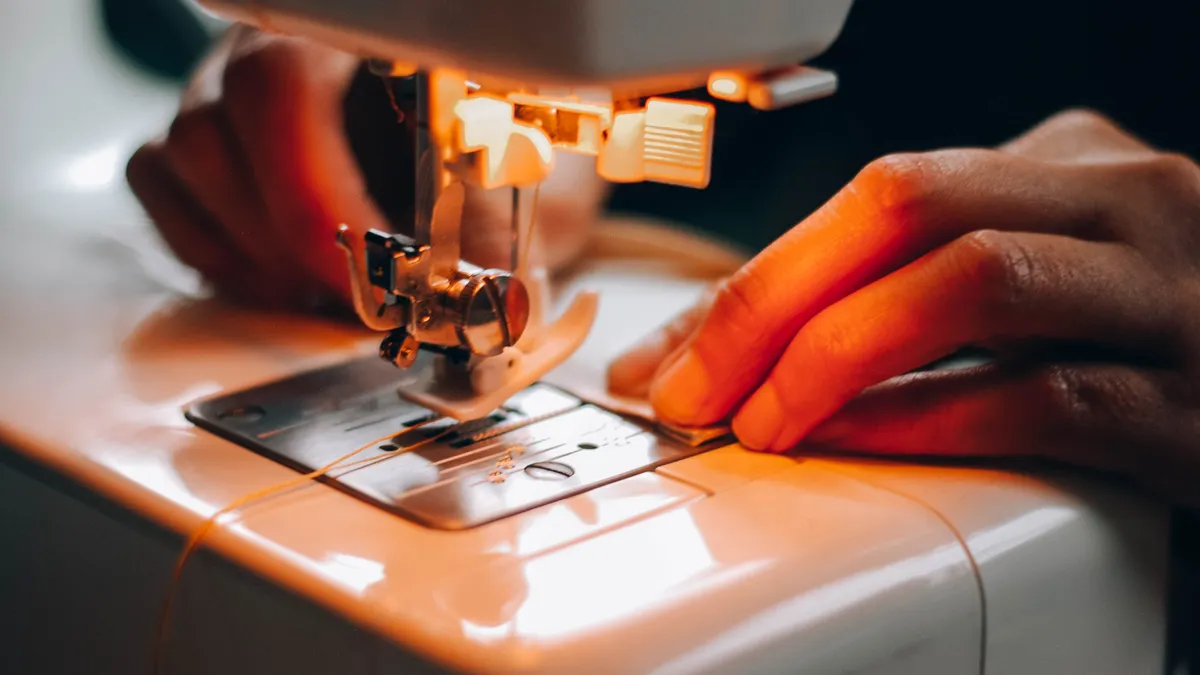
You press the foot pedal without jerking by starting with a light toe touch, then increasing pressure in a short, controlled motion instead of a single push. That keeps the machine from lurching into speed you did not choose.
Use this core procedure:
- Put your heel in place and rest the toe lightly on the pedal. The machine should still be stopped.
- Press just enough to start the needle moving. Aim for the slowest speed your machine will hold without stalling.
- Keep that pressure for 2 to 3 stitches, then ease off a little if the seam is running faster than you want.
- To stop, lift your toe before the motor has a chance to surge. The machine should coast to a clean stop.
- Repeat the same motion five or six times on scrap fabric until the start and stop feel even.
The main mistake is pressing through the first half-inch of travel too quickly. That costs you control at the exact moment when the stitch line is most likely to wander. The better move is a slow first squeeze, then a calm hold.
Another mistake is “correcting” with the heel. That usually makes the foot rock and the speed swing. Keep the heel planted and let the toe do the work. If you need a visual cue, think of pressing a car pedal in a parking lot, not a gas pedal on the highway.
This is also where stitch consistency begins. A steady pedal hand gives the needle a more even rhythm, which makes it easier to keep seams readable and clean. The pedal does not fix tension, thread choice, or fabric prep, but it does stop avoidable speed changes from wrecking the line.
When should you use the handwheel instead?
Use the handwheel instead of the foot pedal when you need one-stitch control, a very slow first stitch, or a careful restart near a marked point. The handwheel gives slower movement than the pedal can usually manage.
That matters on delicate sewing, small corners, and any moment when the fabric is not yet under full control. If the presser foot is down and the fabric is lined up exactly on a seam start, a quick handwheel turn lets you place the needle before the motor takes over. After that, the pedal can take over for regular speed.
The handwheel is also useful if your pedal has a touchy range. Some feet start fast even with a soft press, and no amount of practice fully removes that. In that case, use the handwheel for the first stitch or two, then move to the pedal once the seam is stable.
Here is the trade-off: the handwheel is slower and more deliberate, but it is not practical for long seams. The pedal is faster and less tiring, but it demands more foot control. A beginner who tries to force the pedal to do everything often ends up fighting the seam. A better habit is to use both tools for different jobs.
What mistakes make speed control worse?
Bad pedal placement, a tense ankle, and a stomp-style start make speed control worse because they create sudden speed changes that the fabric cannot absorb. Each mistake has a clear cost, and each has a simple fix.
| Mistake | What it costs | Better move |
|---|---|---|
| Pedal too far away | Foot reaches and presses at an angle, which causes a jump | Move it closer so the foot lands naturally |
| Pedal on a slippery floor | The pedal shifts under pressure | Put it on a non-slip mat or hard surface |
| Heel lifted high | Ankle loses fine control | Keep the heel planted and use small toe pressure |
| Pressing too hard at the start | Machine takes off before you are ready | Start with the lightest motion that moves the needle |
| Watching the needle only | Foot speed gets forgotten | Keep the foot steady and glance between needle and seam line |
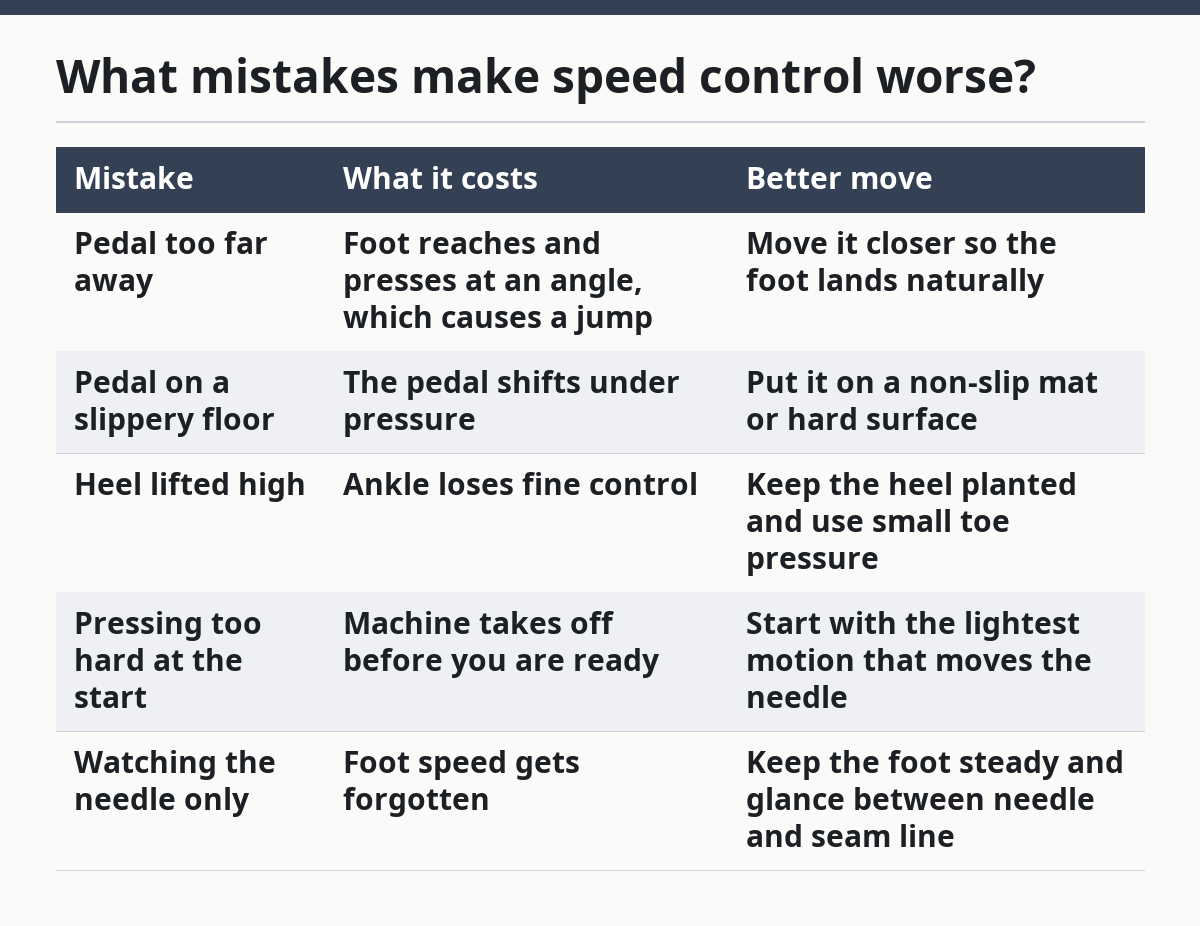
The most common beginner error is trying to “save” a shaky start by pressing harder. That usually makes the problem worse. If the machine is already moving too quickly, reduce pressure and let it slow down before the next stitch.
Another issue is pedal fatigue. After a few seams, the foot gets tense and the ankle starts making bigger moves. A short reset helps. Lift the foot, relax the calf, and start again with a lighter first press. That sounds basic, but it changes the way the pedal feels in the next 30 seconds.
How do you practice slow sewing until it feels normal?
You practice slow sewing by repeating the same short start-and-stop motion until your foot learns the pedal’s small control range. A few minutes of repetition matters more than sewing fast and hoping the seam improves.
Start with 10 to 15 short starts on plain fabric. Press for 2 or 3 stitches, stop, and reset. Then try holding the speed for about 5 stitches without speeding up. That range is enough to teach your foot how little pressure the pedal really needs.
Do not chase perfect speed on the first try. The point is to build a repeatable habit: heel anchored, toe soft, fabric ready, stop before the rush. If your first three starts are uneven, that is normal. The win is that the fourth and fifth are less uneven than the first.
A useful rule is to change only one thing at a time. If the pedal is still too jumpy, do not also change stitch length, thread, and fabric at once. Keep the setup simple and repeat the same motion until the machine feels less surprising.
If a sewing machine manual recommends a specific pedal or speed-control setup for the model, follow that first. Brand support pages from companies such as Brother and Singer usually describe the pedal connection and basic control range for their own machines. For broader setup advice, the sewing machine setup hub on this site is the next stop, but this page stays focused on foot control.
Why does my machine start too fast?
Your machine starts too fast because the first part of the foot pedal travel is too aggressive for your foot, or because your foot position does not let you feather the pressure. That is a control problem, not always a defect.
The fix is usually to sit a little closer, plant the heel, and use a gentler first press. If the machine still surges, start with the handwheel for the first stitch, then switch to the pedal once the fabric is moving. That gives you a slow entry point without forcing a tricky pedal start.
If the pedal remains hard to control across different sewing machine settings, the controller itself may feel touchy for your style. Some pedals are simply less forgiving than others. In that case, the practical answer is to lean more on the handwheel for starts and on short pedal bursts for the rest of the seam.
How do i sew slowly without losing control?
Sew slowly without losing control by keeping the heel down and making tiny pressure changes, not by hovering your foot in the air. The foot pedal should feel like a small range of motion, not a big shove.
If the seam still races away, shorten the run. Sew 2 or 3 stitches, stop, reset, and start again. That rhythm is slower overall, but it is often cleaner than trying to hold an unstable crawl for a long stretch.
Should I use the foot pedal or handwheel for delicate sewing?
Use the handwheel for the first stitch or any exact placement, then use the foot pedal only if the seam can tolerate a little speed. The handwheel gives the most control when the fabric is thin, slippery, or positioned at a marked point.
The foot pedal is better once the line is underway and the stitch path is stable. If the pedal keeps making the start too fast, stay with the handwheel longer. That choice is slower, but it protects the seam from a rushed start.
Drafted with AI; not yet reviewed by a person.