Last updated: November 20, 2026
Quick answer: choose the fabric that matches the skirt’s shape, season, and waistband needs. For a full, flowing skirt, choose fabric with soft drape; for a tailored skirt, choose fabric that holds shape. Cotton, linen, viscose, and wool each work well in different ways, and the right pick depends on the skirt, not just the fiber name. If you are comparing options for How to Choose Fabric for a Skirt, start with the garment’s job, then check drape, structure, and lining.
Key takeaways
- Soft, fluid skirts need fabric that falls in folds, not fabric that stands stiff.
- Structured skirts need body at the waist and enough firmness to keep seams crisp.
- Cotton and linen feel cooler and more casual; viscose and wool usually give more movement and shape, depending on weight.
- Lining changes how a skirt hangs, how opaque it looks, and how the waistband feels.
- The wrong fabric can make a skirt cling, flare too much, sit bulky at the waist, or look limp after one wear.
What should I look for in skirt fabric?
Look for three things first: drape, structure, and season. A skirt fabric that suits a summer wrap skirt can be a poor choice for a pencil skirt, because the same cloth can either skim the body or fight the pattern. Cotton, linen, viscose, and wool all belong in skirt sewing, but each one behaves differently once it is cut on grain and sewn into a waistband.
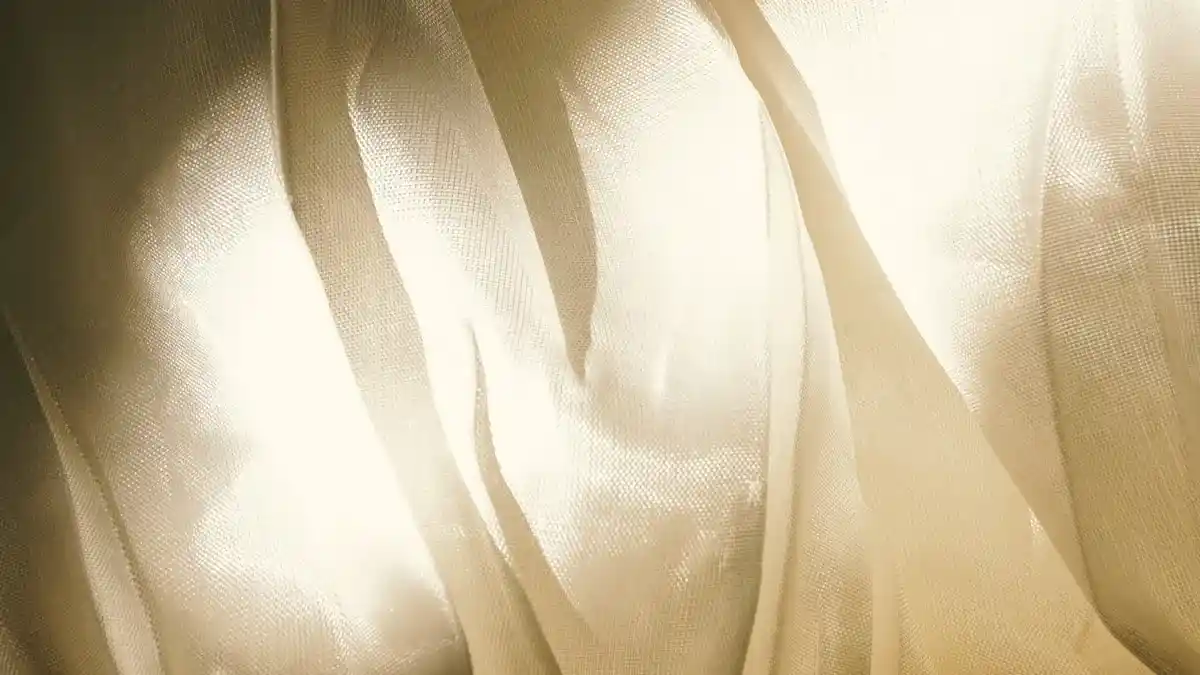
Drape is the way fabric hangs. If you want soft folds, movement, or a skirt that swings when you walk, choose a fabric with good drape such as viscose or some lighter wool fabrics. If you want a sharp A-line, a box pleat, or a skirt that stands away from the body, choose fabric with more body, such as cotton or wool suiting.
Season matters too. Linen and cotton usually suit warm weather because they feel light and breathable. Wool usually suits cooler weather because it traps warmth better and often keeps a skirt’s shape longer. Viscose sits between the two in feel and can work for a fluid skirt in several seasons, but it may need a lining if you want opacity or less cling.
A good rule is to match the cloth to the skirt’s job. A skirt is not just “a piece of fabric sewn into a tube.” It has a waistband, a hem, seams, and often lining, and each part asks something different of the cloth. For broader fabric selection help across sewing projects, the fabric selection hub on this site is the right next stop.
Which skirt shape needs which fabric?
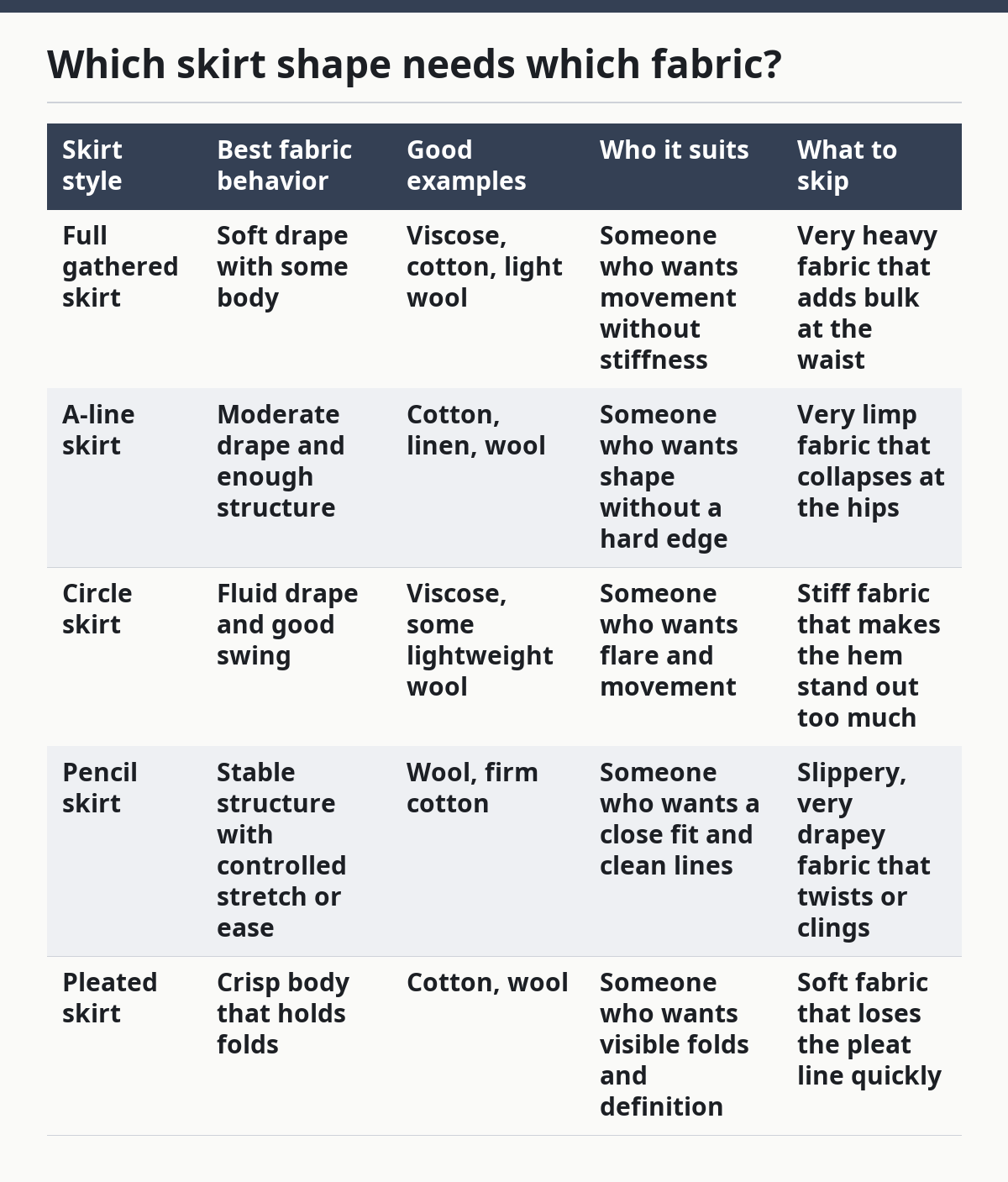
The skirt shape decides how much drape or body you need, and that choice is more important than chasing a single “best” fabric. A gathered skirt does not ask the same thing as a straight skirt, and a circle skirt asks for more drape than a box-pleat style. The table below shows a practical way to sort common options.
| Skirt style | Best fabric behavior | Good examples | Who it suits | What to skip |
|---|---|---|---|---|
| Full gathered skirt | Soft drape with some body | Viscose, cotton, light wool | Someone who wants movement without stiffness | Very heavy fabric that adds bulk at the waist |
| A-line skirt | Moderate drape and enough structure | Cotton, linen, wool | Someone who wants shape without a hard edge | Very limp fabric that collapses at the hips |
| Circle skirt | Fluid drape and good swing | Viscose, some lightweight wool | Someone who wants flare and movement | Stiff fabric that makes the hem stand out too much |
| Pencil skirt | Stable structure with controlled stretch or ease | Wool, firm cotton | Someone who wants a close fit and clean lines | Slippery, very drapey fabric that twists or clings |
| Pleated skirt | Crisp body that holds folds | Cotton, wool | Someone who wants visible folds and definition | Soft fabric that loses the pleat line quickly |
A common mistake is choosing fabric by color or print first and shape second. A beautiful print on a fabric with the wrong fall can make a skirt look crowded, stretched, or oddly heavy. A plain wool skirt with the right line often looks better than a printed viscose skirt that fights the pattern.
If the skirt is meant to skim the body, the cloth should move with it. If the skirt is meant to stand away from the body, the cloth should support that silhouette. This is why a skirt fabric choice is really a shape choice in disguise.
How do cotton, linen, viscose, and wool compare?
These four fibers each solve a different skirt problem, and none of them is right for every skirt. Cotton gives clean everyday structure, linen gives coolness and texture, viscose gives fluid movement, and wool gives shape with warmth. The right answer depends on whether the skirt needs softness, crispness, or both.
| Fabric | Best for | Strengths | Drawbacks | Skip it when |
|---|---|---|---|---|
| Cotton | Casual to tailored skirts, especially A-line or gathered styles | Easy body, familiar feel, often simple to sew | Can feel plain or hold less fluid drape than viscose | You want a very swishy or slinky skirt |
| Linen | Summer skirts, relaxed A-line shapes, fuller silhouettes | Cool feel, natural texture, good air flow | Creases easily and can look too casual for some tailored skirts | You want a smooth, polished finish with little wrinkling |
| Viscose | Flowing skirts, bias cuts, soft gathers, circle skirts | Excellent movement, soft hand, elegant fall | Can cling, grow heavy when hung, or need lining for modesty | You want a crisp waistband and sharp pleats |
| Wool | Tailored skirts, cooler-season skirts, structured silhouettes | Shape retention, warmth, polished look | Can feel too warm or too firm for airy summer styles | You want a light, breezy, ultra-soft summer skirt |
Cotton is a reliable starting point for a first skirt because it usually behaves predictably and gives the skirt enough presence without making it hard to wear. Linen is a strong choice when the skirt is loose and summer-oriented, though it is not the smoothest match if you want a pressed, wrinkle-free look.
Viscose is the fabric that most often works for movement. It hangs well in a circle skirt or gathered skirt, but that same softness can be a problem in a skirt that needs a crisp side seam or a waistband that stays neat all day. Wool is a strong choice for a polished tailored skirt, especially when the goal is shape rather than lightness.
For fiber properties and textile basics, the Woolmark Company and Cotton Incorporated both publish material on how wool and cotton behave as fibers. Their pages are useful because they focus on the material, not just fashion terms. See Woolmark’s wool fiber information and Cotton Incorporated’s cotton fiber resources for background on how these materials differ. The Better Cotton and The Textile Exchange sites also provide fiber background for readers comparing natural and man-made options.
What should I do about waistband and lining?
Choose fabric with the waistband and lining in mind, because those two details often decide whether a skirt feels finished or fussy. A waistband needs fabric that can sit flat, keep its edge, and not stretch out after a few hours of wear. A lining can fix opacity, reduce cling, and help a skirt slide over tights or leggings.
A firm waistband works best with cotton and wool because both can hold a cleaner edge. Linen can work too, but a linen waistband may feel softer and crease more. Viscose can be fine in the body of the skirt, but it is not always the strongest choice for the waistband itself if the goal is a crisp finish.
Lining is not required for every skirt, but it matters more with some fabrics than others. Viscose often benefits from lining when the fabric is sheer or when you do not want it to cling. Wool skirts often use lining for comfort and to help the skirt hang well. Cotton and linen may be left unlined in casual styles, though a lining can still improve comfort and opacity.
The smart question is not “Does this fabric work?” It is “Does this fabric work for the waistband, the lining, and the hem at the same time?” A beautiful main fabric can still make a poor skirt if the waist twists or the lining fights the drape. That is why skirt fabric choice should include the inside of the garment, not only the face fabric.
What are the most common fabric mistakes?
The most common mistake is picking fabric that is too heavy for the skirt shape, which makes the waistband bulk up and the hem pull down. A heavy fabric can turn a simple gathered skirt into a weighted drape that sits awkwardly at the hips. The fix is to move to a lighter fabric in the same fiber family or choose a different skirt shape.
The second mistake is choosing fabric that is too limp for a structured skirt. A limp viscose may look lovely on the roll, but on a straight skirt it can sag, cling, or show every seam line. The fix is to choose cotton or wool when the pattern needs shape, especially for pleats, A-lines, and pencil skirts.
The third mistake is ignoring how the fabric behaves at the waistband. Some fabrics look great in the body of the skirt but stretch, roll, or compress under a fitted waistband. That creates a skirt that feels fine for ten minutes and annoying for a whole day. A firmer cotton or wool waistband solution usually works better than adding more topstitching.
The fourth mistake is forgetting opacity. Light-colored viscose or linen can need a lining, and some cottons can be more see-through than they appear in the shop. A lining adds one more layer of work, so it is worth deciding early rather than after the skirt is finished. If modesty or coverage matters, the lining plan should be part of the fabric choice from the start.
One more trap: choosing fabric only because it is on sale. A cheap bolt that fights the pattern often costs more in time than a better fabric costs in money. If the cloth does not match the skirt shape, the skirt will remind you of that every time you wear it.
How do I make the final choice at the fabric shop?
Choose the fabric by matching the skirt’s shape, the season, and the finish you want, then check whether the waistband and lining will still make sense. Start by naming the skirt in plain words: “I want a full summer skirt,” “I want a tailored winter skirt,” or “I want a soft circle skirt.” That sentence should narrow the fabric list faster than any trend label.
Use this simple order of decisions:
- Decide the skirt shape first, such as A-line, circle, gathered, or pencil. The shape tells you whether you need drape or structure.
- Decide the season second. For warm weather, cotton and linen are strong starting points; for cooler weather, wool is often the better pick.
- Decide how much movement you want. If you want swish, lean toward viscose or a lighter wool. If you want a crisp outline, lean toward cotton or wool.
- Think about the waistband. If you want a flat, steady waist, avoid fabrics that feel unstable or overly soft at the top edge.
- Decide on lining before you buy. If the fabric is sheer, clingy, or static-prone, plan a lining from the start rather than treating it as an afterthought.
- Hold the fabric up to the skirt idea in your head. If you can already picture the hem collapsing, puffing out, or clinging, that is usually the sign to choose differently.
The final choice is rarely the “best fabric” in a general sense. It is the fabric that suits the skirt you actually want to wear. A good skirt fabric makes the shape look intentional, keeps the waistband comfortable, and gives the hem the right kind of movement. That is the standard worth shopping for.
FAQ
What is the easiest fabric for a beginner skirt? Cotton is often the easiest starting point because it usually behaves predictably and holds a clear shape.
Which fabric is best for a summer skirt? Linen and cotton are common summer choices because they feel light and breathable.
Which fabric works best for a tailored skirt? Wool is often a strong choice for a tailored skirt because it holds shape well and gives a polished finish.
Do all skirts need a lining? No, but lining helps with opacity, cling, and comfort in fabrics that are sheer or drapey.
Can viscose work for a skirt waistband? It can work in the body of the skirt, but a firmer fabric is often a better choice for the waistband itself.
Drafted with AI; not yet reviewed by a person.