Last updated: November 20, 2026
Quick answer: choose one pattern with 6 to 8 main pieces, a simple silhouette, and a closure you can manage without panic. For How to Choose a Sewing Pattern for Your First Dress, that usually means a beginner sewing pattern with few pieces, little shaping, and a zipper only if the rest of the design is plain. That gives you a finished dress without piling on new skills at once.
Key takeaways
- Start with construction, not style. A pretty envelope can hide hard sewing.
- Fewer pattern pieces usually means fewer places to get stuck.
- Woven fabric is often easier for a first dress than slippery knit fabric.
- A side zipper or center-back zipper adds work; a pull-on dress removes some of it.
- A simple silhouette is easier to fit and easier to finish cleanly.
- Skip patterns with lots of darts, lining, collars, cuffs, or multiple closures for the first try.
What makes a beginner sewing pattern for a first dress?
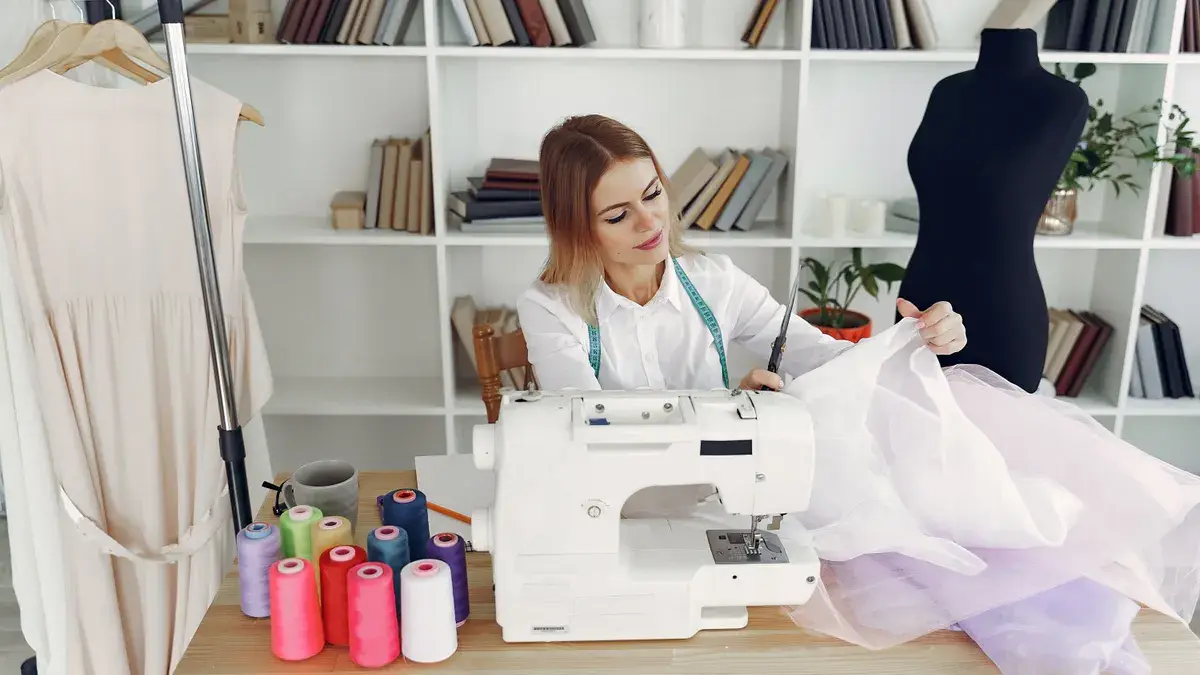
A beginner sewing pattern for a first dress is one that limits the number of new skills you have to learn in one project. The best first dress patterns usually use a simple silhouette, a woven fabric, and a straightforward closure such as no zipper at all or one zipper placed where the construction stays plain.
The pattern should also match the kind of patience you actually have. A dress with 6 or 8 main pieces is easier to handle than one with many panels, facings, lining pieces, and tiny shaped parts. If a pattern front looks calm but the back has a zipper, yoke, buttons, and a waist seam, that is not a beginner dress pattern in practice.
A good rule is to choose one challenge at a time. If you want to learn zippers, keep the shape simple. If you want to learn fit, avoid a dress that also needs lining and sleeves. The beginner pattern you want is the one that lets you finish a real dress before your confidence runs out.
This is where a broader guide to pattern reading and fit checks helps, because the label on the envelope is not the whole story. A pattern marked “easy” can still be a poor first choice if the construction is fussy.
Which dress style is easiest to sew first?
A straight or gently shaped dress is usually the easiest first dress to sew. A shift dress, loose A-line dress, or pull-on dress gives you a clean path from cutting to finishing without a lot of shaping work.
The hardest styles for a first dress are the ones that need strong fit through the bust, waist, and hips all at once. A fitted sheath with darts, princess seams, and a back zipper asks for more precision than most first-time makers expect. That does not make it a bad pattern. It just makes it a bad first pattern.
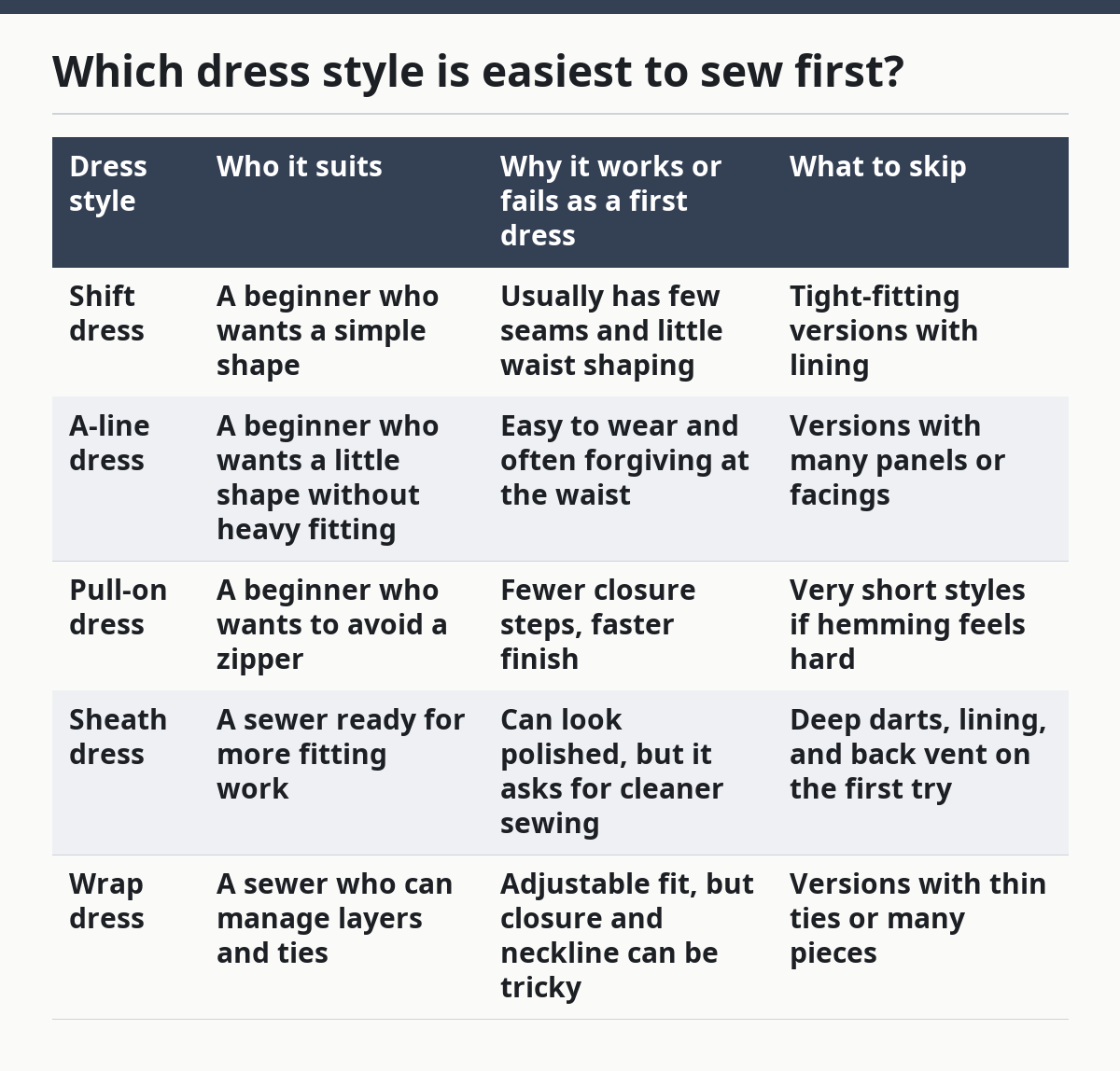
Here is a quick comparison to help you sort the options:
| Dress style | Who it suits | Why it works or fails as a first dress | What to skip |
|---|---|---|---|
| Shift dress | A beginner who wants a simple shape | Usually has few seams and little waist shaping | Tight-fitting versions with lining |
| A-line dress | A beginner who wants a little shape without heavy fitting | Easy to wear and often forgiving at the waist | Versions with many panels or facings |
| Pull-on dress | A beginner who wants to avoid a zipper | Fewer closure steps, faster finish | Very short styles if hemming feels hard |
| Sheath dress | A sewer ready for more fitting work | Can look polished, but it asks for cleaner sewing | Deep darts, lining, and back vent on the first try |
| Wrap dress | A sewer who can manage layers and ties | Adjustable fit, but closure and neckline can be tricky | Versions with thin ties or many pieces |
If you want the lowest-risk first project, pick the style that looks calm from front and back. Avoid decorative seams that serve no function. They often add cutting and matching work without making the dress easier to wear.
How do I judge construction difficulty?
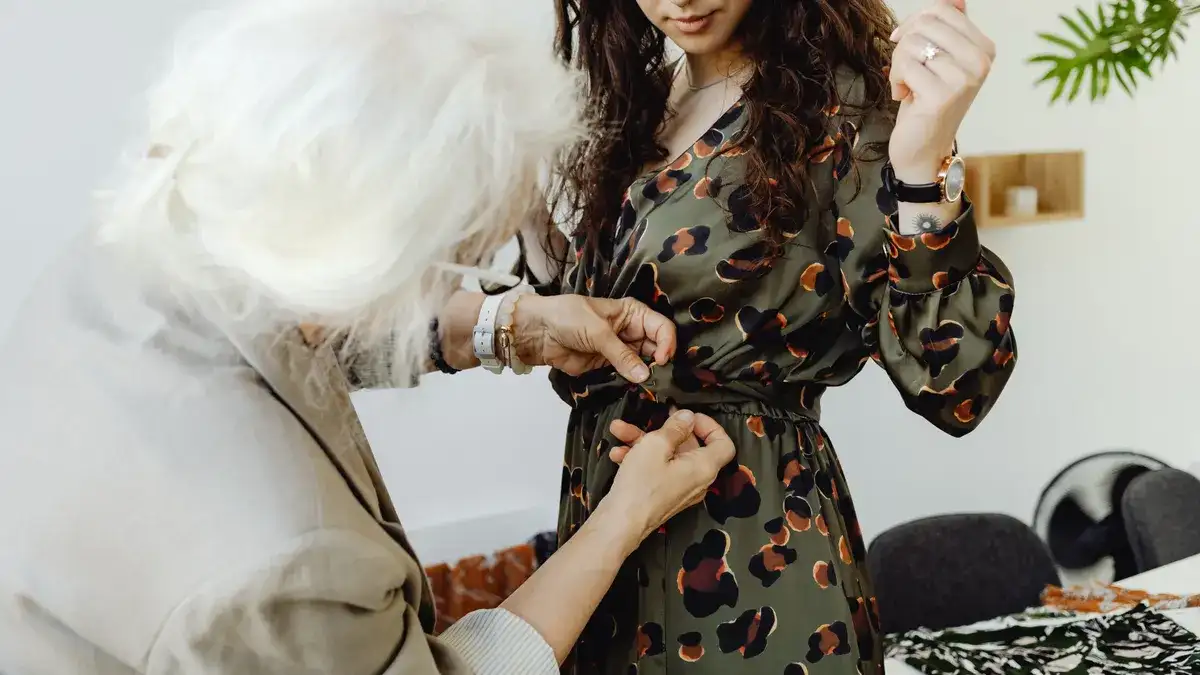
Judge construction difficulty by counting the steps that can go wrong, not by the skill name printed on the pattern. A pattern with 10 simple steps is easier than one with 24 steps that each depend on exact placement.
Use this order when you compare a beginner sewing pattern for a first dress:
- Count the main pieces. Fewer pattern pieces usually mean fewer chances to miscut or mis-sew.
- Check the closure. A no-zipper dress is easiest. A zipper adds a skill that needs accuracy and calm hands.
- Look for shaping. Darts, princess seams, and fitted waist seams can improve the look, but they also increase fitting pressure.
- Notice the finish. Lining, facings, collars, cuffs, and sleeve plackets add steps that can slow a beginner down.
- Check the fabric choice. If the pattern expects woven fabric, stick with that rather than switching to something stretchier or slipperier.
- Scan the sewing order. If the pattern asks you to attach many small pieces before the main body feels complete, the project may feel harder than it looks.
A pattern is beginner-friendly when one mistake does not ruin the whole dress. That is why simple seams and plain edges matter so much. They leave room for small wobble in stitching, while complex tailoring tends to show every uneven line.
This is also where a pattern with a zipper can stop being a good first pick. A zipper is not impossible, but it takes accuracy at one narrow point. If the rest of the dress is also fitted, the project becomes less about learning and more about coping.
What fabric should I choose with the pattern?
Choose a woven fabric that matches the pattern’s suggestions and avoids slippery handling for the first dress. A woven fabric is often the safest choice because it holds shape and behaves predictably while you cut, press, and sew.
The pattern’s fabric list matters as much as the drawing on the front. A loose dress in medium-weight woven fabric is far more manageable than the same dress in a drapey fabric that shifts when you cut it. If the pattern name says it works with woven fabric, treat that as a real instruction, and if the wording is unclear, check the pattern company’s notes or ask a sewing teacher or other professional before you substitute fabric.
For a first dress, choose fabric with enough body to show the shape of the pattern. Very drapey cloth can hide a design on the hanger and expose every uneven seam on the body. Very thick fabric can make corners, hems, and neckline turns bulky. The middle ground can be the easiest place to start.
Pattern and fabric need to agree on structure. A simple dress in the wrong fabric can feel harder than a more advanced dress in the right one. That is one reason beginners get frustrated: they blame the pattern when the fabric choice did some of the damage.
If the pattern asks for a zipper and woven fabric, the fabric should still be easy to press and hold a crease. That makes the zipper area and hem more predictable. A fabric that resists pressing will make even a neat pattern harder to finish well. The fabric guide can help you compare those choices before you cut.
Which pattern details should I avoid on a first dress?
Avoid pattern details that add many decisions without adding much wearability. For a first dress, the most common troublemakers are lining, lots of darts, princess seams, collars, cuffs, and multiple closures.
Those details are not bad. They are just expensive in attention. A lining means extra layers to cut and match. Darts need careful placement. Princess seams demand clean stitching from top to bottom. Collars and cuffs turn a simple dress into a shape puzzle. Each one can be learned later, but all of them at once is too much for many first-time makers.
Skip patterns that look “simple” only because the drawing is plain. A plain sketch can hide a hard construction order. The back view is often where the trouble lives. If you see a zipper, keyhole, buttons, or a lot of curved seams in the back, that pattern is asking for more than a first dress should.
A beginner sewing pattern for a first dress should let you practice one or two useful skills and then stop. It should not try to teach fitting, closures, sleeves, lining, and decorative finishing in one go. That kind of pattern can leave a new sewer with half-finished fabric and a bad opinion of dressmaking.
The better first choice is often less glamorous on the envelope. That is the honest trade-off. A plain shift dress may not look exciting in the pattern catalog, but it is far more likely to end as a dress you can actually wear.
How do I make the final choice at the shop or online?
Make the final choice by asking one question: can I finish this without needing to learn four new skills at once? If the answer is no, put it back.
Start with the pattern illustration or photo, then read the back envelope or product description for closure type, fabric suggestion, and construction features. A first dress should usually come from the simplest version of a pattern, not the fanciest view. If the pattern offers three versions, pick the plainest one with the fewest extras.
Use this short decision list before you buy:
- Choose a simple silhouette.
- Prefer woven fabric.
- Avoid a lining if you can.
- Keep the closure simple.
- Watch for darts, princess seams, and other shaping.
- Skip extra style features you do not need yet.
If two patterns look equally good, choose the one that is more forgiving when the seams are a little off. That usually means a looser fit, fewer panels, and less emphasis on exact shaping. A beginner dress should reward steady stitching, not punish every small line wobble.
A good first dress pattern is not the most stylish one on the wall. It is the one that gives you a finished dress and leaves you willing to sew another. That matters more than starting with the hardest design in the pile. The American Sewing Guild’s project advice and Threads Magazine’s fitting guidance both point in that practical direction: simplify the build, then improve the details later.
What should I skip if I want a fast first win?
Skip anything that turns the first dress into a sewing exam. A fast first win usually comes from a pattern with a simple shape, few pieces, and one clear way to finish the garment.
That means avoiding complicated closures, heavy fitting, and extra construction like full lining or multiple decorative seams. It also means avoiding patterns that only look beginner-friendly because the model photo is calm. The photo does not show the hours spent wrestling a tricky neckline or setting a zipper twice.
A first dress should be useful even if it is not perfect. That is the point of choosing the right beginner sewing pattern. You want a project that teaches enough to build skill, but not so much that the dress becomes a repair job before it is even done.
Two helpful references can keep this decision grounded: the American Sewing Guild and Threads Magazine both publish sewing guidance that focuses on construction choices, fabric behavior, and project planning. Their advice is useful because it usually treats dressmaking as a series of practical decisions, not a personality test.
The best first dress pattern is usually the one you can see yourself finishing on a normal week, not the one that sounds most impressive. If a pattern asks for a zipper, woven fabric, and careful fitting all at once, it may be a better second dress than first dress.
FAQ
How many pattern pieces should a first dress have?
A first dress is often easier when it has 6 to 8 main pieces, because fewer pieces usually mean fewer places to miscut or mis-sew.
Is a zipper okay for a first dress?
Yes, but only if the rest of the pattern is simple. A zipper adds one precise step, so it is easier when the dress has little shaping and no extra layers.
Should I choose woven or knit fabric?
For many first dresses, woven fabric is the simpler choice because it holds shape and stays more predictable during cutting and sewing.
What style is easiest for a beginner?
A shift dress, loose A-line dress, or pull-on dress is usually the easiest starting point because each one keeps the construction straightforward.
What should I avoid in my first pattern?
Avoid lining, multiple closures, lots of darts, princess seams, collars, and cuffs if you want the first project to stay manageable.
Drafted with AI; not yet reviewed by a person.