Last updated: November 19, 2026
Key Takeaways
- Woven cloth uses crossing yarns; knit cloth uses loops, so they behave differently in stretch and shape.
- Stretch and recovery usually reveal more than fiber content alone.
- Grainline matters most in woven fabric, less in most knits.
- Knit edges often curl; woven edges usually stay flatter and are easier to manage.
Woven fabric and knit fabric differ in how the yarn is built, and that difference changes stretch, recovery, grainline, edge behavior, and the way the cloth hangs. If you are trying to tell the two apart for sewing, the short answer to what is the difference between woven and knit fabric? is this: woven fabric is made from yarns interlaced at right angles, while knit fabric is made from yarns formed into loops.
Woven fabric vs. knit fabric: the structural difference
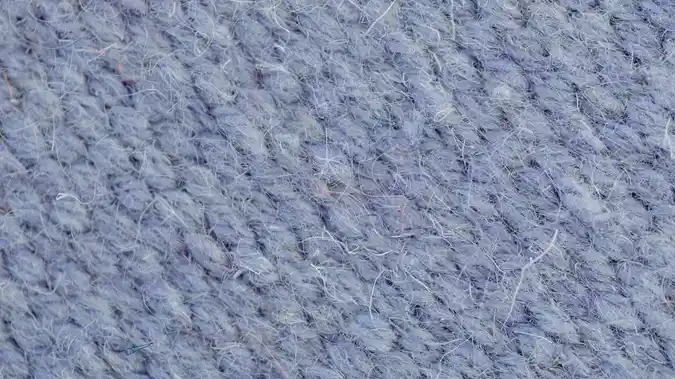
Woven fabric is built from two sets of yarns crossing each other, usually at 90 degrees; knit fabric is built from interlocking loops, usually in rows and columns. That one structural change explains most of the practical differences a sewer notices at the cutting table.
In a woven, the yarns that run lengthwise are the warp, and the yarns that run crosswise are the weft or filling. Because those yarns are locked together at intersections, woven cloth usually has much less mechanical stretch than a comparable knit. You may see a little give on the bias, which is the 45-degree diagonal, but the straight grain stays comparatively stable.
A knit does not rely on crossed yarns in the same way. Its looped construction lets it stretch, often far more than a woven of similar weight. A rib knit, for example, stretches much more across the width than a plain weave cotton, and it also tends to pull back after stretching. That return is called recovery.
This is why the words “woven” and “knit” are not just textile labels. They tell you how the fabric will behave when you cut it, pin it, stitch it, and wear it. A 100% cotton poplin and a 100% cotton jersey can both be light, soft, and casual, but they will not act the same in a seam.
For a broader road map on choosing cloth for sewing, the hub on choosing fabric for sewing projects sits one step up from this page. This article stays with the structure and the practical consequences.
What stretch and recovery tell you right away
Stretch and recovery are the quickest signs of how a fabric will behave, and they matter more than fiber content alone. A polyester knit can stretch a lot; a wool tweed woven may barely stretch on the straight grain at all.
Stretch is how far the cloth gives when you pull it. Recovery is how well it returns to its original shape after you let go. A knit with good recovery snaps back instead of staying bagged out at the elbows or knees. A woven usually has limited stretch, so it keeps its shape more predictably, which is useful in collars, waistbands, jackets, and shirts that need structure.
A simple way to think about it is this: if the fabric needs to move with the body, the looped structure of a knit usually helps. If the fabric needs to hold a shape, the interlaced structure of a woven usually helps. There are exceptions. Stretch woven fabrics exist, and some knits are engineered to be firm, but the basic rule still holds.
The trade-off is real. Knit fabric is forgiving on a body and often comfortable for close-fitting garments, but that same stretch can make seams ripple, hems wave, and cut edges shift while you sew. Woven fabric is usually easier to keep square and flat, but it can feel restrictive in places where the body bends and expands.
If you are comparing two bolts at a shop, pull a 10 cm section across the width and let it go. A knit often shows visible stretch and then recovers; a woven usually resists. That quick test is not a substitute for reading the cloth carefully, but it gives a useful first impression.
How grainline changes the way woven fabric behaves
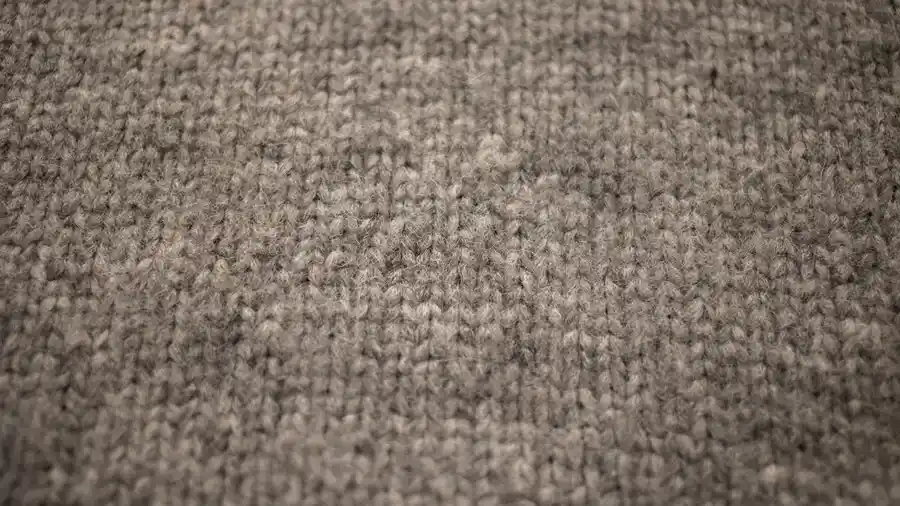
Grainline is the directional layout of a woven fabric, and it matters much more there than it does in most knits. In a woven, the straight grain follows the lengthwise yarns, the crossgrain follows the widthwise yarns, and the bias runs diagonally at about 45 degrees.
This directional map helps explain why woven fabric is cut “on grain.” When the grainline is off, garments can twist, hang unevenly, or feel distorted after sewing. A skirt cut a few degrees off grain may drift to one side. A shirt panel cut badly can show a crooked placket or a seam that no longer sits straight.
Knits have direction too, but the loop structure makes them more forgiving and less rigidly directional than wovens. Many knits also have a more and a less stretchy direction, which is why pattern pieces usually follow a specific crosswise direction even if the fabric does not behave like a woven. Still, the classic grainline problem is mainly a woven-fabric issue.
A common mistake is to confuse grainline with stretch direction. They are related but not identical. A woven’s stretch is usually strongest on the bias, not along the straight grain. A knit’s stretch direction depends on how the loops were formed, and a fabric can stretch more across than along without being “off grain” in the woven sense.
If a garment pattern calls for stable seams and crisp shape, the grainline on a woven is part of the design, not a minor detail. If the pattern is built for a knit, the fabric’s natural stretch becomes part of the fit itself. That difference is why the same sleeve cap can behave cleanly in one fabric and fight you in another.
Why knit edges curl and woven edges stay flatter
Knit edges often curl, while woven edges usually stay flatter and easier to handle. The curling comes from the loop structure relaxing at the cut edge, especially in single knit fabrics such as jersey.
This matters the moment you cut the cloth. A curled edge can hide your cutting line, make seam allowances hard to measure, and throw off a folded hem. On a jersey tee, the edge may roll toward the right side or the wrong side as soon as it is cut. On a woven cotton broadcloth, the edge generally lies flatter and stays where you put it.
That difference affects planning as much as sewing. With a knit, you often need extra attention to alignment, pinning, and edge control because the cloth wants to move. With a woven, the bigger risk is fraying, not curling. Some wovens, such as loosely woven linens, can fray heavily at the cut edge, but they still do not usually curl like a knit does.
A practical way to think about this is: knits want to roll, wovens want to shed threads. Both need handling, but the handling is different. A knit edge may be tamed with pressing, starching, clips, or a serged finish. A woven edge may need a finish to stop fraying, but it usually behaves more predictably under a ruler and rotary cutter.
This is one reason beginners sometimes find knits visually confusing even before stitching starts. The edge itself changes shape, so the fabric can look uneven even when the cut is correct. With a woven, the cloth generally reveals its shape more honestly from the start.
Best uses for woven and knit fabrics
Wovens are best when the shape should stay crisp; knits are best when the garment needs stretch and body movement. That difference is why shirts, tailored pants, structured skirts, and jackets often use woven fabric, while T-shirts, leggings, fitted dresses, and many activewear pieces often use knit fabric.
A woven’s tighter dimensional stability makes it a strong choice for seams that need to stay clean and sharp. A shirt collar, cuff, button band, pleat, dart, or tailored waist shaping is usually easier to keep crisp in a woven. Because the fabric does not move as much, these details hold their form. A cotton shirting, denim, or suiting cloth can support that kind of structure.
A knit’s stretch and recovery make it a better match for closer-fitting clothing and casual garments that must move with the body. A jersey T-shirt can pull over the head without a closure. A rib knit waistband can stretch and then return. That same quality is what makes knits comfortable, but it also means the pattern has to be designed for that behavior.
The wrong use is not always a disaster, but it can change the result. Put a close-fitting knit pattern in a stiff woven without adjustments, and the garment may not fit over the body. Put a tailored woven pattern in a very stretchy knit, and the garment may lose its intended shape or drape oddly because the fabric behaves too loosely for the design.
For a sewer, the useful question is not “which is better?” It is “what does this shape need the cloth to do?” If the answer is “hold,” reach for a woven. If the answer is “move and recover,” reach for a knit.
A quick, reliable way to tell them apart
A woven usually shows a visible over-under yarn pattern and little straight-grain stretch; a knit usually shows rows of loops and noticeable stretch. This is a practical way to identify the difference when a bolt label is missing or the fabric swatch is small.
- Hold the fabric flat under bright light and look closely at the surface. If you can see individual yarns crossing at right angles, you are likely looking at a woven; if you see tiny loops or a sweater-like texture, it is likely a knit.
- Pull a 10 cm section gently along one direction, then the other. A woven usually resists on the straight grain; a knit usually gives more in at least one direction.
- Let go and watch the return. A knit with good recovery springs back; a woven usually returns less dramatically because it was not built for that kind of stretch.
- Check the cut edge. If it curls into a tube or rolls sharply, that is a strong knit signal. If it stays flatter but begins to fray, that points toward a woven.
- Look at the drape from a fold. A woven often hangs with a steadier, cleaner line; a knit can fall into softer curves, especially in jersey and modal jersey.
This process takes less than a minute once you know what to look for. It is more reliable than guessing from fiber alone, because cotton, polyester, wool, and rayon can all appear in both woven and knit constructions.
For a technical reference on weave structures, the CottonWorks resource from Cotton Incorporated explains plain weave and related constructions clearly, and the Textile Exchange materials glossary is useful for standard textile terms. Those sources help confirm that construction, not fiber content, is the key distinction.
What people get wrong about woven and knit fabric
The biggest mistake is assuming fiber type tells the whole story, and that mistake leads to poor fabric choices and bad sewing guesses. Cotton is not automatically woven, and polyester is not automatically knit. The construction matters more than the label on the fiber content tag.
Another common error is treating all knits as soft and all wovens as stiff. A ponte knit can be substantial and stable. A loosely woven linen can be soft, airy, and fluid. The category tells you the structure; it does not tell you the final hand or weight by itself. If the feel or stretch is unclear, consult a sewing professional or the pattern guidance before cutting.
A third mistake is ignoring recovery. Stretch without recovery can look fine when the cloth is on the table and fail badly in wear. A knit that stretches 20 cm and stays there is a poor match for cuffs, knees, or necklines that need to return to shape. Recovery matters just as much as stretch.
A fourth is using the wrong expectations for edge behavior. People often press and trim a knit as if it were a woven, then wonder why the edge curls back into shape. That wastes time and makes cutting less accurate. The fix is to control the cloth with the right tools and to expect the edge to behave like a knit, not a woven.
The cleanest summary is simple: woven fabric gives structure and stability; knit fabric gives stretch and recovery. That is the core difference, and it explains why the two behave differently in almost every sewing decision that follows.
How can you tell if fabric is woven or knit?
The quickest clue is the surface structure: woven fabric shows crossing yarns, while knit fabric shows loops. A gentle stretch test helps too. Wovens resist on the straight grain and may only give slightly on the bias; knits stretch more and usually bounce back with recovery.
Which is easier to sew, woven or knit?
Woven fabric is usually easier to keep flat and aligned, which makes it simpler for many sewers. Knit fabric is easier in a different way because it tolerates body movement and often needs less precise fit, but it can curl, shift, and ripple if the fabric is not handled well.
Do knits need special needles?
Knits usually sew better with a ballpoint or stretch needle because the tip is designed to move between loops rather than pierce and damage them. The exact needle type depends on the knit’s thickness and elasticity, so checking the fabric and pattern guidance matters before stitching.
Drafted with AI; not yet reviewed by a person.