Last updated: November 18, 2026
Key Takeaways
- Weight shapes drape, silhouette, and seam stress in the finished garment.
- The envelope points you to fabric family and intended behavior first.
- Match structure before color or print when choosing fabric.
- Lightweight fabrics suit movement; medium-weight fabrics suit shape.
Table of Contents
- What fabric weight actually changes in a finished garment
- How do I read the pattern envelope for fabric weight?
- Step 1: Match the pattern’s structure to the fabric weight
- Lightweight vs medium-weight fabric: which one does the pattern want?
- How drape and structure should guide your choice
- Step 4: Check whether the garment type wants movement or body
- Common mistakes that make a pattern and fabric fight each other
- A quick decision check before you buy the fabric
Fabric weight tells you how a cloth will hang, bend, and hold shape, so how to match fabric weight to a sewing pattern is really a question of behavior, not just ounces or grams. In practical terms, a 4 oz shirting can suit a pattern that wants crisp seams and body, while a 7 oz denim or heavy canvas can work against soft folds and movement. This guide to how to match fabric weight to a sewing pattern starts with the pattern envelope, then checks drape, structure, and garment type. For general fabric definitions, see the Textile Exchange glossary and the Fashion Institute of Technology’s textile resources. Textile Exchange; Fashion Institute of Technology
What fabric weight actually changes in a finished garment
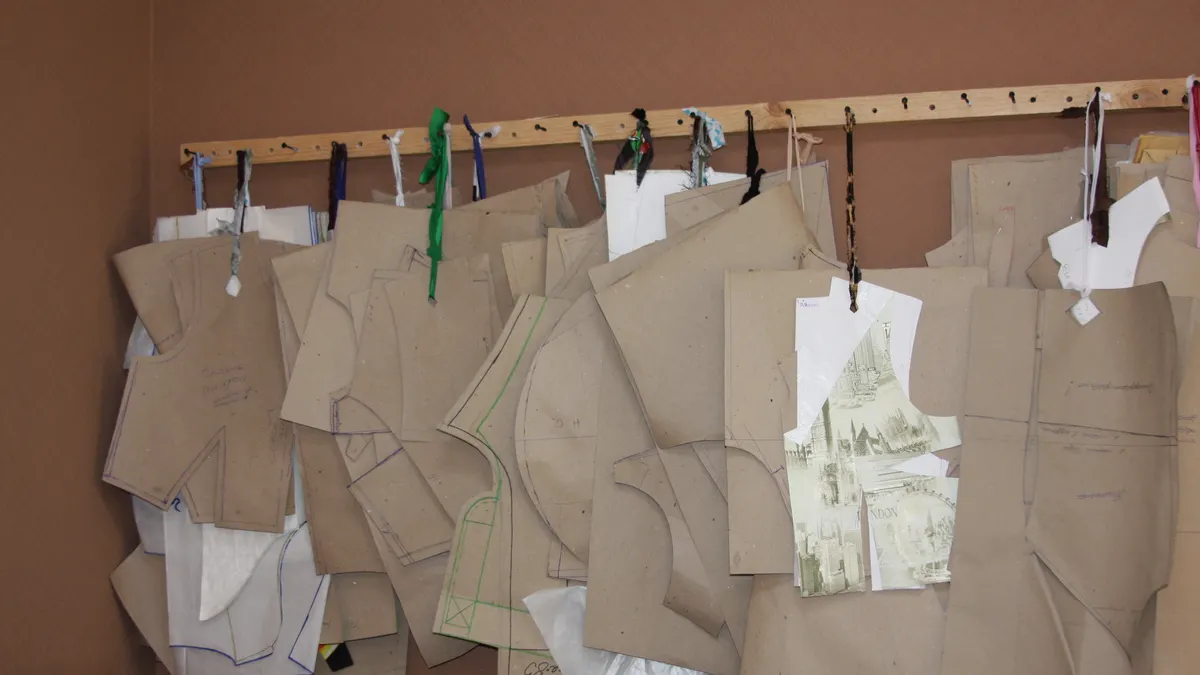
Fabric weight changes drape, silhouette, and how much stress the garment puts on seams. A lightweight rayon challis around 3–5 oz per square yard will fall differently from a medium-weight cotton twill around 6–8 oz, even if both are sold as “dress fabrics.” The number alone does not decide the match, but it gives the first clue.
Think of weight as one part of a three-part decision:
- Weight affects how much the cloth resists gravity.
- Drape affects how it hangs in folds and curves.
- Structure affects whether it stands away from the body or collapses into it.
A pattern with a gathered skirt, flutter sleeve, or cowl neckline usually wants a fabric that moves and pools. A boxy shirt, chore jacket, or unlined tote needs more body. That is why a sewing pattern can look “right” in one cloth and wrong in another even when the color and print are perfect.
The common mistake is treating weight as a substitute for drape. A medium-weight knit can still flow beautifully if it has enough stretch and recovery, while a lightweight canvas can feel stiff if its weave is tight. If you are unsure, consult a sewing professional or an experienced fabric shop staff member before cutting; Textile Exchange and FIT both note that fiber, weave, and finish affect fabric behavior, not weight alone. Textile Exchange; Fashion Institute of Technology
One helpful reference point is the pattern envelope, which usually names suggested fabric types such as woven cotton, knit jersey, viscose, or denim. Those labels are not decorative. They tell you what kind of behavior the designer built the garment around.
For a broader planning view, the guide to Choosing Fabric for Sewing Projects belongs at the hub level; this page stays on the narrower job of compatibility.
How do I read the pattern envelope for fabric weight?
The pattern envelope usually tells you the fabric family first, then the garment’s intended behavior. Look for phrases like “lightweight woven,” “medium-weight knit,” “stable knit,” or “drapey fabrics.” Those words are the designer’s first filter, and they matter more than brand names on the bolt.
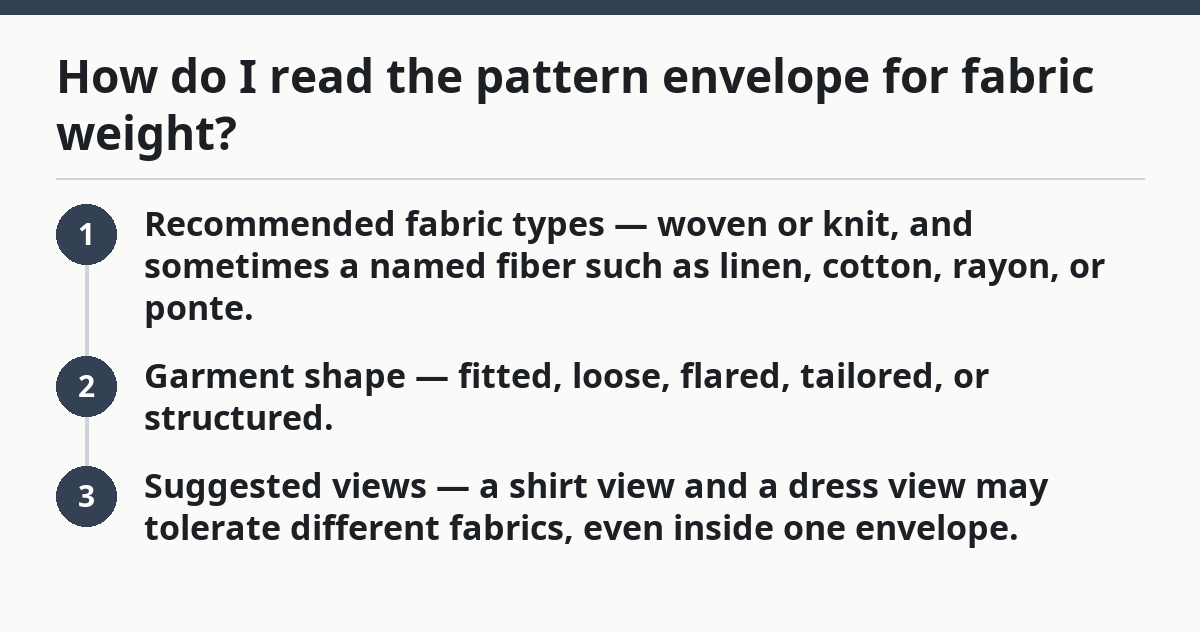
Start with the envelope and pull out three clues:
- Recommended fabric types — woven or knit, and sometimes a named fiber such as linen, cotton, rayon, or ponte.
- Garment shape — fitted, loose, flared, tailored, or structured.
- Suggested views — a shirt view and a dress view may tolerate different fabrics, even inside one envelope.
If the envelope says “light to medium-weight woven fabrics,” that usually points toward cloth in the range of shirting, lawn, chambray, poplin, or rayon challis rather than upholstery canvas or wool coating. If it says “medium-weight knit fabrics with 30–50% stretch,” the weight alone matters less than stretch and recovery. A 10 oz sweatshirt fleece may be the right weight but the wrong knit behavior if the pattern needs a close, elastic fit. For stretch guidance, see Sewing.org’s pattern-fitting resources and Britannica’s overview of fabric properties.
A useful habit is to compare the envelope wording to the finished garment drawing. A loose shirt in a 5 oz cotton lawn can work because the pattern does not need the fabric to stand away from the body. A structured blazer pattern that expects interfacing, pad stitching, and crisp lapels usually needs a fabric with enough body to support those details.
Do not ignore “not suitable for obvious diagonal designs,” “avoid bulky fabrics,” or similar notes. Those warnings often point to seam bulk, collapse at hems, or lost detail around facings and collars. If the envelope gives a range, stay near the middle on your first make. A pattern that names medium-weight woven fabrics is usually safer in a true medium than in the heaviest version of “lightweight.”
Step 1: Match the pattern’s structure to the fabric weight
Choose a fabric whose weight supports the garment’s structure before you look at color or print. The right match usually shows up in the garment’s bones: darts, seams, collars, cuffs, pleats, gathers, and hem shape.
Use this order:
- Lay the pattern on the table and identify the main shape: fluid, fitted, boxy, or built-up. If the garment has a collar stand, welt pockets, cuffs, or topstitching details, it needs more structure than a simple pull-on dress.
- Check the envelope for fabric family and any phrase tied to weight, such as “light to medium-weight” or “medium-weight stable knit.” If it names a stable knit, avoid very drapey jersey; if it names a drapey woven, avoid crisp canvas.
- Pick fabrics in the weight band the pattern is asking for. As a rough starting point, think light around 2–5 oz per square yard, medium around 5–8 oz, and heavy above that. Those are broad craft references, not rules.
- Hold a swatch or sample fold in your hand and let it hang 6 to 8 inches. If it collapses into soft curves, it behaves like a drapey cloth. If it stays open or sticks out, it behaves like a structured cloth. Match that behavior to the garment drawing.
- If the pattern needs shaping through darts or princess seams, choose a fabric that presses cleanly and does not fight the shaping. If the pattern is meant to skim the body, choose a fabric that falls rather than stands out.
A worked example helps: a shirt dress with a self-tie belt and patch pockets usually accepts a medium-weight woven such as chambray or poplin. The same pattern in a very light voile may show every lining edge and droop at the pockets. The same pattern in heavy denim may turn stiff at the waist and add bulk at the placket.
This step is where many projects fail. The mistake costs time, not just appearance: bulky fabrics make seam finishes harder, under-collars thicker, and buttonholes harder to place cleanly. The fix is to shift one weight class lighter or heavier, not to force the wrong cloth into the pattern.
Lightweight vs medium-weight fabric: which one does the pattern want?
Lightweight fabric suits garments that need movement; medium-weight fabric suits garments that need shape. That simple split solves many matching problems, but the details matter. A lightweight 100% cotton lawn can behave very differently from a medium-weight cotton sateen, and a lightweight knit with 30% stretch may still perform well in a fitted knit design.
Use lightweight fabric when the pattern has:
- gathers,
- flutter sleeves,
- soft pleats,
- lining or underlining,
- bias cuts,
- loose draped silhouettes.
Use medium-weight fabric when the pattern has:
- collars,
- cuffs,
- button bands,
- patch pockets,
- straight hems,
- structured waistbands,
- jackets, overshirts, and tailored skirts.
The reason is practical. Light cloth can make soft lines look elegant, but it can also make a garment collapse if the design expects crisp edges. Medium-weight cloth gives seams more presence and helps a garment hold its outline. That can be a gift for shirt patterns, but a problem for a blouse meant to float away from the body.
This is also where woven and knit choices diverge. A lightweight woven without stretch usually behaves more predictably at collars and plackets. A medium-weight knit can work for body-skimming T-shirts, dresses, and pull-on pants, but only if the pattern is drafted for knit behavior. A woven pattern converted to a knit is not a free swap just because the weights are similar.
One honest limitation: the more details a pattern has, the less forgiving the fabric choice becomes. A plain elastic-waist skirt tolerates a wider range of weights than a fitted blazer with lapels and welt pockets. If the design is simple, you have room to vary. If the design is engineered, stay closer to the envelope recommendation.
When in doubt, ask what the garment should do in motion. Should it swing, skim, stand away, or hold a crease? That answer points to the weight class better than the number on the bolt.
How drape and structure should guide your choice
Drape should match the shape the pattern is asking for, and structure should support the places that need definition. A 6 oz rayon challis drapes well but does not hold sharp corners; a 7 oz denim has more structure but may refuse a soft cowl neckline. The same weight can behave differently depending on fiber, weave, and finish, so drape is the real test.
A useful way to think about it:
- High drape: good for bias-cut dresses, wrap styles, gathered tiers, and loose blouses.
- Moderate drape: good for shirts, casual dresses, and trousers with relaxed shaping.
- Low drape / high structure: good for jackets, trousers with crisp legs, bags, and garments that need a defined edge.
Patterns that include a lot of ease can usually accept a wider range of drape. A relaxed shirt in a medium-weight viscose twill may still look right. A closely fitted sheath dress in the same cloth may cling or collapse at seams in ways the pattern did not intend.
This is where people often over-correct. They see “structured” and grab the heaviest fabric in the shop. That can backfire. A fabric can be heavy and still drape too much if the weave is loose. It can also be light and still feel crisp if the finish is firm. So keep the focus on behavior, not just mass.
A practical reference is to compare the cloth to a paper pattern piece held by one corner. If the fabric wants to hang in a smooth line, it has more drape. If it resists hanging and keeps an angular shape, it has more structure. Neither is better on its own. The right one depends on the silhouette.
For more context on fabric and pattern selection as a larger decision, the hub article can sit above this one; this page is only the compatibility layer. If you need help with fit before choosing yardage, see how to read sewing patterns and basic interfacing choices.
Step 4: Check whether the garment type wants movement or body
Choose fabric weight by garment type only after you have checked the envelope and the structure. The same weight can work for one category and fail in another.
Use these pairings as a starting point:
- Blouses and shirts: light to medium-weight woven fabrics, often around 3–6 oz.
- Dresses with gathers or tiers: light to medium-weight fabrics with enough drape.
- Trousers and skirts: medium-weight fabrics that can take a crease or hold a line.
- Jackets, overshirts, and vests: medium to heavier fabrics with body.
- T-shirts and close-fitting knits: medium-weight knits with stretch and recovery.
- Sweatshirts and casual pullovers: medium to heavy knits that do not collapse under their own weight.
The garment type tells you what the fabric must do at stress points. A trouser needs fabric that survives knees, seat tension, and pocket openings. A blouse needs fabric that gathers without bulk at the neckline. A jacket needs fabric that supports edges, facings, and closures without sagging.
One thing a generic article often leaves out: lining and interfacing change the answer. A lighter fabric can sometimes support a pattern if the pattern assumes interfacing in collars, cuffs, waistbands, or facings. That does not mean any light cloth will work. It means the structure is partly built elsewhere. A thin shirting with a good interfacing may behave better in a collar than a medium-weight but floppy fabric with no support. For a deeper look at support materials, see the interfacing guide and pattern fitting basics.
The wrong choice shows up fast. Too little body and the garment looks limp; too much body and it looks boxy or bulky. If you are between two fabrics, choose the one that matches the garment’s main visual line. For a soft gathered skirt, pick the one that falls. For a sharp overshirt, pick the one that holds.
Common mistakes that make a pattern and fabric fight each other
The most common mistake is matching by weight alone and ignoring the fabric family, which turns a usable pattern into a disappointing one. A 6 oz woven linen and a 6 oz dense twill do not behave the same way. Linen wrinkles and opens; twill can feel more stable and compact. The garment may fit on paper but look wrong in motion.
Another mistake is choosing a fabric that is too heavy for detail work. Heavy cloth adds bulk at seam intersections, collars, cuffs, waistbands, and button plackets. The cost is not only a thicker edge; it can also distort the whole shape, especially on small-sized garments. The fix is to step down one weight class or simplify the pattern view.
A third mistake is assuming a knit pattern and a woven pattern are interchangeable because both fabrics are “medium weight.” They are not. Knit stretch changes fit, recovery, and comfort. If the pattern expects a woven, a knit can throw off the silhouette unless the pattern was drafted for it.
A fourth mistake is ignoring the amount of drape the design needs. A skirt designed for movement can become stiff and bulky in a fabric with too much body. The result is a hem that kicks out, gathers that sit up, or side seams that twist. If that happens, the cloth is not wrong for sewing in general; it is wrong for that pattern.
The honest rule is simple: if the pattern is tailored, stay closer to structure; if the pattern is fluid, stay closer to drape. When the two are in conflict, the pattern intent wins. That is the part a reader should keep open beside the cutting table.
A quick decision check before you buy the fabric
Match the fabric to the pattern by asking five questions in order, and stop when one answer is clearly off. This takes about 2 minutes at the cutting table.
- Does the envelope call for woven or knit? If not, do not improvise.
- Does the garment need drape or body? A swishy dress and a crisp shirt want different fabrics.
- Are there details that need support? Collars, cuffs, and plackets raise the bar.
- Does the cloth hang the way the drawing suggests? If not, put it back.
- Will the weight help the garment’s seams, hems, and closures stay neat? If not, choose another fabric.
If you answer those questions honestly, how to match fabric weight to a sewing pattern becomes much easier. The right fabric usually feels obvious once you compare the pattern’s shape to the cloth’s behavior. For more help with the next step, see choosing fabric for sewing projects and how to choose sewing patterns.
Drafted with AI; not yet reviewed by a person.