Last updated: November 18, 2026
Quick Answer: Use a stretch fabric with the pattern’s required stretch range and good recovery; for many fitted T-shirts, that often means about 20% to 30% stretch, but the pattern controls the final answer. Stretch fabric is the right choice when a pattern needs give, close fit, and movement, but the real decision is not just “stretchy or not.” It is choosing a fabric with the right amount of stretch, enough recovery, and the right kind of knit for the garment you want to make in How to Choose Fabric for Stretch Sewing Projects.
Start with the pattern, not the fabric bolt
Begin with the pattern’s recommended fabric type and stretch range, then shop inside that range instead of guessing from the shelf label. A good pattern for a fitted T-shirt, leggings, or a knit dress usually names a fabric family such as jersey, rib knit, interlock, or a stable knit and may give a stretch percentage or a stretch ratio. If the pattern asks for 25% to 30% stretch, a fabric that only gives 10% may feel too tight, while one that stretches far more may grow out of shape.
The first thing I would check is the pattern envelope or instructions, because that tells you whether the design relies on fabric stretch for the fit or only for comfort. A close-neck top, for example, needs enough stretch to pass over the head without forcing the neckline to gape. A looser knit top can tolerate less stretch.
If the pattern gives no guidance, look at the garment shape. A slim tee, leggings, swimwear, dancewear, and children’s play clothes usually need more controlled stretch than a boxy lounge top. That is the first fork in the road, and it saves you from buying a lovely fabric that is wrong for the cut.
How do stretch percentage and recovery work?
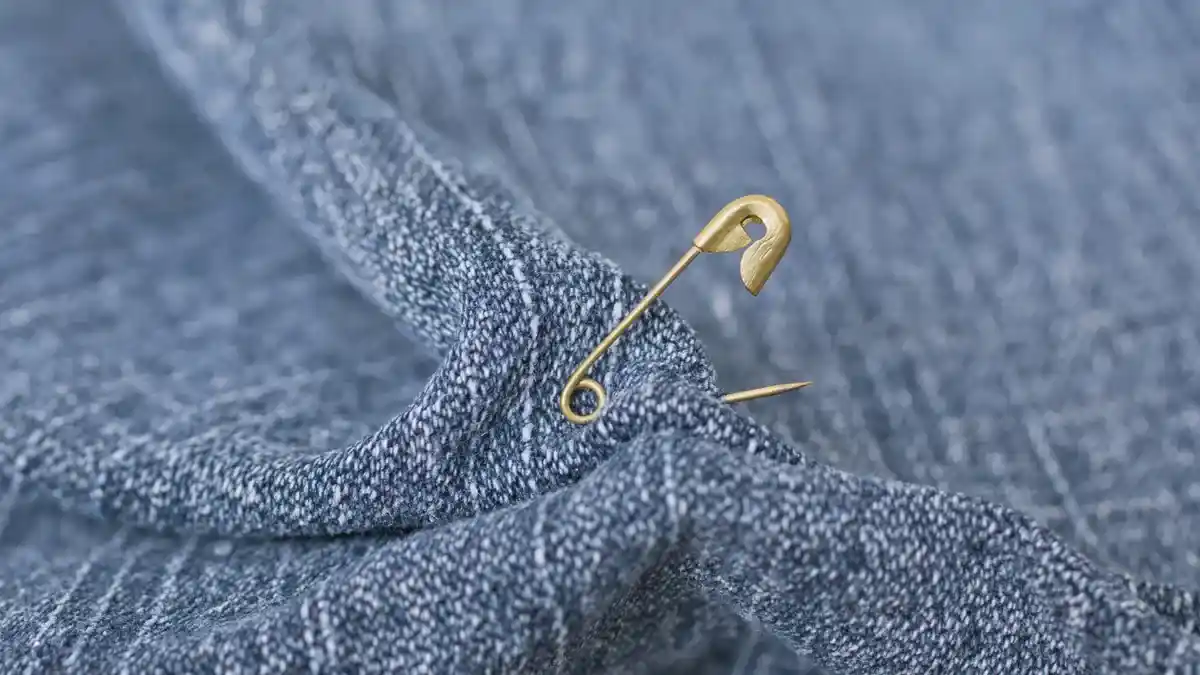
Stretch percentage tells you how far a fabric extends, and recovery tells you how well it springs back after being stretched. Both matter, and recovery is the one people ignore until the neckline waves, the knees bag out, or the hem ripples after one wear. A fabric can feel very stretchy in your hand and still be a bad choice if it stays elongated.
Use this simple check before you buy. Mark 4 inches on the fabric, stretch it comfortably, and see how far that 4-inch section extends. If it reaches 5 inches, that is 25% stretch. If it reaches 6 inches, that is 50% stretch. Then let it go. If it snaps back cleanly instead of staying longer, the recovery is decent.
For most sewing decisions, a fabric with good recovery is more useful than one with extreme stretch. That matters especially for necklines, cuffs, waistbands, and any place that must keep its shape. Poor recovery is also a clue that the fabric may be too worn-out, too thin, or overloaded with elastane that has lost resilience.
This is where a stable knit can be the smarter choice. A stable knit has less stretch than a very loose jersey or a high-stretch performance knit, but it often behaves better in structured tops, skirts, and garments that should skim the body rather than cling to it. If the pattern expects moderate stretch, choose a stable knit only if the design has enough ease built in.
For a deeper sourcing route, the FabricLink Network’s knit fabric references and the testing language used in standards such as ASTM D2594 for stretch and recovery are useful points of comparison. The exact lab method is more formal than home sewing needs, but the terms help you read product descriptions with less guesswork. The ASTM standard is a useful reference point, while the FabricLink Network provides fabric-family descriptions that help compare options before you buy.
Which knit type fits the garment: jersey, rib knit, or stable knit?
Jersey is often the most versatile starting point, rib knit gives more stretch and grip, and a stable knit gives shape with less cling. That is the practical difference that matters when you are choosing fabric for a stretch sewing project.
Jersey is common for T-shirts, dresses, and pajamas because it drapes well and is easy to find in cotton, cotton blends, rayon blends, and spandex blends. It usually has enough stretch for everyday knit garments without feeling overly compressed. The downside is that some jerseys curl at cut edges and can grow if the fiber blend has weak recovery.
Rib knit stretches more and hugs the body more closely. It is a strong pick for cuffs, neckbands, waistbands, baby clothes, and fitted tops where you want the fabric to grip without a separate elastic. The trade-off is that rib knit can be less forgiving on a garment that should hang cleanly; it can look too close-fitting if you use it where jersey would have drape.
Stable knits sit between woven-like structure and knit comfort. They are useful for pencil skirts, more tailored knit dresses, and tops that need body without cling. They are not the right answer for every pattern that says “stretch fabric,” because some designs need more elasticity in the neck or hip than a stable knit provides.
If you are choosing between jersey and rib knit for the first time, ask what the garment needs to do at the edge. A neckband needs resilience. A relaxed tee body needs drape. A cuff needs memory. That is often a better filter than fiber content alone.
How to judge stretch fabric in the store without guessing
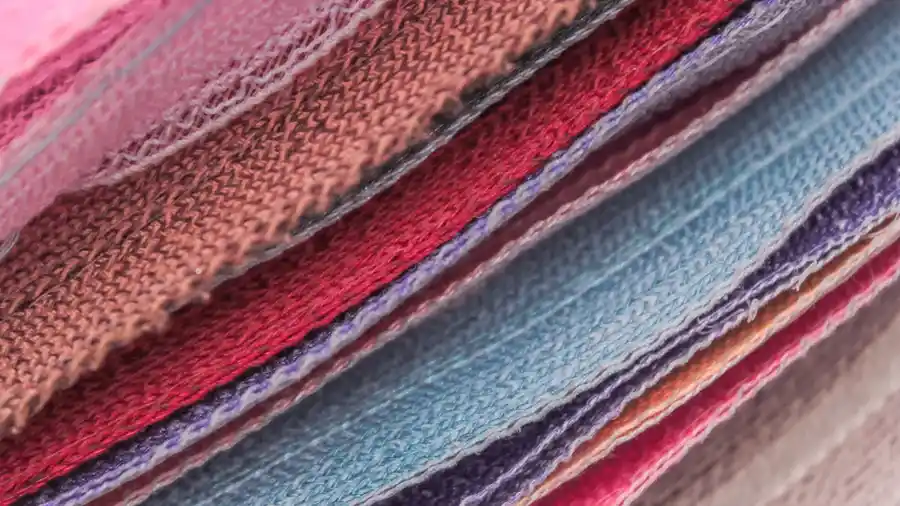
Choose the fabric only after you have checked stretch, recovery, thickness, and drape in your hands, not just from the shelf tag. A bolt label that says “jersey” or “spandex blend” tells you very little by itself.
Use this order:
- Hold the fabric at the intended garment orientation. If the print has a clear direction, test stretch across the width and length separately. Many knits stretch far more across the crossgrain than along the length, and the wrong direction can destroy fit.
- Pull a 4-inch section to compare the stretch percentage with the pattern’s requirement. If the garment needs around 20% and your sample only reaches 22% or 25%, that can work; if it barely moves, it is the wrong fabric.
- Release it and watch for rebound. Good recovery means the fabric returns quickly and does not stay rippled or elongated.
- Pinch the cloth and hold it to the light. If it becomes very sheer when stretched, plan for a lining, a doubled layer, or a different fabric weight.
- Drape a small section over your hand or arm. If it collapses in a limp puddle, it may be too fluid for a crisp fitted garment. If it stands away stiffly, it may fight the pattern.
What should you see when this works? A fabric that stretches enough for the pattern, springs back without distortion, and has the weight to support the garment shape. That combination matters more than color or print.
This is also the point where content and fiber blend stop being enough. Cotton jersey, rayon jersey, bamboo jersey, polyester spandex, and modal blends can all behave differently even when they share the same family name. The bolt label is a clue, not a verdict.
Match stretch fabric to garment fit
Use more recovery and more controlled stretch when the garment needs to fit close to the body, and choose drapier or less elastic fabric when the design has ease built in. That is the fit decision most beginners miss.
A fitted T-shirt needs enough stretch to go over the head and enough recovery to keep the neckline and hem from waving. A fabric with around 20% to 30% stretch is often a reasonable starting point for many tees, though the exact pattern may call for more or less. A ribbed neckline band is often there for a reason: it helps the opening recover after dressing.
Leggings, athletic wear, and dancewear are stricter. They need stretch plus strong recovery because the garment is under repeated movement at the knees, seat, and waistband. A weak jersey may fit at first and then bag out in one wear cycle.
For looser tops, simple cardigans, or relaxed dresses, a fabric with less stretch can still work if the silhouette has enough ease. In those cases, overbuying stretch can cause a garment to cling where it should skim. A stable knit often shines here because it gives comfort without collapsing into a second skin.
The wrong fabric choice usually shows up in one of two ways: the garment is hard to put on, or it fits on day one and drifts out of shape by day two. If you want a project that keeps its lines, choose recovery as seriously as stretch percentage.
The mistakes that cost the most time
The most expensive mistakes are choosing fabric by feel alone, ignoring recovery, and assuming all jersey behaves the same. Each one can waste pattern time, thread, and a full afternoon of sewing.
Buying on stretch alone is the classic trap. A fabric that feels very elastic can still be wrong if it does not rebound. The result is sagging hems, loose elbows, and necklines that stretch out after sewing. The fix is simple: do the 4-inch stretch check and let go of the fabric before you buy.
Ignoring fabric weight causes another problem. A very thin stretch fabric may technically meet the stretch percentage, but it can be too sheer or too limp for the garment. That is especially risky in leggings, close tops, and dresses with no lining. A slightly heavier jersey or a stable knit may be a better match.
Picking the wrong knit family is a third mistake. Rib knit at the body can make a relaxed pattern look too tight and bumpy. Jersey used where the design expects a firmer edge can relax too much. Stable knits are often safer for a clean look, but they are not a substitute for missing stretch in a pattern that needs it.
The cost is not just cosmetic. Bad stretch choice means you may have to resew neckbands, cut a new front panel, or abandon the garment after finishing the seams. That is why a 10-minute fabric check can save several hours later.
For more on how this choice fits into the bigger project, the hub on Choosing Fabric for Sewing Projects covers the broader selection process; this page stays focused on stretch fabric so the stretch question does not get buried. For related garment planning, see the guides on Choosing Fabric for Sewing Projects and How to Sew Knit Fabric.
A simple buying checklist for stretch fabric
Choose stretch fabric when it passes five checks: the pattern match, the stretch percentage, the recovery, the weight, and the garment’s fit needs. If one of those is off, keep looking.
Before you cut, ask these questions in order:
- Does the pattern call for jersey, rib knit, stable knit, or a similar stretch fabric?
- Does the fabric stretch enough for the pattern, usually checked against a 4-inch sample?
- Does it spring back instead of staying lengthened?
- Is it opaque enough for the intended garment, or will it need lining?
- Does the drape suit the silhouette: close, relaxed, or structured?
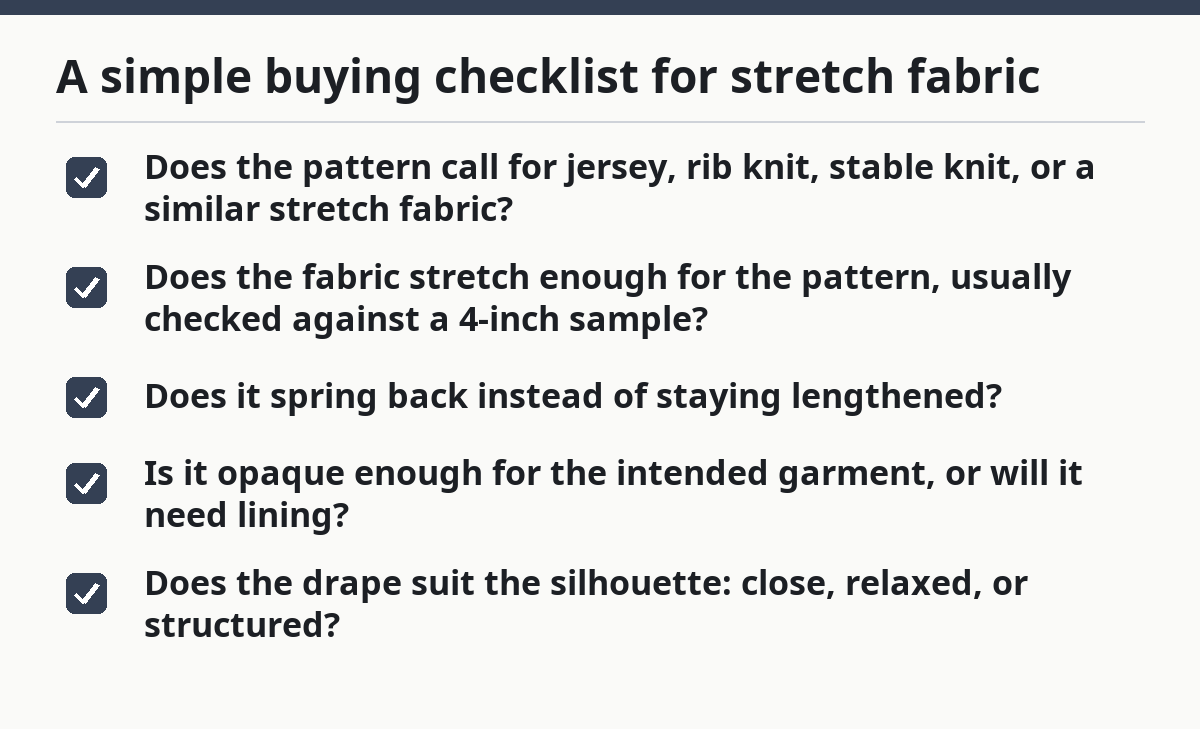
A fabric that answers yes to all five is usually a safe choice. A fabric that misses one point may still work only if the pattern is forgiving. A fabric that misses stretch and recovery is the wrong candidate, even if the print is perfect.
When in doubt, keep a swatch card. A 6-inch square with a note about stretch, recovery, and fiber blend is more useful than memory. After a few purchases, patterns will start to connect to fabric behavior instead of just fabric names.
Key takeaways
- Stretch fabric choice is really a fit decision, not a color or print decision.
- Stretch percentage tells you how far the fabric extends; recovery tells you whether it bounces back.
- Jersey is a versatile starting point, rib knit gives more grip, and stable knits help when you want less cling.
- A fabric that stretches a lot but stays elongated is a poor choice for necklines, cuffs, and fitted hems.
- The fastest way to avoid a mistake is to compare the pattern’s need to the fabric’s real behavior in your hands.
What stretch percentage do I need for a T-shirt?
A T-shirt usually needs moderate stretch, often somewhere around 20% to 30%, but the pattern controls the final answer. The key is whether the fabric can pass comfortably over the head and still recover at the neckline and hem. If the pattern is close-fitting, it may need more. If it is boxy, less may work.
Is jersey easier than rib knit?
Jersey is often easier for a first garment because it is more versatile and often less clingy than rib knit. Rib knit is very useful, but it can hug the body more tightly and show fitting issues more clearly. For a plain T-shirt or casual dress, jersey is often the simpler starting point.
How do you measure fabric stretch?
Measure a 4-inch length of fabric, stretch it comfortably, and compare the new length to the original. If the 4-inch section reaches 5 inches, that is 25% stretch; if it reaches 6 inches, that is 50% stretch. Then let go and check whether the fabric returns to its original size without staying distorted.
Drafted with AI; not yet reviewed by a person.