Last updated: November 18, 2026
Quick answer: In most cases, skipped stitches come from a needle, thread, fabric, or timing mismatch, and a fresh needle plus rethreading the top path is the first test to try.
Skipped stitches usually mean the needle, thread, fabric, or stitch timing is not matching up. The usual first fix is to replace the needle, then rethread with the presser foot up, then test on a stable woven scrap before touching anything more complicated.
Key takeaways
- A dull, bent, or wrong-size sewing machine needle is a common cause of skipped stitches.
- Thread that is too thick, fuzzy, old, or routed badly can keep the loop from forming at the needle’s eye.
- Stretch fabric needs a different needle and a steadier setup than tightly woven cotton.
- Presser foot pressure matters more than many people think, especially on jersey, knit, and slippery fabric.
- If the problem started suddenly and nothing else changed, needle damage or a threading mistake is more likely than timing.
- Timing issues are real, but they are usually the last thing to blame after the simple fixes fail.
What skipped stitches actually mean on your seam
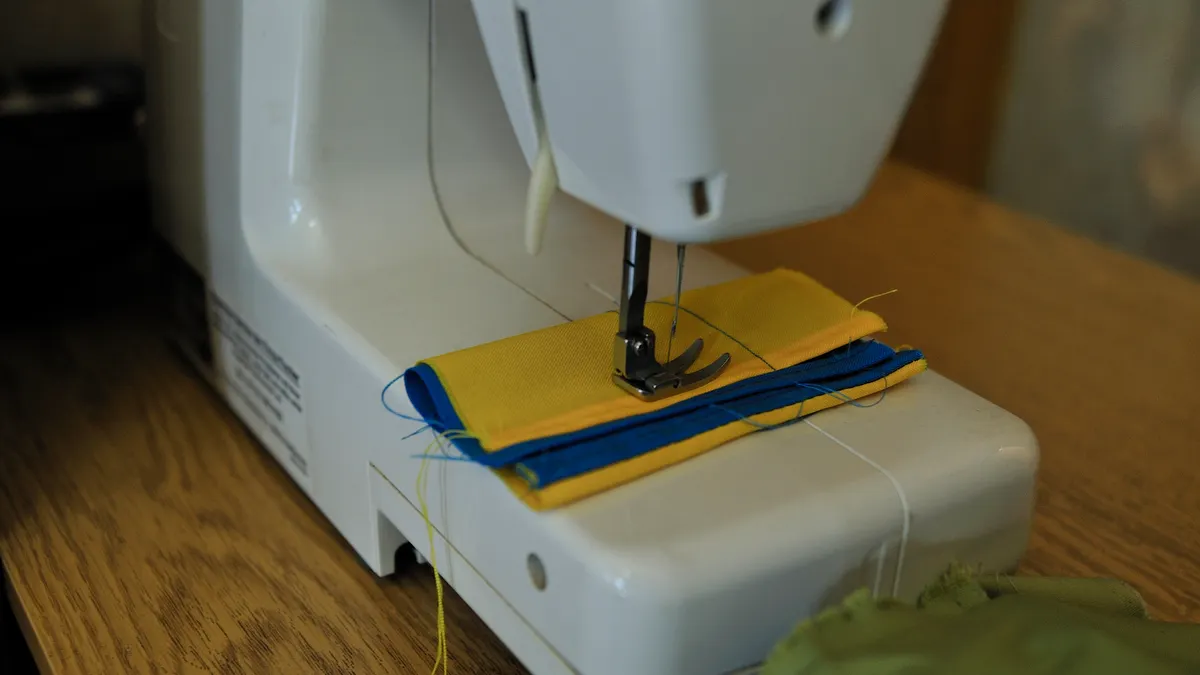
Skipped stitches mean the needle is not catching the bobbin thread on every cycle, so the seam has gaps instead of a steady line of stitches. On most home machines, that points first to a needle problem, then to thread or fabric handling, and only after that to timing.
A skipped stitch is not the same thing as tangled thread under the fabric. This page stays with skipped stitches only, because the fix is different. If your seam looks fine on top but is looping underneath, that is another problem entirely and belongs on a different troubleshooting page. The same goes for beginner setup questions like threading from spool pin to take-up lever; the hub page on sewing machine basics for beginners can handle that foundation.
The first clue is where the gap appears. If the machine skips on thick seams, on jersey, or only when turning a corner, the fabric is often part of the story. If it started right after a needle change, after sewing over a pin, or after the machine hit a thick ridge, the needle is usually the first suspect. If it skips on every fabric with multiple needles, then the issue may be deeper.
A practical rule is to start with the cheapest, fastest fixes before assuming the machine needs service. A pack of standard needles costs little compared with a repair visit, and it solves many skipped-stitch complaints. The rest of this guide follows that order.
Why is my sewing machine skipping stitches?
The most common reason is a bad needle, and a fast fix is to replace it with the right type and size for the fabric. If the new needle does not solve it, rethread the top path and then check the fabric and presser foot settings.
Here is the order I would use:
- Change the needle first. Put in a fresh needle that matches the fabric. For ordinary woven cotton, a universal needle in size 80/12 is a common starting point. For knits, try a ballpoint or stretch needle instead. If the old needle is bent, dull, burred, or slightly hooked, the point can miss the loop of thread that forms behind it.
- Install the needle fully and in the right direction. On many home machines the flat side faces the back, but the exact orientation depends on the model. A needle that is even slightly mis-seated can skip under load.
- Rethread the top thread with the presser foot raised. Raise the foot so the tension discs open, then thread again from spool to needle. A thread path that looks fine can still leave the thread sitting outside a guide or tension disc.
- Swap to a fresh, suitable thread. Old or fuzzy thread can shed fibers and behave erratically, especially through a fine needle. A 40 wt polyester or all-purpose thread is a safer test than a novelty thread.
- Test on a plain woven scrap. Sew 10 to 15 cm on two layers of cotton. If the stitches are even there, the machine is probably fine and the problem is fabric-specific.
- Try a different presser foot pressure or foot type if your model allows it. Lightening the pressure on knits can help the fabric feed without lifting off the needle plate, while a walking foot can help with layered seams.
- If the problem persists on several fabrics and with several needles, suspect timing or a worn hook area. That is the point where service makes more sense than more guessing.
The logic behind the order matters. A skipped stitch is often a small mechanical mismatch, not a deep failure. Changing only one thing at a time helps you see what actually fixed it.
Needle problems: bent, dull, wrong size, or wrong type
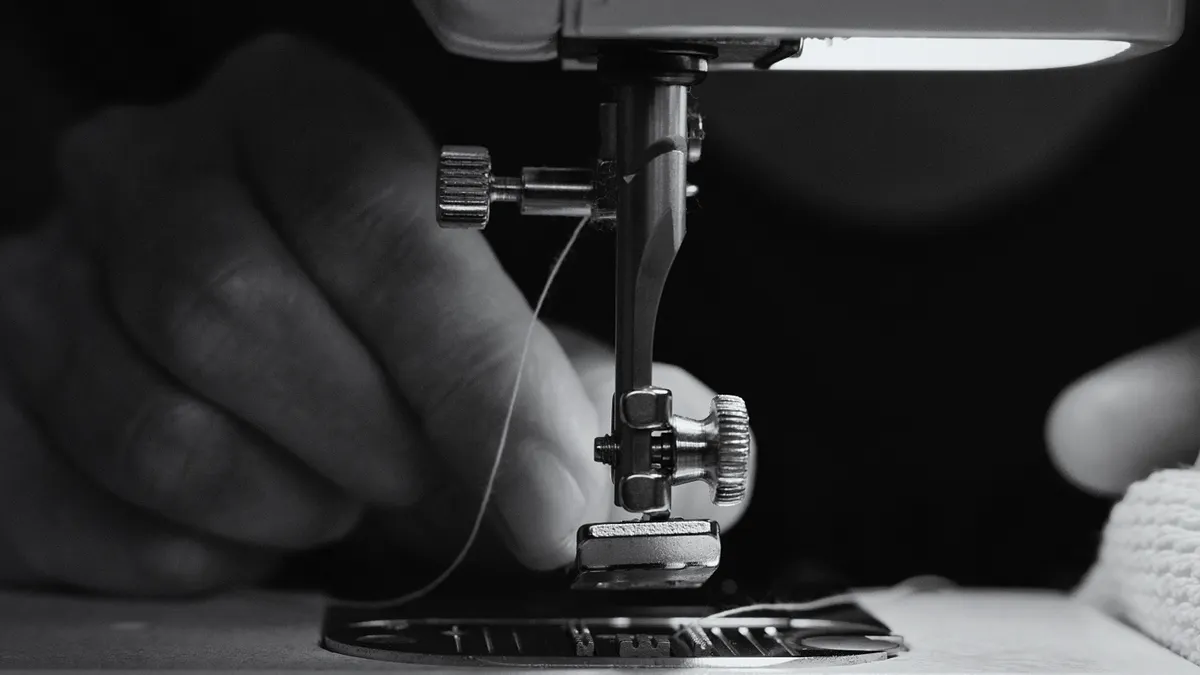
A bent or dull needle is a top suspect, and a wrong needle size is close behind. A needle that does not suit the fabric can still pierce it, but it may not form the thread loop the hook needs to catch.
This is the section most generic advice gets wrong: it says “change the needle” without explaining what kind or why. The point is not just to use a new needle. It is to use a needle whose shaft, point, and eye suit the job.
A few needle clues are easy to spot:
- Bent needle: Look at it from the side on a flat surface. If it wobbles, replace it.
- Dull point: The needle may look fine but leave tiny holes, chatter, or intermittent skips.
- Wrong size: A very fine needle, such as 60/8, can struggle with heavier thread or dense fabric. A heavy denim needle may punch through lightweight voile but leave larger holes than you want.
- Wrong type: A universal needle often works on woven fabric. On jersey, a ballpoint or stretch needle is usually better because it pushes between loops instead of cutting them.
The cost of ignoring this is not just skipped stitches. A bad needle can damage fabric, fray thread, and stress the hook. That is why replacing the needle is the first fix, not the last resort.
One honest limit: needle changes will not solve every skipped stitch. If the seam skips only on ultra-slippery synthetic fabric, only on a thick hem, or only on one side of a decorative stitch, the needle may be right and the setup may still be wrong. But even then, the needle should still be the first thing to rule out.
For a dependable reference on needle styles and application charts, Schmetz publishes fabric-and-needle guidance, and the American Sewing Guild also discusses needle selection in practical terms. Those sources are useful because they separate needle point from needle size instead of treating all needles as interchangeable, and a sewing professional can help if the right match is still unclear.
Thread and threading mistakes that cause skipped stitches
Thread can cause skipped stitches when it is too thick, too fuzzy, too weak, or not seated properly in the tension path. The fix is to rethread with the presser foot up, use a smoother thread, and make sure the needle eye matches the thread weight.
A thread that works in one project can fail in another. Metallic thread, very old cotton thread, and linty bargain thread all behave differently as the needle moves up and down. If the thread cannot travel cleanly through the needle eye and take-up system, the hook may miss the loop it needs.
Common threading-related causes include:
- The thread missed a guide.
- The thread did not sit fully in the tension discs.
- The needle was threaded from the wrong side for that model.
- The top thread is too heavy for the needle eye.
- The spool is snagging and adding drag.
The simple fix is to start over rather than guess. Remove the thread, raise the presser foot, and thread from the spool again, watching each guide one by one. If the machine uses a horizontal spool pin, check that the spool cap is the right size and that the thread unspools without jerking. If the thread catches hard every few stitches, that drag can show up as skipped stitches on the fabric.
A practical test: thread the machine with a basic polyester all-purpose thread and sew on two layers of medium cotton. If the seam cleans up, the original thread was likely part of the problem. If the same skip appears with a plain thread, move on to the fabric and needle pair.
The trade-off here is simple. Fancier threads can look better on the spool and worse in the seam. If the project does not need metallic sheen, embroidery softness, or extra loft, a standard thread is easier to diagnose and far less frustrating.
Why skipped stitches show up on knit, stretch, or slippery fabric
Stretch fabric skips stitches because it moves, stretches, and springs back while the needle is trying to form a loop. The fix is usually a stretch or ballpoint needle, lighter presser foot pressure if your machine allows it, and steadier fabric support.
Knit fabric is the classic troublemaker. Jersey, rib knit, interlock, and other stretch fabrics can all distort under the foot. When the fabric lifts with the needle or shifts away from the throat plate, the hook may miss the thread loop. The stitch then disappears, even though the needle pierced the cloth.
What helps most:
- Use a stretch needle or ballpoint needle rather than a universal needle.
- Lower the presser foot pressure slightly if the machine allows it. Too much pressure can stretch the knit flat; too little can let it ride up with the needle.
- Support the fabric with both hands, but do not pull it from behind the needle.
- Sew on a scrap of woven stabilizer or tissue if the knit is especially loose.
- Shorten the stitch only if the fabric is tunneling or stretching; a very tiny stitch can make diagnosis harder.
Slippery fabrics can create a different problem. Satin, chiffon, and some coated synthetics slide before the hook can pick up the loop. In those cases, a fine, sharp needle may work better than a ballpoint, and a walking foot or temporary stabilizer can keep layers aligned.
This is where many generic guides stop too early. They blame “fabric” as if that were the end of the answer. It is not. The useful answer is that fabric changes the relationship between the needle, thread, and feed dogs, and that relationship can usually be corrected with the right needle and pressure setting.
If your machine skips only on one fabric type and sews cleanly on cotton, that is a strong sign the machine itself is not broken.
When to suspect timing or a deeper mechanical issue
Timing is the likely cause when fresh needles, correct thread, and ordinary woven fabric still produce skipped stitches across multiple settings. The fix is not a user-level tweak on most home machines; it usually means service by a technician.
Timing is the alignment between the needle’s movement and the hook that catches the upper thread. If that relationship is off by even a small amount, the hook can pass the needle too early or too late, and the stitch will miss. This often follows a hard hit: sewing over a pin, forcing thick denim through without the right needle, or jamming the needle into the plate.
Signs that point beyond the usual fixes:
- The machine skips on several fabrics with several new needles.
- The skip appears no matter how carefully the machine is threaded.
- The needle struck metal and immediately afterward the seam started skipping.
- The machine makes unusual noise along with the skipped stitches.
- The problem appears in straight stitch, zigzag, and other basic settings.
At this stage, do not keep forcing the fabric through. That can bend the needle bar, nick the hook, or make the repair more expensive. A technician can check hook timing, presser foot height, and the needle-to-hook relationship with the proper tools.
This is also the right point to admit the limit of DIY troubleshooting. A page like this can rule out the common causes quickly, but it should not pretend that every skipped stitch is a minor adjustment. Some are. Some are not.
For a general maintenance standard, many machine manuals recommend periodic cleaning around the bobbin area and checking for lint buildup. If your manual or brand support page names a service interval, follow that instead of guessing.
A quick way to narrow the cause in under 10 minutes
A quick diagnosis in under 10 minutes is possible if you change the needle, rethread the top path, and test on a stable cotton scrap before you touch anything else. That sequence usually tells you whether the problem is the needle, the thread path, the fabric, or something deeper.
Use this short process:
- Install a fresh needle. Start with a new universal 80/12 for woven cotton or a stretch needle for knit fabric.
- Rethread the machine with the presser foot up. Make sure the thread seats in every guide and tension point.
- Switch to basic thread. Use a plain all-purpose polyester thread if you have been using something specialty or old.
- Sew 10 cm on a woven scrap. Cotton broadcloth or quilting cotton is a good test fabric because it is stable and predictable.
- Sew the same test on your project fabric. If the issue appears only on the project fabric, the fabric or presser foot settings are the clue.
- Change only one variable at a time. Move from needle to thread to fabric so you can tell what mattered.
- Stop if the machine still skips on plain woven fabric after two needle changes. That pattern is less likely to be a fabric problem and more likely to need service.
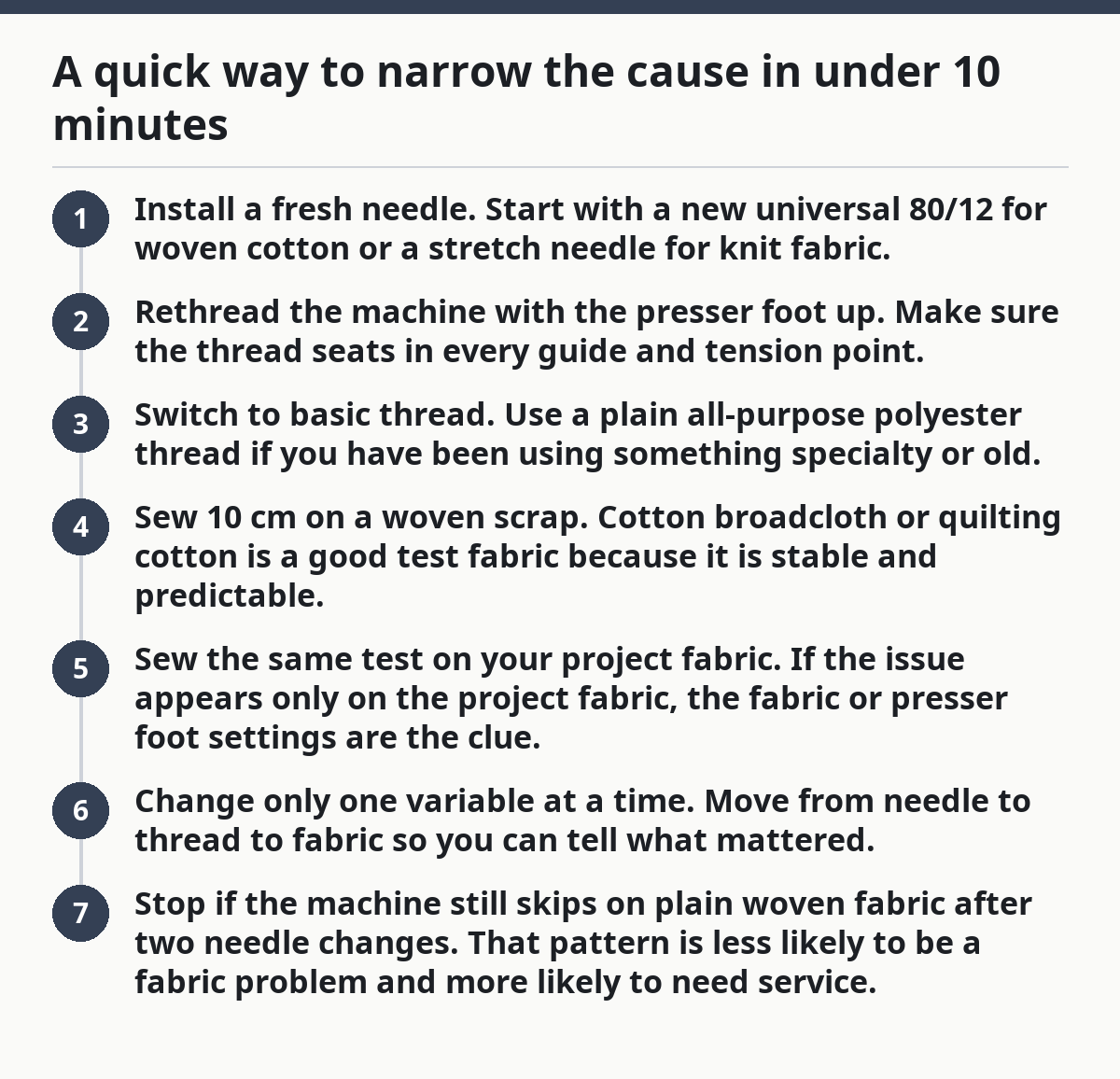
The main advantage of this approach is that it avoids random tinkering. The main drawback is that it requires patience, which saves time here because it keeps you from changing three things at once and never knowing which one fixed the seam.
If you need the basics of setup before you start, the hub page on sewing machine basics for beginners is the right companion piece. This guide assumes the machine is already threaded and ready to troubleshoot.
Drafted with AI; not yet reviewed by a person.