Last updated: November 19, 2026
Quick answer: a 4-inch sample is enough to spot shrinkage before sewing. Fabric shrinkage test tells you a lot before the first cut. If the fabric changes after a wash-and-dry test, it will likely shrink again unless you prewash or change care. How to Tell If Fabric Shrinks Before Sewing starts with a marked sample, then a wash, then a dry. The steps below show how to check fiber content, test a sample, and decide what to do next.
Fabric shrinkage test: what you need to check first
The fabric itself gives the first clue, and the care label gives the second. Fiber content matters because cotton, linen, wool, and rayon often behave differently from polyester, but the label is the place to see how the maker expects the cloth to be washed and dried.
Picture this: you’re holding a yard of fabric in one hand and a pattern in the other, trying to avoid a ruined first sew. The answer starts with fiber content, care label, and a quick test.
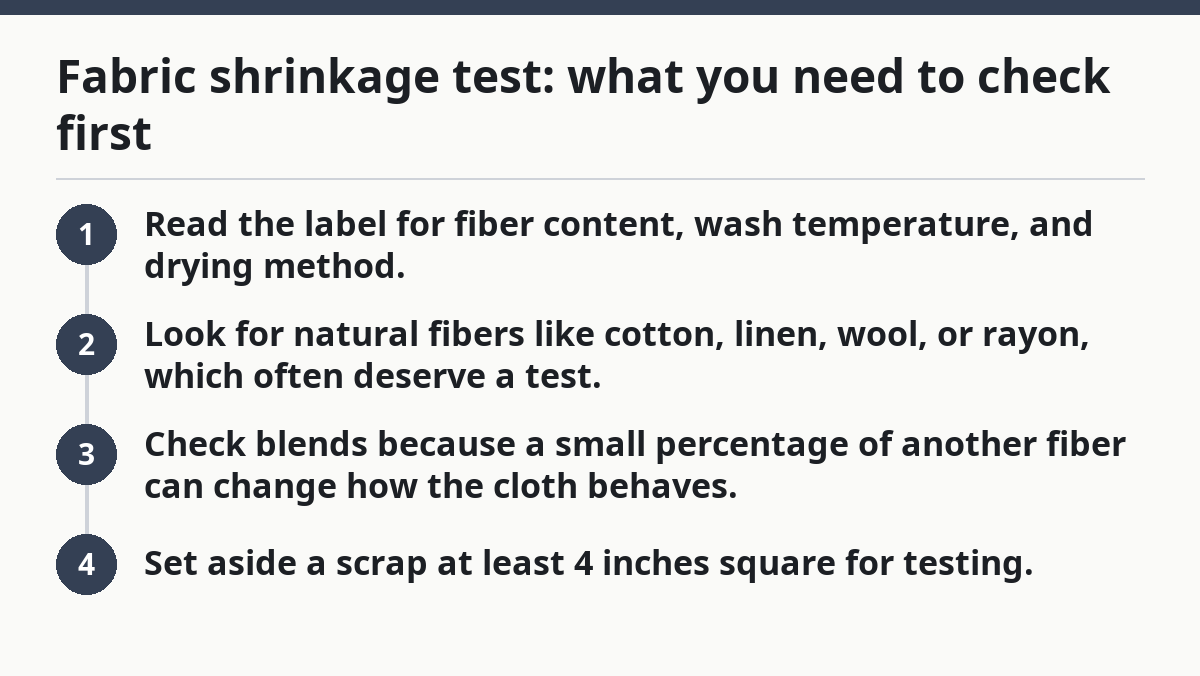
- Read the label for fiber content, wash temperature, and drying method.
- Look for natural fibers like cotton, linen, wool, or rayon, which often deserve a test.
- Check blends because a small percentage of another fiber can change how the cloth behaves.
- Set aside a scrap at least 4 inches square for testing.
- Cotton and linen often shrink more than polyester.
- Wool can shrink and felt if washed or dried too hard.
- Rayon can change size and drape after water exposure.
The best part is that you do not need a full yard to find out. A small square can tell you enough to decide whether the fabric is safe to cut first.
How do I test fabric shrinkage at home?
You test fabric shrinkage at home by washing and drying a marked sample, then checking whether its size changed. The method is simple, but it works only if you measure before and after with the same tools and the same drying method. For more on fabric prep, see the sewing fabric guide and prewash fabric tips.
Picture this: you’ve got a small scrap, a ruler, and a washer. You’re not guessing anymore — you’re making the fabric show its hand in one wash.
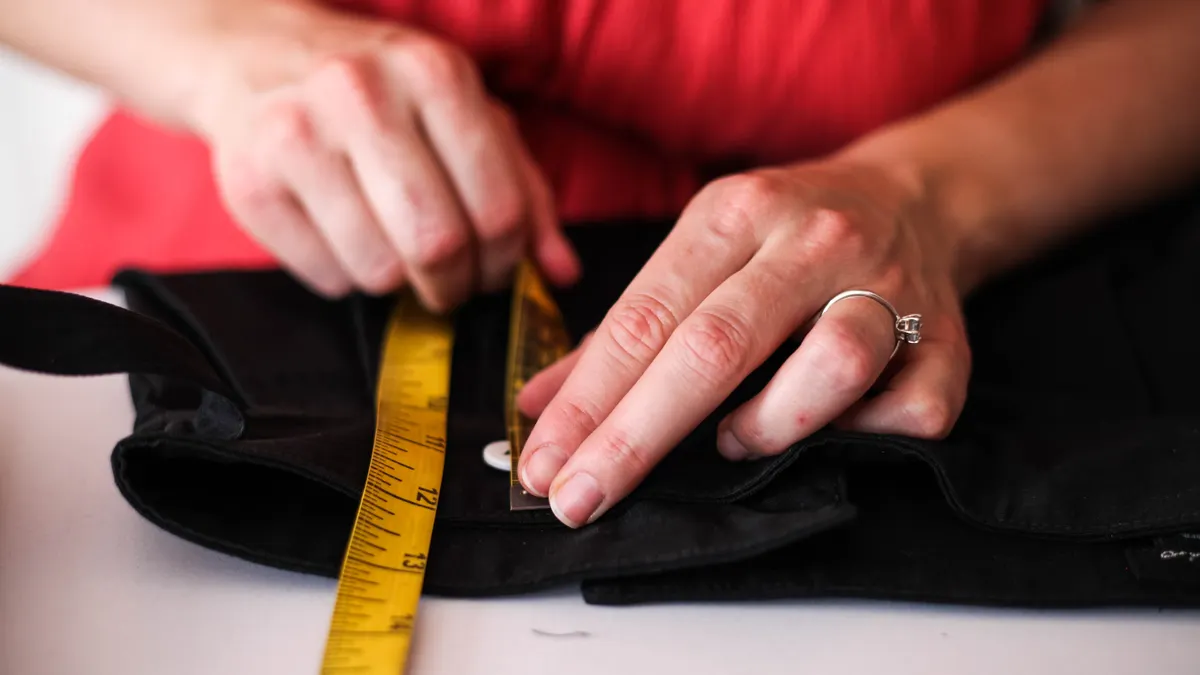
- Measure a square with a ruler and mark the corners with chalk or a washable pen.
- Record the size in inches or centimeters before washing.
- Wash the sample on the same cycle you plan to use later.
- Dry the sample the same way you expect to care for the finished item.
- Measure again after it is fully dry.
- Compare the numbers to see if the fabric got smaller.
A small change on a 4-inch square can still matter on a garment panel. If the sample pulls in, curls, or feels denser after drying, that is your warning sign.
What to watch for in the wash test
The test is not just about length and width; it also shows texture changes. A sample that comes out puckered, stiffer, or fuzzy may have more risk than the numbers alone suggest.
- Cotton may tighten and lose width.
- Linen can shrink and wrinkle more after water.
- Wool can shrink fast if agitated.
- Rayon may distort or grow limp before it changes size.
- Polyester usually stays closer to its original size.
Use the same detergent, the same cycle, and the same dryer setting you plan to use later. If you will air-dry the final item, air-dry the sample too. For fiber behavior basics, see the cotton care guide and wool care guide.
What does a drying test tell you that washing alone does not?
A drying test tells you whether heat is the bigger problem than water. Some fabrics look fine after the wash but change size, shape, or hand after a 20- to 40-minute dryer cycle. The U.S. Federal Trade Commission says care labels must show cleaning instructions, and that makes the drying step worth testing.
Picture this: the fabric comes out of the washer looking harmless, then the dryer turns it into a smaller, tighter version of itself. That second step is where surprises live.
- Wash the sample the way you plan to launder the finished piece.
- Dry it by your real method — dryer or air dry.
- Check the edges for puckering, rolling, or uneven shrinkage.
- Compare the size before and after drying.
- Note the result in inches or centimeters.
- Dryer heat can shrink a fabric that was calm in the wash.
- Air drying can still change shape if the cloth sags while wet.
- Some knits relax after washing, then tighten after heat.
On the flip side, if the sample stays nearly the same size after both steps, you have a much better read on the fabric’s behavior. That does not promise perfection, but it lowers the surprise factor. For care-label rules, see the FTC’s care labeling guidance.
Which fabrics shrink the most?
Cotton, linen, wool, and rayon are the fabrics most likely to shrink or change shape before sewing. Polyester is usually more stable, though blends can behave differently based on the other fiber in the mix. The Consumer Product Safety Commission notes that clothing labels must give fiber content, so that is the first place to look.
Picture this: you’re sorting fabric by risk before a project starts. Some bolts are calm, and some are trouble in a stack of folded yardage.
- Cotton often shrinks on the first wash.
- Linen can shrink and wrinkle heavily.
- Wool may shrink fast if washed or dried too aggressively.
- Rayon can change size and lose structure.
- Polyester usually holds size better, but blends need checking.
The catch is that fiber type is a clue, not a verdict. A tightly woven cotton may behave better than a loose one, and a cotton-poly blend may shrink less than plain cotton. The care label still matters. For label details, see the CPSC’s textile labeling guidance.
How much shrinkage means you should prewash?
Even a small change means you should think hard about prewashing before cutting. If the sample clearly gets smaller, the safest move is to treat the yardage the same way before sewing, and to consult a sewing professional or the maker if the fabric is delicate or expensive. The American Sewing Guild recommends prewashing fabric before cutting when shrinkage is likely.
Picture this: you’ve measured a 4-inch sample, and after washing it comes back visibly smaller. That is not just a lab detail — it changes seam lines, hem length, and fit.
Use this simple rule of thumb:
- No visible change: the fabric may still benefit from a careful first wash, but the risk is lower.
- Small change: prewash the full yardage the same way you plan to launder the finished item.
- Clear change: do not cut first; wash and dry the fabric before layout.
Do not skip the test just because the bolt looks stable. Fabric can surprise you after one cycle, especially with natural fibers and blends. If the fabric is for a garment or anything that must fit after washing, the test is worth the few minutes it takes. See also how to prewash fabric and fabric grain basics.
Common mistakes that hide shrinkage
The most common mistake is testing one way and caring for the fabric another way. If you wash the sample gently and then machine-dry the finished fabric on high, the test lied for you.
Picture this: you did “the test,” but you changed the rules halfway through. The result tells you almost nothing.
- Different cycle, different result — A hand-wash sample does not predict a hot machine wash.
- Half-dry measuring — Wet fabric is not done shrinking yet.
- Tiny scraps only — Very small pieces can curl and mislead you.
- Ignoring the bias — Fabric can shrink unevenly across grain and width.
- Skipping the label — The maker’s care instructions are often the clearest clue you have.
The fix is plain: match the test to the real use. Same wash, same dry, same finish. If you plan to line dry but your sample went in the dryer, the test overstates shrinkage. If you plan to tumble dry and only air-dried the sample, it understates it.
For a broader planning step, this is where the fabric and pattern selection hub fits best: it helps you compare cloth choices before you cut into yardage. See pattern selection and fabric buying tips.
What should I do before I cut if the fabric might shrink?
You should wash and dry the full yardage the same way you plan to care for the finished piece if the sample changed size or the fabric is naturally shrink-prone. That keeps seam allowances, hems, and fit from drifting after the first laundry day. If the fabric is dry clean only, ask a professional cleaner or follow the maker’s care advice before you try a home wash test, since the FTC care-label rules are based on the garment’s intended cleaning method.
Picture this: the fabric is on your table, and the scissors are nearby. This is the last checkpoint before the project becomes irreversible.
- Use the sample result to judge risk.
- Match the full fabric care to the sample test.
- Press the fabric flat after it dries so you can cut accurately.
- Lay out the pattern again after shrinkage, not before.
- Save any extra scraps for future laundry checks.
If the fabric is wool or rayon, be extra careful with heat and agitation. If it is cotton or linen, expect more change than you would with polyester. If the care label says dry clean only, do not treat a home wash test as a promise that the fabric is safe for water; consult a professional cleaner or the maker’s instructions first. For care-label basics, see the FTC guidance above and the dry clean only guide.
Key takeaways
- A wash-and-dry sample tells you more than guessing from the bolt.
- Fiber content, care label, and drying method are the three clues that matter most.
- Cotton, linen, wool, and rayon deserve the closest check.
- If the sample changes size, treat the full fabric the same way before cutting.
- The test only works when the wash and dry steps match the real project care.
How do I test fabric shrinkage at home?
You test fabric shrinkage at home by measuring a marked sample before and after washing and drying it the same way you plan to care for the finished fabric. The first reading gives you the baseline, and the second tells you whether the cloth changed. A 4-inch square is enough to start, and the FTC care-label guidance explains why matching the care method matters.
Which fabrics shrink the most?
Cotton, linen, wool, and rayon are the fabrics most likely to shrink or change shape. Polyester usually stays more stable, but blends can still move if the other fiber reacts to heat or water. The care label is the final clue when the fiber mix is not obvious, and CPSC labeling rules help identify that mix.
Should I prewash fabric if I am not sure?
Yes, if you are not sure, prewashing is the safer choice for fabric that will be laundered later. A test that shows shrinkage is a clear sign to wash the yardage first. If the fabric has a special care label, follow that care method rather than guessing, and check the maker’s instructions or a professional cleaner when the label says dry clean only.
Drafted with AI; not yet reviewed by a person.