Last updated: November 19, 2026
Quick Answer: sewing pattern ease is the extra room in a pattern, and a 2 cm to 8 cm difference at the bust can change fit a lot. Sewing pattern ease can make a garment feel fitted, boxy, or wearable before you cut a single piece. Read the finished garment measurements, then compare them to your body measurements and the kind of ease the pattern is built for. The steps below show how to tell fitting ease from design ease before you touch the scissors in How to Understand Sewing Pattern Ease Before Cutting.
Key Takeaways
- Pattern ease is the extra room built into a sewing pattern beyond your body.
- Finished garment numbers let you compare the pattern size to your measurements and the intended fit.
- Fitting ease supports movement; design ease shapes the silhouette.
- The main pre-cut measurements are bust, waist, hip, upper bust, shoulder, rise, crotch depth, and upper arm.
What pattern ease means in plain English
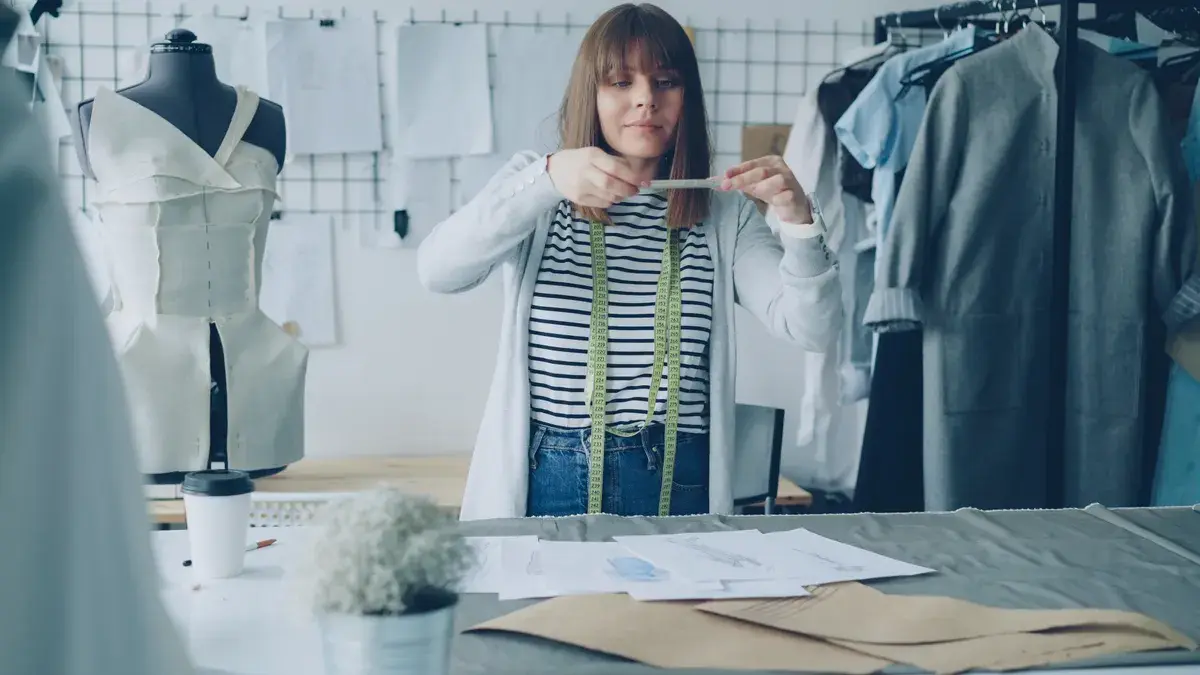
Pattern ease is the extra room built into a sewing pattern beyond the body. It tells you why a size that matches your body measurement on paper can still fit very differently once sewn.
Picture this: you hold a pattern envelope in one hand and your tape measure in the other. The bust number looks close, but the garment could still pull tight, skim the body, or hang loose depending on ease and the style line.
- Body measurements are your actual bust, waist, and hip numbers.
- Finished garment measurements are the pattern’s sewn dimensions, seam allowance excluded unless the pattern says otherwise.
- Fitting ease is the small amount needed so you can move, sit, and breathe.
- Design ease is the extra room the designer wants for shape, drape, or volume.
Here’s the catch: a pattern can match your body measurement and still feel wrong. A close-fit knit top may need only a little ease, while an oversized shirt can include a lot of extra room and still look intentional. That difference matters before cutting.
For a broader map of pattern symbols and terms, the guide to reading sewing patterns sits well beside this one. This page stays on ease, so you can judge fit without drifting into size selection or measuring your body.
How do I read finished garment measurements on a sewing pattern?
You read finished garment measurements by comparing the pattern’s garment numbers to your body numbers, then asking what kind of fit the style needs. That is often the clearest way to see whether the pattern is meant to skim, fit close, or hang with room.
Picture this: you open the pattern insert and see a chart with bust, waist, and hip measurements for the garment itself. You do not need to guess from the envelope drawing alone. The chart is the hard evidence.
- Find the chart on the envelope, instruction sheet, or online listing. Look for the words finished garment measurements or garment ease.
- Check the body points that matter for the design. A jacket may care about bust and upper arm, while pants care about hip, crotch, and thigh.
- Subtract your body number from the garment number at the same point. The leftover space is the ease.
- Read the result by garment type. A woven shirt with 6 cm of bust ease will feel different from a stretch tee with 6 cm of bust ease.
- Compare all key points, not just one. A pattern can be roomy at the hip and tight at the upper bust.
The plain math is simple. The judgment is not.
A pattern with 2 to 5 cm of ease at the bust often reads as close fitting, while a looser woven style may have much more. The exact range depends on fabric, silhouette, and the designer’s intent, so the chart matters more than the envelope sketch. If the chart is missing, treat that as a sign to be cautious and, if needed, consult a sewing professional or use a pattern with published measurements; threads and guides from Sew Over It and The Slapdash Sewist both stress checking the chart before cutting.
How do I tell fitting ease from design ease?
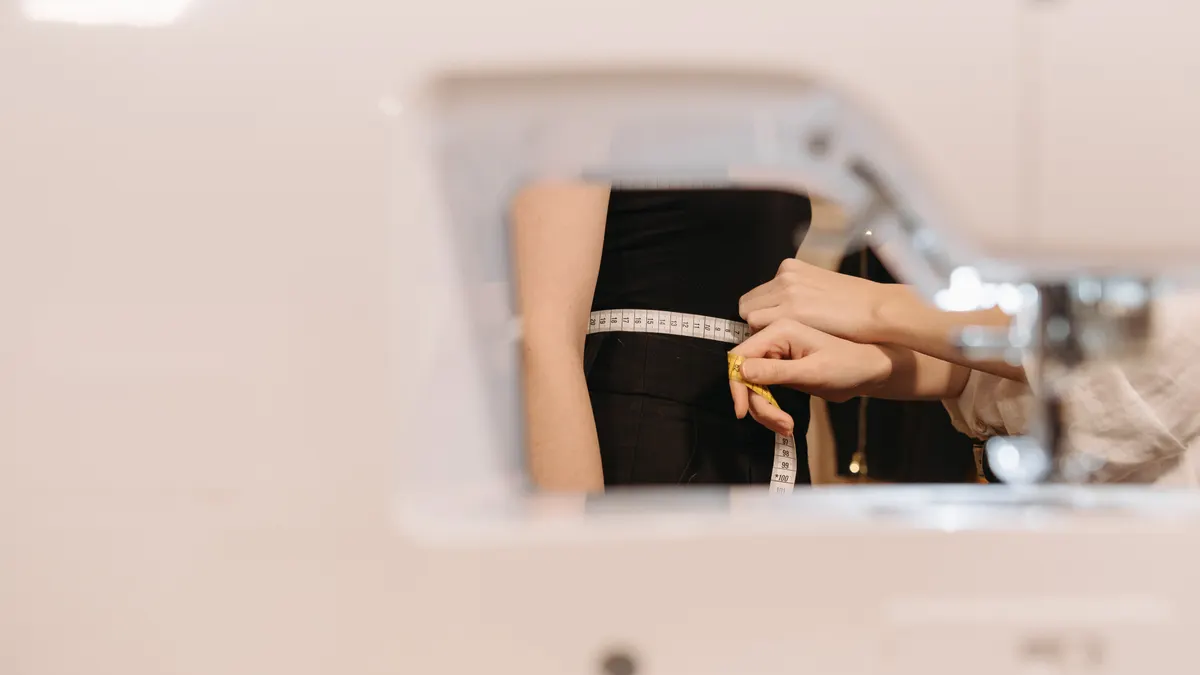
You tell fitting ease from design ease by asking what the extra room is doing. If it only lets you move, sit, and raise your arms, it is fitting ease. If it creates the shape of the garment, it is design ease.
Picture this: you slip a shirt over a blouse and the sleeves still move. That extra room is doing one job. Now picture a boxy jacket with dropped shoulders and a loose body. The extra room is part of the look.
- Fitting ease is practical space.
- Design ease changes the silhouette.
- Both can exist in the same pattern.
- The same number means different things in different garments.
A close-cut woven blouse may need enough room at the bust for breathing and movement, but the waist can still be shaped with darts. A swing top may have a much larger waist measurement and still fit well because the flare is the style. A fitted sheath dress is judged differently from a cocoon coat.
You do not need to know the designer’s whole drafting method to spot the difference. Look at where the garment is intended to touch the body and where it is meant to float away.
If the pattern has a lot of room in the body but narrow sleeves or a sharp shoulder line, that room is likely design ease, not a mistake. On the flip side, if the chart shows very little room in the bust or upper hip and the fabric is woven, that can mean the garment will feel tight even if the size matches your body number on paper.
Which measurements matter most before I cut?
The measurements that matter most before cutting are the ones the garment uses to fit the body: bust, waist, hip, upper bust, shoulder, rise, crotch depth, and upper arm. You do not need every number on every pattern, but you do need the ones that control the silhouette.
Picture this: you are about to cut a dress with princess seams. The bust and waist matter most there, while a pair of trousers puts more weight on hip, crotch, and thigh. One measurement rarely tells the whole story.
| Area | Why it matters | What to watch for |
|---|---|---|
| Bust | Tension across the chest changes the whole fit | Too little ease can pull buttons apart |
| Waist | Controls comfort and shape | Too much ease can make shaping disappear |
| Hip | Affects sitting and walking room | Not enough ease can lock the garment |
| Upper arm | Controls sleeve movement | Too little room makes sleeves bind |
| Rise / crotch | Governs pants comfort | Tightness here is hard to ignore |
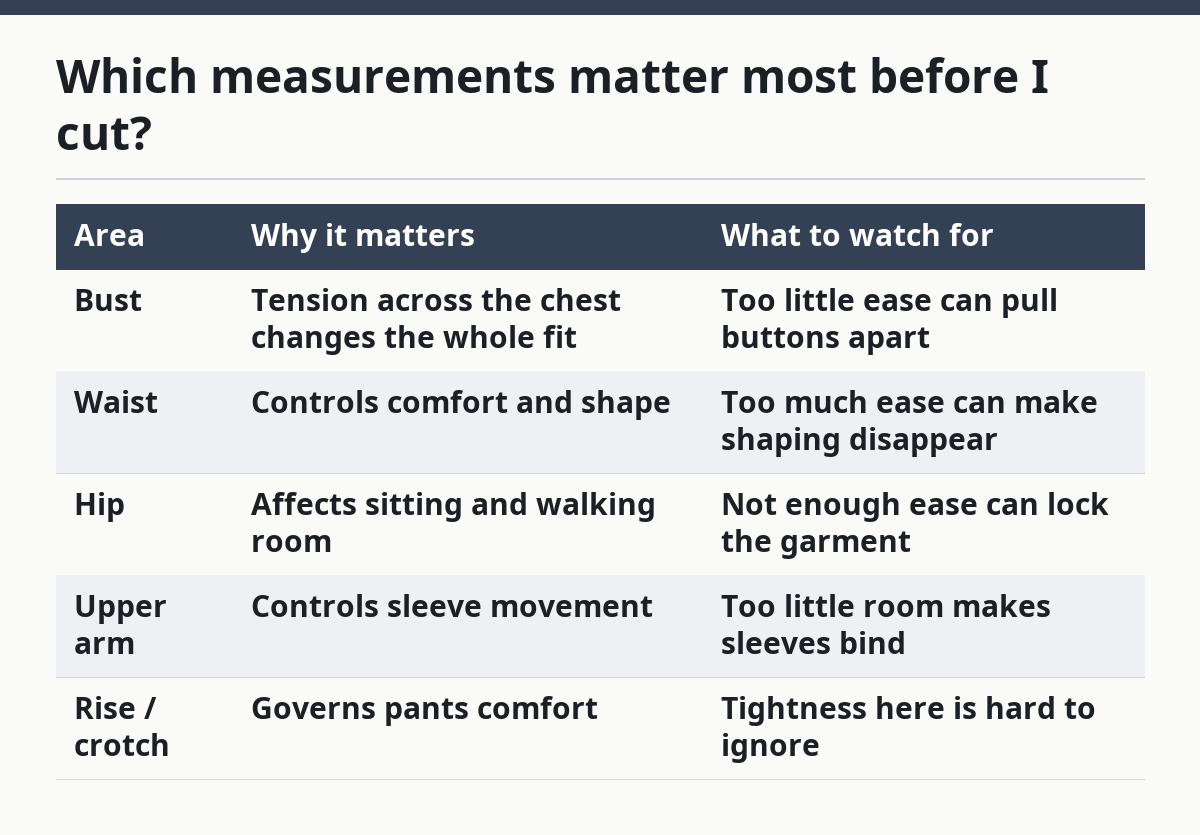
Use this chart as a filter, not a law.
- A blouse can fit the bust and still strain at the upper arm.
- Pants can fit the waist and still pull at the hip.
- A jacket can look fine front-on and still pinch when you cross your arms.
Many sewing mistakes start with checking only one line on the chart. A pattern with 5 cm of bust ease and no room in the upper arm is not a good fit just because the bust number looked friendly. When in doubt, compare the finished garment measurements against the fullest part of your body and the parts that move most.
A simple way to compare pattern ease to your body
A simple way to compare pattern ease to your body is to line up the finished garment measurements with your body measurements, then judge the difference against the garment type. That gives you a quick fit check before cutting.
Picture this: you have the chart open, your body measurements written down, and a highlighter in hand. The goal is not perfection. The goal is to spot where the garment has room and where it does not.
- Write down the garment measurement for bust, waist, or hip.
- Write down your body measurement for the same point.
- Subtract body from garment to get total ease.
- Check the fabric type named on the pattern. Wovens need more room than many knits.
- Match the result to the style line. A fitted dress, relaxed shirt, and oversized coat will not share the same ease needs.
- Inspect the close-fitting zones like shoulders, biceps, crotch, and upper back.
A quick example makes the point. If a bust garment measurement is 102 cm and your bust is 94 cm, the pattern has 8 cm of total ease at that point. That may be fine for a semi-fitted woven blouse, but it may feel roomy on a knit top. The number itself is not the verdict; the garment type is.
Ease is a fit decision, not a grade. A shirt with more room can still be the right shirt if the design calls for it. A slim top with less room can still work if the fabric stretches and the pattern is made for that stretch.
Common ease mistakes that ruin a cut
The most common ease mistakes are reading the envelope art instead of the chart, assuming your size number tells the whole story, and treating all ease the same. Each mistake costs you fit, fabric, or both.
Picture this: you cut expensive fabric because the pattern looked loose on the model. Then the first fitting shows strain at the bust or a sleeve that won’t bend. The paper looked safe. The chart was the part that mattered.
- Mistake: trusting the illustration. Cost: you may cut a size that looks right in the photo but fits wrong on your body.
- Mistake: ignoring garment type. Cost: a knit chart gets judged like a woven chart, or the other way around.
- Mistake: checking only bust or only hip. Cost: the garment fits one area and fails in another.
- Mistake: forgetting movement. Cost: you can stand in the garment but not sit, reach, or lift your arms.
- Mistake: mistaking style for fit. Cost: you call intentional volume “too big” or call tightness “tailored.”
The fix is to work from the measurement chart every time, even on patterns you think you understand. If the chart is missing, treat that as a sign to be cautious and, if the fit is important, consult a sewing professional. If the pattern is for a close-fit garment and the ease is unclear, choose a style with a published finished measurement chart or a draft that names the intended ease.
A pattern with very little ease is not bad by itself. It is only wrong when it does not match the fabric and shape you want. That is why ease should be read before cutting, not repaired after sewing.
What is ease in sewing, exactly?
Ease in sewing is the extra room in a pattern that lets a garment fit the body and move with it. It is the difference between body size and garment size, and it can be tiny or generous depending on the design.
Picture this: you pull on a shirt that sits close to the chest but still lets you breathe and reach. That small amount of room is fitting ease. A coat with extra space at the shoulder and side seam has design ease layered on top of that.
Ease shows up in the chart, the cut, and the finished silhouette.
- Fitting ease helps the garment function.
- Design ease creates the style.
- Finished garment measurements show the space in numbers.
- Body measurements show the wearer’s size, not the garment’s.
If you want the whole pattern-reading picture, this topic sits inside the larger guide to reading sewing patterns. That hub helps with symbols and structure; this page helps with fit judgment. They work together.
The short version: if you understand ease before cutting, you stop treating every pattern like a mystery. You can see whether the garment is meant to skim, shape, or hang. And that saves fabric, time, and a lot of second-guessing.
What is ease in sewing?
Ease in sewing is the extra room built into a pattern so the finished garment can fit and move. It is the difference between the body and the garment, and it changes with the style, fabric, and intended fit. A fitted blouse, for example, has less ease than a relaxed shirt.
How much ease should a pattern have?
A pattern should have enough ease for the garment to function and match its intended shape. There is no single correct amount for every project, because a close-fitting knit top, a shirt, and a coat need different amounts. The finished garment measurement chart is the best guide.
How do i tell if a pattern will be tight or loose?
You tell by comparing the finished garment measurements to your body measurements and reading the result in the context of the style. Small extra room usually means a closer fit, while larger extra room points to a looser fit or deliberate design ease. Fabric stretch also changes the result.
Drafted with AI; not yet reviewed by a person.