Last updated: November 19, 2026
Quick Answer: to estimate fabric yardage for a sewing pattern, start with the envelope chart, then adjust for fabric width, layout, nap, and print repeat; many projects need the chart amount plus 1/4 yard to 1 yard more when those factors apply. Fabric yardage estimate is the amount of cloth you need to buy for one sewing pattern. How to Estimate Fabric Yardage for a Sewing Pattern begins with the pattern envelope yardage chart, then shifts for fabric width, layout, nap, and matching. The steps below show where the chart holds and where extra fabric sneaks in.
Key Takeaways
- The pattern envelope gives the starting yardage for your exact width and layout.
- Match the chart to your fabric, then add for layout changes, nap, and print matching.
- Fabric width changes how pieces fit on the cloth, which changes yardage.
- Nap, grainline, and one-way prints can require extra yardage because they limit placement.
What the pattern envelope tells you first
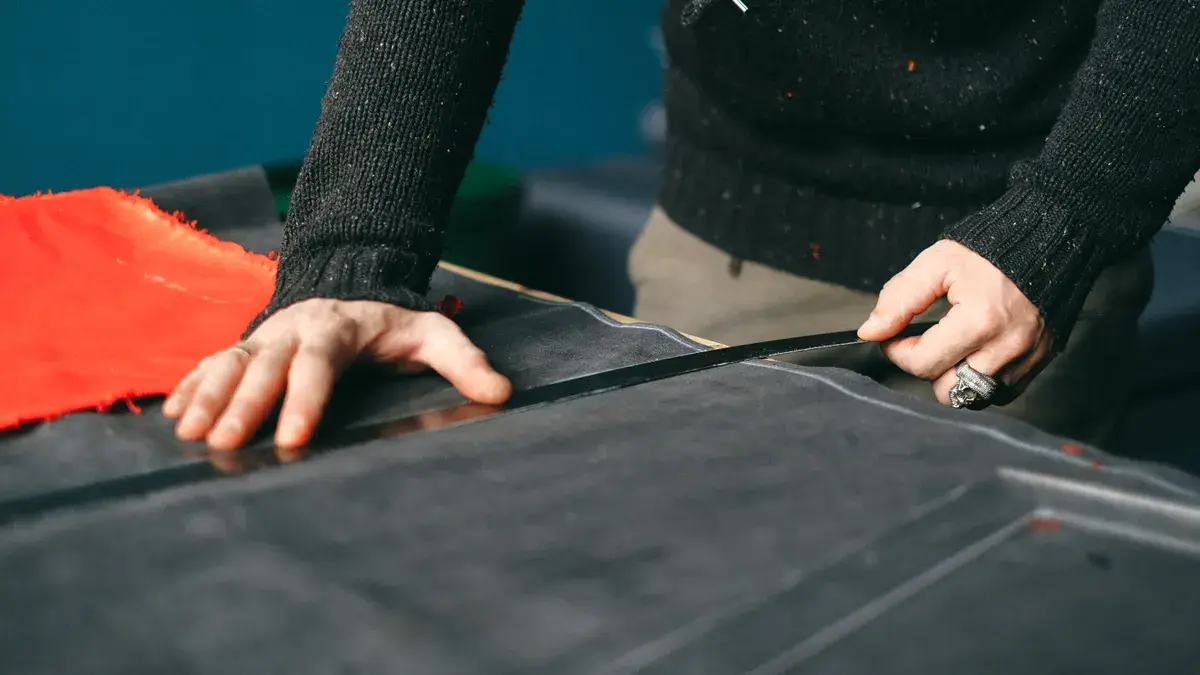
Start with the pattern envelope. It gives the base yardage for your exact width and layout.
When the chart says 44-inch fabric and your bolt is 60 inches wide, the total can change fast. That gap is not tiny.
Picture this: you’re in a shop, pattern in one hand, bolt in the other, trying to avoid a short buy. The envelope chart is the baseline; fabric width, cutting layout, and repeat can push the total up by 1/4 yard, 1 yard, or more.
- Check the size line first.
- Find the listed fabric width, usually 44/45 inches or 60 inches.
- Read the view or version you want, since one view may need more than another.
- Look for nap, pile, directional print, or one-way design notes.
Still, the envelope is a model, not a promise. It assumes a clean layout and a fabric that behaves the way the pattern writer expected.
How to estimate fabric yardage for a sewing pattern
Match the chart to your fabric. Then add for layout changes, nap, and any print matching.
That is the whole job.
Picture this: you already own the pattern, but you’re not sure if 2 1/4 yards is enough or if you should buy 3. The answer turns on fabric width, the cutting layout, and whether the cloth has a direction that forces pieces to go one way.
- Read the pattern envelope yardage chart and find your size and view.
- Measure the fabric width at the bolt or listing, using 44/45 inches or 60 inches as the key comparison.
- Check the layout diagram in the instructions and note whether it uses fold placement, single-layer cutting, or a special arrangement.
- Add extra yardage for nap, directional print, or repeat if the fabric has any one-way surface or design.
- Round up to the next 1/4 yard when the chart lands between cuts or when the print needs matching.
- Keep a small note of the final total so you buy the same amount if you need more later.
So the purchase number should be an estimate, not a guess. If the chart says 2 yards and your fabric is wider than the pattern assumes, you may still need 2 yards; if the print has a long repeat, you may need more.
What fabric width changes, and why 44 inches and 60 inches are not the same
Fabric width changes how tightly the pattern pieces fit on the cloth, and that changes the yardage. A 60-inch fabric often needs less yardage than a 44/45-inch fabric because the pieces can nest more efficiently.
Picture this: you’ve found two cottons you like, one on a narrow bolt and one on a wide bolt. The pattern chart may list both widths separately because a wide fabric can save space, while a narrow one may force extra length to make all the pieces fit.
- Use the width on the pattern chart, not the width you hope the fabric has.
- If the bolt is wider than the chart’s wide option, the chart may still be close.
- If the bolt is narrower than the chart’s narrow option, the layout may fail.
- Never assume that “wide” means less yardage for every pattern.
Honestly, width is the easiest variable to check before you buy. It’s printed on the bolt end or product page, so you can compare it before the fabric ever reaches the cutting table.
Why nap, grainline, and one-way print add extra yardage
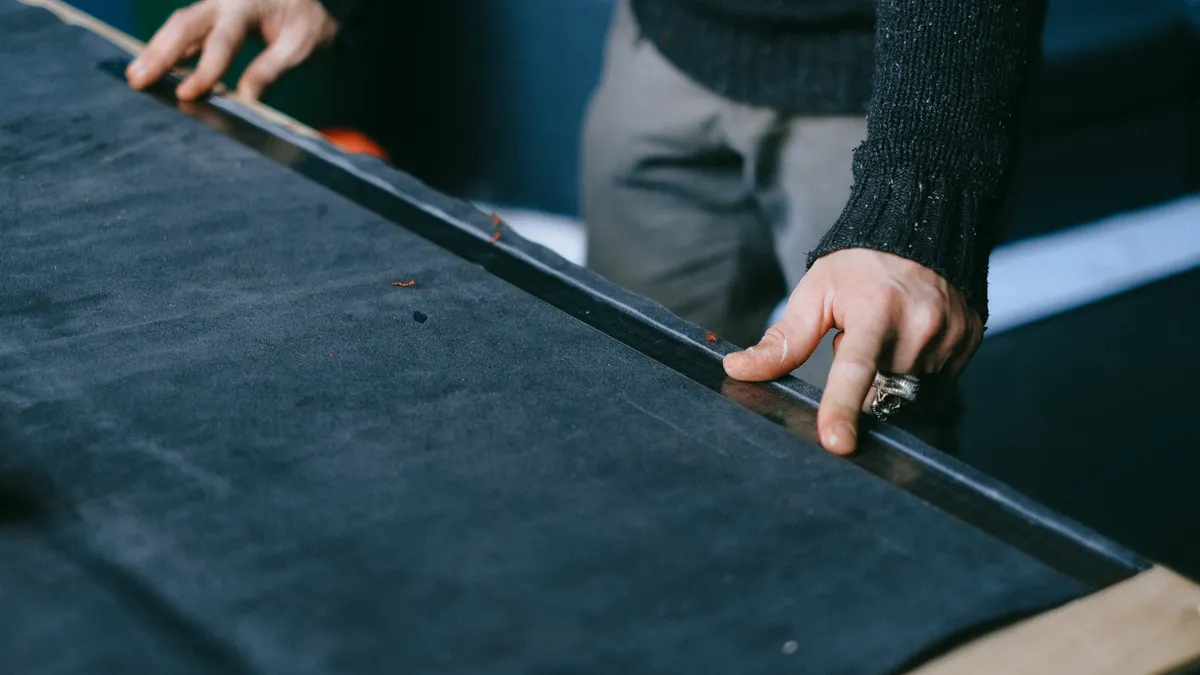
Nap, grainline, and one-way print add extra yardage because they restrict how you can place the pieces. If the fabric has nap or a directional pattern, every major piece has to face the same way, and that often stretches the layout by 1/4 to 1 yard or more.
Picture this: you’re looking at velvet, corduroy, brushed twill, or a floral print with stems pointing up. The pattern pieces may no longer fit in the neat mirrored arrangement you saw in the diagram, because the fabric has to lie in one direction from end to end.
| Fabric feature | What it does to yardage | What to do |
|---|---|---|
| Nap or pile | Usually increases yardage | Buy extra and cut all pieces in one direction |
| One-way print | Usually increases yardage | Match direction before cutting |
| Standard fabric | Usually matches the chart | Follow the envelope chart closely |
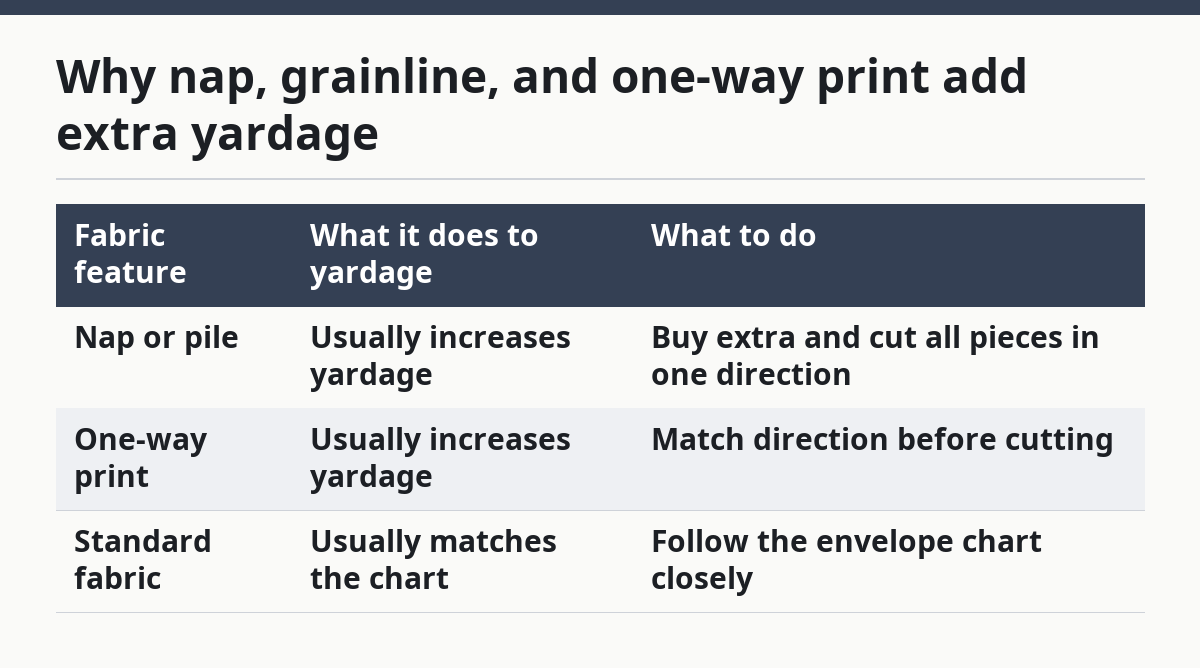
The truth is, many chart mistakes come from ignoring direction. A pattern that fits in 2 yards on plain cloth can need more once every piece must face the same way. That math stops working fast.
How do you allow for pattern repeat and matching?
Add enough length for the design to line up across seams, hems, and side pieces. Large repeats can waste more cloth than a beginner expects, especially on plaid, stripe, or border print fabric.
Picture this: you love a bold stripe or plaid, but the front, back, sleeves, and pockets all have to meet cleanly. If you buy only the base chart amount, the design may break at the side seam or sit crooked across the hem.
- Check the pattern repeat on the fabric listing if it’s shown.
- Look for plaid, stripe, border print, or large floral motifs.
- Add extra when seam matching matters at center front, side seams, or patch pockets.
- Buy a little more if the design must line up at the hem or collar.
A plain solid needs less planning than a plaid with a 6-inch repeat. If the fabric has a strong pattern and the garment has many pieces, matching can cost more cloth than the garment itself.
When should you buy extra fabric?
Buy extra fabric when the chart leaves no room for layout changes, shrinkage, or mistakes. Extra yardage is cheap insurance when the fabric is expensive, directional, or hard to replace.
Picture this: you’re making a fitted dress, a lined jacket, or anything with curved seams, and the bolt is the last one in the store. A half-yard more can save the project if you need to recut a sleeve, add length, or match a print after the first layout fails.
Buy extra when:
- The fabric has nap, pile, or repeat.
- You need matching at seams, pockets, or center fronts.
- The pattern has long sleeves, a hood, or wide hems.
- The fabric might shrink after laundering.
- You may need to lengthen the garment later.
Don’t add extra blindly when:
- The pattern already includes a generous yardage range.
- The layout is simple and the cloth is plain.
- You’re buying a very wide fabric and the chart already shows that width.
The honest trade-off is simple: extra fabric costs more up front, but too little fabric can stop the project cold. Saving a few inches is the wrong place to be stingy.
How shrinkage and cutting layout change the final number
Shrinkage and cutting layout change the final number because both can turn a paper estimate into a real shortage. If the fabric shrinks after washing, or if the layout forces odd gaps, the chart amount may no longer cover the project.
Picture this: you’ve got the exact yardage from the envelope, but the fabric will be washed before cutting or the layout requires single-layer cutting. Those two things can quietly eat into your usable length, especially on fabric that shrinks or on pieces that must be placed with the same direction.
- Wash your fabric if your project plan includes prewashing, then measure the usable length again.
- Lay out the largest pattern pieces first, because they control the rest of the placement.
- Watch for single-layer pieces, curved hems, facings, and lining sections that steal space.
- Compare the leftover scraps before you cut small pieces like pockets or cuffs.
- Revise the buy if the layout no longer fits on the cloth length you planned.
A chart can be right and still fail in the real world if the cloth behaves differently after washing or if the layout is tight. That’s why the final check matters.
A quick yardage estimate method that works at the cutting table
Use the pattern chart, then add only the factors that truly apply. You do not need a formula that pretends every fabric is the same.
Picture this: you’re in front of a cutting counter and need a fast answer before the store closes. Use the chart as the base, then ask four questions: Is the fabric width the same? Is there nap? Is the print directional? Does the repeat need matching?
- If the answer is no to all four, stay close to the chart.
- If one answer is yes, add a small cushion.
- If two or more answers are yes, buy extra rather than gambling.
- If the fabric is hard to replace, choose the larger cut.
This is the guide to fabric yardage estimate that keeps the decision simple: chart first, then width, then layout, then design matching. To avoid the two classic mistakes of buying too little or buying too much by default, consult the pattern instructions or a sewing professional when the fabric is unusual.
Sources to check on pattern sizing and fabric layout
Reliable sewing references back up the idea that yardage depends on width, layout, and fabric behavior, not on the pattern number alone. The Sewing Pattern Review community and major pattern companies often explain layout notes, while standards groups and textile references define width and directional properties.
For a deeper look, check:
- Pattern instructions from the company that issued the pattern
- Sewing reference books that explain layout and grainline
- Textile references from recognized sewing and fabric organizations
- The Simplicity pattern envelope and instruction sheets
- The Coats & Clark sewing guides for measuring and layout basics
These sources won’t give one universal answer, because there isn’t one. That’s the point.
How do I know how much fabric I need?
Start with the yardage chart on the pattern envelope and the width printed for your fabric. Then add for nap, directional print, and matching if those apply. If the chart lists more than one width, use the row that matches your fabric bolt.
What affects fabric yardage?
Fabric width, cutting layout, nap, grainline, repeat, and matching all affect yardage. Shrinkage can also change how much usable cloth you end up with after washing. A plain fabric at 60 inches often needs less than the same pattern on 44-inch cloth.
Should I buy extra fabric for a project?
Buy extra when the fabric has a directional design, a strong repeat, or a pile like velvet or corduroy. Extra yardage also helps if you may need to lengthen the garment or fix a cutting mistake. If the cloth is plain and the chart already fits your width, you may not need much more.
Drafted with AI; not yet reviewed by a person.