Last updated: November 20, 2026
Quick answer: store fabric flat, clean, labeled, and out of sun, with about 12 inches of shelf depth for a folded piece when you can. In How to Store Fabric Before You Sew It, the goal is to keep cloth usable until you are ready to cut it. Put it on a shelf, in a storage bin, or in a garment bag, then keep the pieces folded with the grain and the yardage marked so the cloth stays usable when you are ready to cut.
Key takeaways
- Keep fabric in a dark, dry place, not near a sunny window or damp wall.
- Use one storage method for the whole stack so pieces do not disappear or crease unevenly.
- Fold along the grain and avoid tight bends that leave hard lines.
- Label yardage, fiber type, and project notes before the cloth goes back on the shelf.
- Choose a storage bin, shelf, garment bag, or fabric bolt based on how long you will wait to sew.
What is the best way to store fabric?
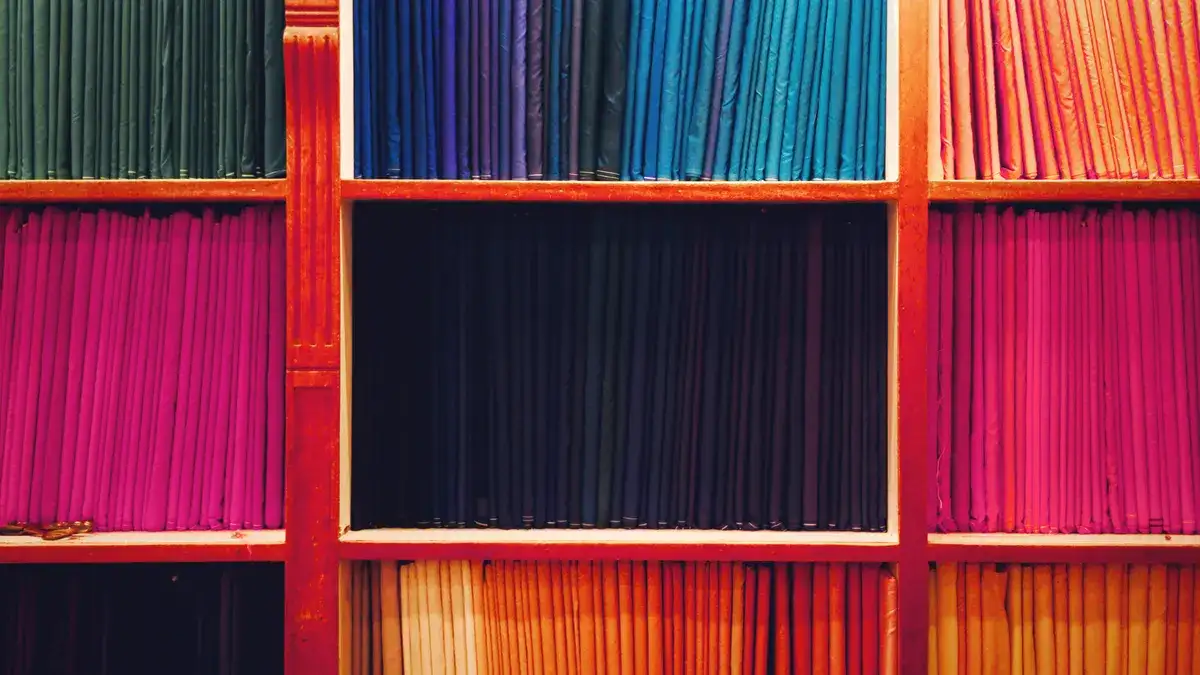
A good way to store fabric is in a cool, dry, dark spot with enough room that the cloth does not get crushed. A shelf or storage bin works for most sewing fabric, and a garment bag or fabric bolt makes sense when you want longer pieces to stay smooth.
The main job of fabric storage is simple: protect the cloth from wrinkling, dust, fading, and clutter. Sunlight can fade color, moisture can make fabric smell stale, and a crowded pile can press permanent fold lines into soft weaves. A closet shelf usually does this better than a stack left on a chair or on top of a sewing table.
For example, the U.S. Environmental Protection Agency notes that moisture control matters in indoor spaces, and the National Park Service recommends cool, stable storage conditions for textiles. Those ideas match sewing rooms too. A stable shelf in a closet is usually better than a bright, humid corner.
Here is a fast way to choose a storage method:
| Storage option | Best for | Main advantage | Main drawback |
|---|---|---|---|
| Shelf | Folded yardage and frequent access | Easy to see and reach | Dust if the shelf is open |
| Storage bin | Mixed pieces and small cuts | Keeps fabric together | Can hide what you own |
| Garment bag | Long cuts and delicate fabric | Reduces dust and snagging | Takes more hanging space |
| Fabric bolt | Large cuts and shop-style storage | Keeps fabric flat and tidy | Needs more room |
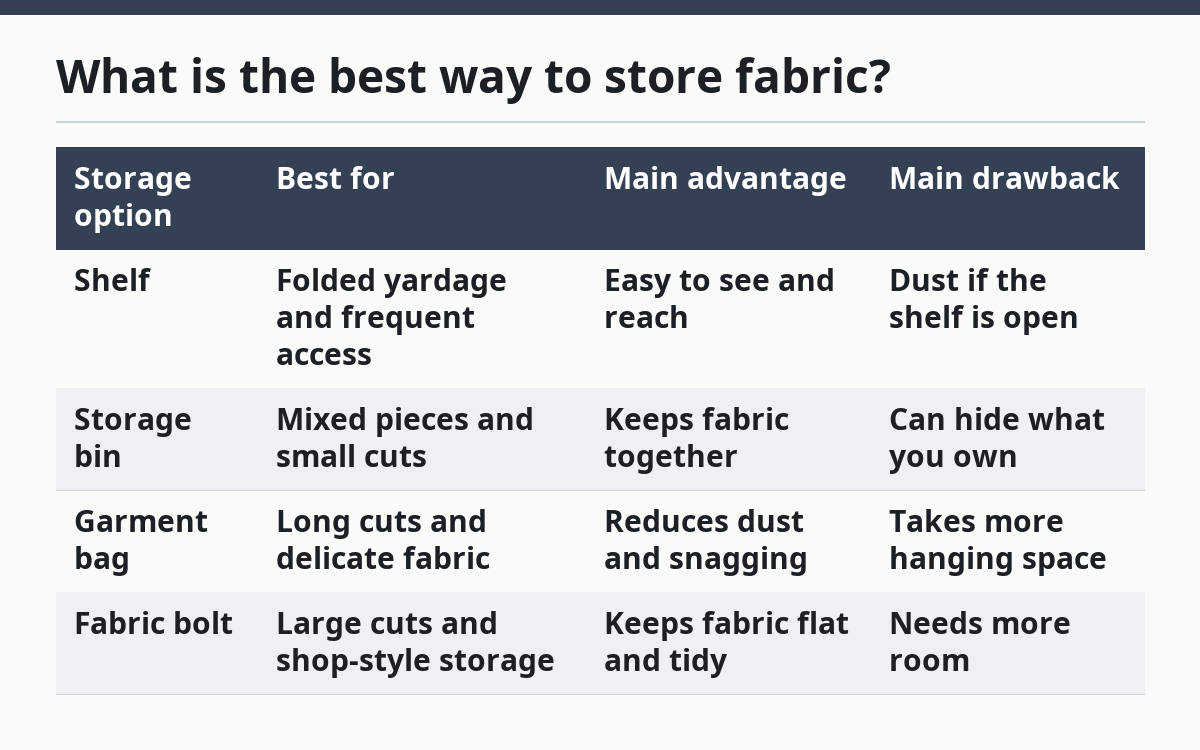
A shelf is the easiest choice if you sew often and want the fabric visible. A storage bin is better when you need to keep one project together, but it is not ideal if you must dig through the pile every week. A garment bag helps when the fabric wrinkles easily or when the cut is long enough to drag and crease.
This page fits the bigger fabric selection process, but it stays focused on storage so the cloth stays ready for the next step. For related planning, see how to choose fabric for a project and how to measure fabric yardage.
How do you fold fabric for storage?
Therefore, you should fold fabric along the grain into a neat rectangle before it goes on a shelf or into a bin. That keeps the edges aligned and reduces the deep diagonal wrinkles that come from stuffing cloth into a tight space.
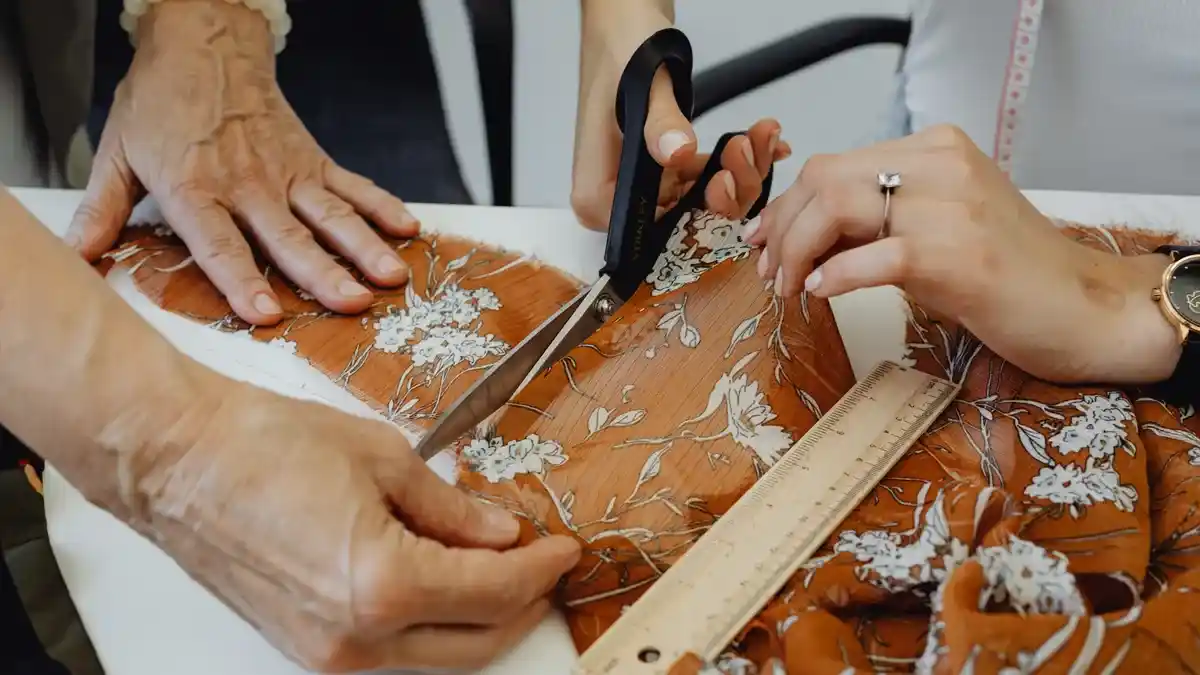
Use a flat table, a ruler or cutting mat edge if you have one, and your hands to smooth the cloth first. Start by matching selvages, then fold the piece into widths that fit your shelf or bin without forcing a sharp bend. If the fabric is wide, fold it again once or twice, but keep the folds gentle.
A good rule is to fold for the container, not the other way around. If your shelf is 12 inches deep, a folded piece that measures close to that depth will sit flat instead of curling over the edge. If the fabric is slippery or soft, place a sheet of tissue or plain paper between layers so the folds do not slide apart.
Do not roll every fabric by default. Rolls work for some large pieces, but they can waste space and make it harder to stack labels. They also do not help if your closet shelf is shallow and your cloth needs a flat surface.
How do you keep fabric from getting wrinkled?
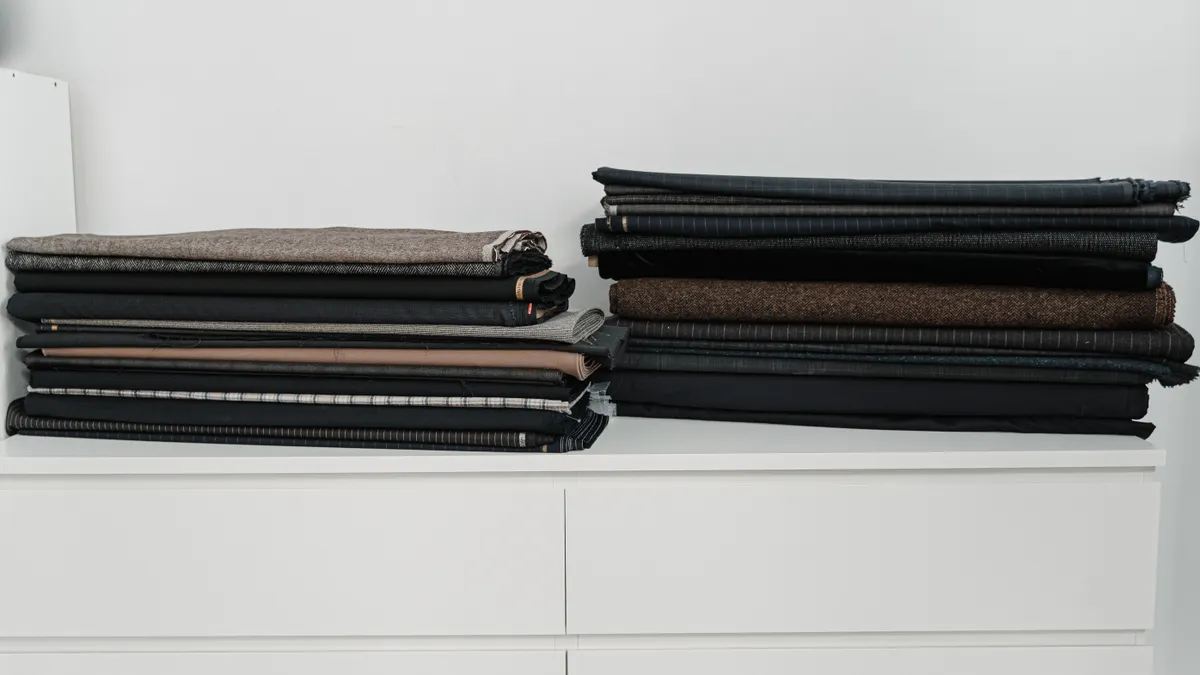
Since fabric gets wrinkled when it is pressed, you keep it smoother by giving it support, not pressure. A folded piece that rests lightly on a shelf stays smoother than one packed into a storage bin with no air space.
Start with a clean surface and let the fabric lie flat for a minute before folding. Then store it where nothing heavy sits on top. A stack that stays under a sewing machine case, books, or extra supplies will pick up hard lines fast.
If the cloth still creases, change the fold direction every so often. That helps avoid the same fold line running through the same place for months. For long-term storage, a garment bag or hanging space can be better than a deep bin, because the fabric hangs with less compression.
Use this simple order when you put fabric away:
- Smooth the fabric on a table so the weave lies flat.
- Fold it to match the shelf, bin, or bolt you plan to use.
- Place acid-free tissue or plain paper between layers if the cloth is delicate.
- Set the folded piece on a shelf or in a storage bin without pressing it down.
- Leave a little room so the stack does not bow under its own weight.
- Recheck the piece after a few weeks and refold it if the same crease keeps returning.
The goal is not perfect museum storage. The goal is fabric that opens up ready to cut after a few weeks or a few months, without a long battle against deep creases. For more on keeping materials stable, see how to organize sewing supplies.
What should you use for long-term fabric storage?
For long-term fabric storage, use a storage bin, shelf, garment bag, or fabric bolt based on the cloth and the space you have.
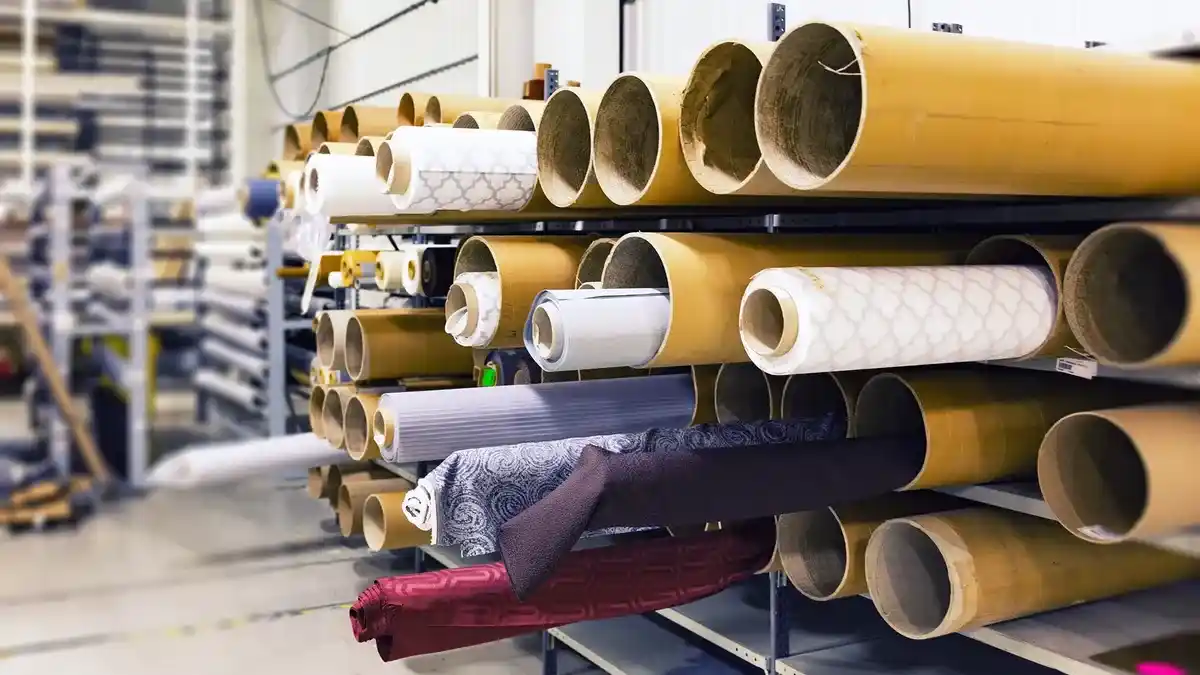
A storage bin is useful when you want the fabric protected from dust and grouped by project. A shelf is better when you want to see yardage at a glance. A garment bag works for longer cuts, dress fabrics, or fabric that snags easily. A fabric bolt is the closest to shop storage and works well when you have enough room to keep pieces flat.
The trade-off is simple: the more protected the fabric is, the less quickly you can reach it. A closed bin blocks dust but can turn into a buried stack. A shelf is easy to browse but leaves the cloth more exposed. A garment bag keeps the edges safer but takes up hanging space that some sewing rooms do not have.
Keep the storage place away from direct sunlight and from damp corners. A bright window can fade color, and a humid wall can make fabric smell stale or feel limp. If the room runs humid, do not put fabric on the floor near a baseboard or under a sink cabinet.
This is also where generic storage advice goes wrong. People often buy a bin before they decide how they sew. If you reach for yardage every week, a clear shelf system is better. If you are saving fabric for later and do not want it scattered across the room, a labeled bin is the better call. See also how to store sewing patterns and how to organize a sewing room.
How do you label yardage and fabric bolts?
You should label yardage and fabric bolts before storage so you know what each piece is without unfolding the whole stack. A simple tag with fiber type, yardage, and project idea saves time later and keeps useful fabric from getting lost.
Use a paper tag, sticky label, or card attached with a safety pin or string. Write the amount of yardage, the fiber content if you know it, and any notes that matter to future sewing. If the fabric belongs with a project, add the pattern name or the part it was meant for.
Keep labels large enough to read at a glance. A 3-by-5-inch card is plenty for most pieces. If you are storing many cuts together, group them by project in one bin and keep the labels on the outside edge so you can scan the stack without opening everything.
Fabric bolts are especially useful here. They keep the cloth flat and make it easier to attach a label at one end, which means you do not have to refold the whole piece every time you check it. If the fabric is on a bolt, store the bolt on a shelf where it will not roll or tilt.
Labeling is one of the easiest ways to prevent clutter. A neat stack with no labels turns into mystery fabric fast, and mystery fabric is the kind that sits untouched for years. For more tracking help, visit how to label sewing supplies.
What mistakes ruin stored fabric?
The biggest mistakes are direct sun, damp storage, tight folds, and unlabeled piles. Each one makes the fabric less useful, and all four are easy to avoid with a 10-minute reset.
Sunlight fades many fabrics over time, especially if they sit by a window or under bright room light. Move the storage to a shaded shelf, closet, or covered bin. Damp air can leave fabric smelling off, so keep it away from bathrooms, basements with moisture, and places where condensation forms.
Tight folds are another problem. They leave deep lines that can be hard to press out later, especially in heavier cloth. If the fabric is already creased, refold it in a new direction before it sits for months.
Clutter is the last trap. A mixed heap of remnants, large cuts, and half-started projects makes it harder to find what you need and easier to damage the cloth. A simple system on one shelf, one bin, or one garment bag works better than three storage spots that compete with each other.
Do not store fabric if it is still damp, smells strongly of mildew, or has debris that can stain other pieces. That kind of cloth needs attention before it goes back with clean yardage.
FAQ
How should I fold fabric for storage?
Fold fabric on the grain into a shape that fits your shelf or bin without forcing sharp bends. A flat surface helps the folds stay even, and a sheet of paper or tissue between delicate layers can reduce slipping. If the same crease keeps showing up, change the fold line before the fabric sits too long.
How do I keep fabric from getting wrinkled?
Keep fabric from getting wrinkled by storing it with support, not pressure. Use a shelf, garment bag, or roomy bin, and do not stack heavy items on top. A little free space around the fabric helps it keep a smoother shape than a packed, compressed pile.
What is the best place to store sewing fabric?
A practical place to store sewing fabric is a cool, dry, dark spot such as a closet shelf or covered bin. Keep it away from direct sunlight, damp walls, and floor-level spots that collect moisture. If you can see and reach it easily, you are more likely to keep it tidy and usable.
Drafted with AI; not yet reviewed by a person.