Last updated: November 20, 2026
Quick answer: start with 1 of 3 lining fabrics—rayon, polyester, or cotton lawn—then match it to 4 factors: drape, breathability, weight, and slip. In the topic of How to Choose Fabric for Lining a Garment, the best lining depends on the outer fabric, the garment type, and how the piece will be worn.
Key takeaways
- The most suitable lining is the one that makes the garment wear better.
- Rayon lining suits pieces that need a soft hand and easy movement.
- Polyester lining works when a smooth, slick lining matters more than breathability.
- Cotton lawn can be a comfortable choice for warm weather or skin-sensitive wearers.
- A lining can change how warm, clingy, heavy, or stiff a garment feels, so the lining should be chosen as part of the finished look.
What should lining fabric do?
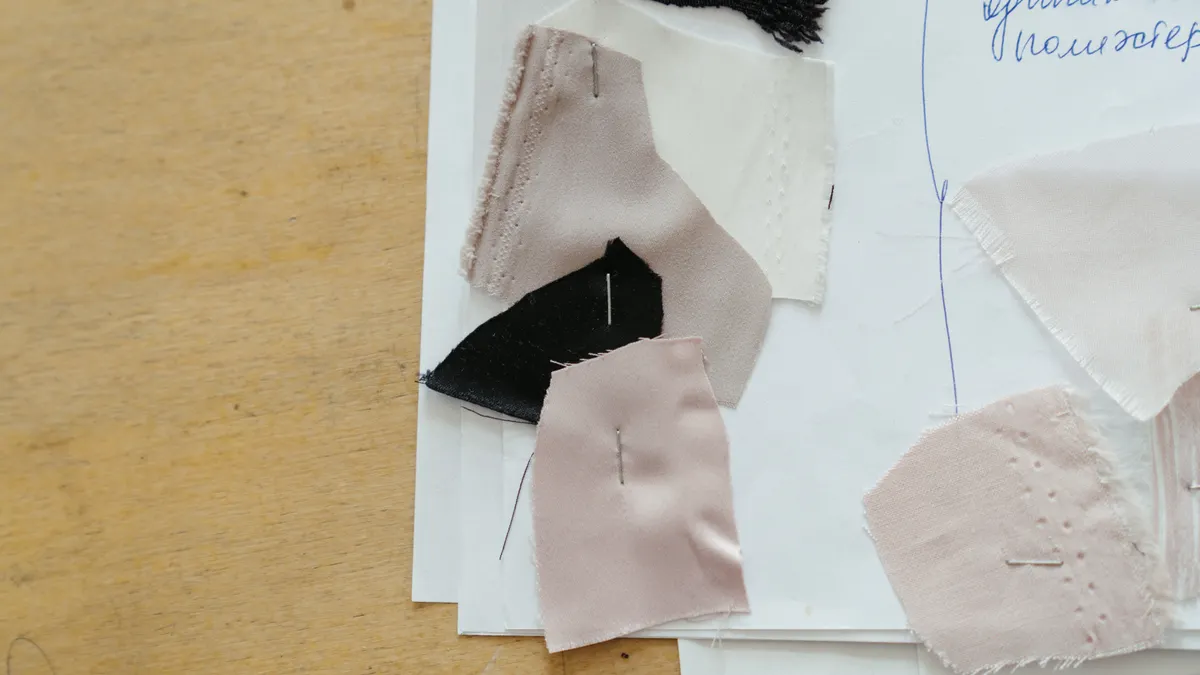
Lining fabric should make the garment easier to wear, not just hide seam allowances. A good lining reduces cling, lets the garment slide on and off, and changes how the finished piece drapes over the body. In a coat or jacket, lining also helps the inside look clean and feel less scratchy.
The four traits that matter most are drape, breathability, weight, and slip. Drape decides whether the lining hangs softly or stands away from the body. Breathability decides whether the garment feels cool or trapped. Weight affects whether the lining adds bulk. Slip affects how easily the garment moves over clothes underneath.
That is why “best fabric for lining clothes” does not have one answer. A winter coat, a silk dress, and a summer skirt all need different lining behavior. The right choice depends on the outer fabric and the job the garment has to do.
Which lining fabric fits the garment?
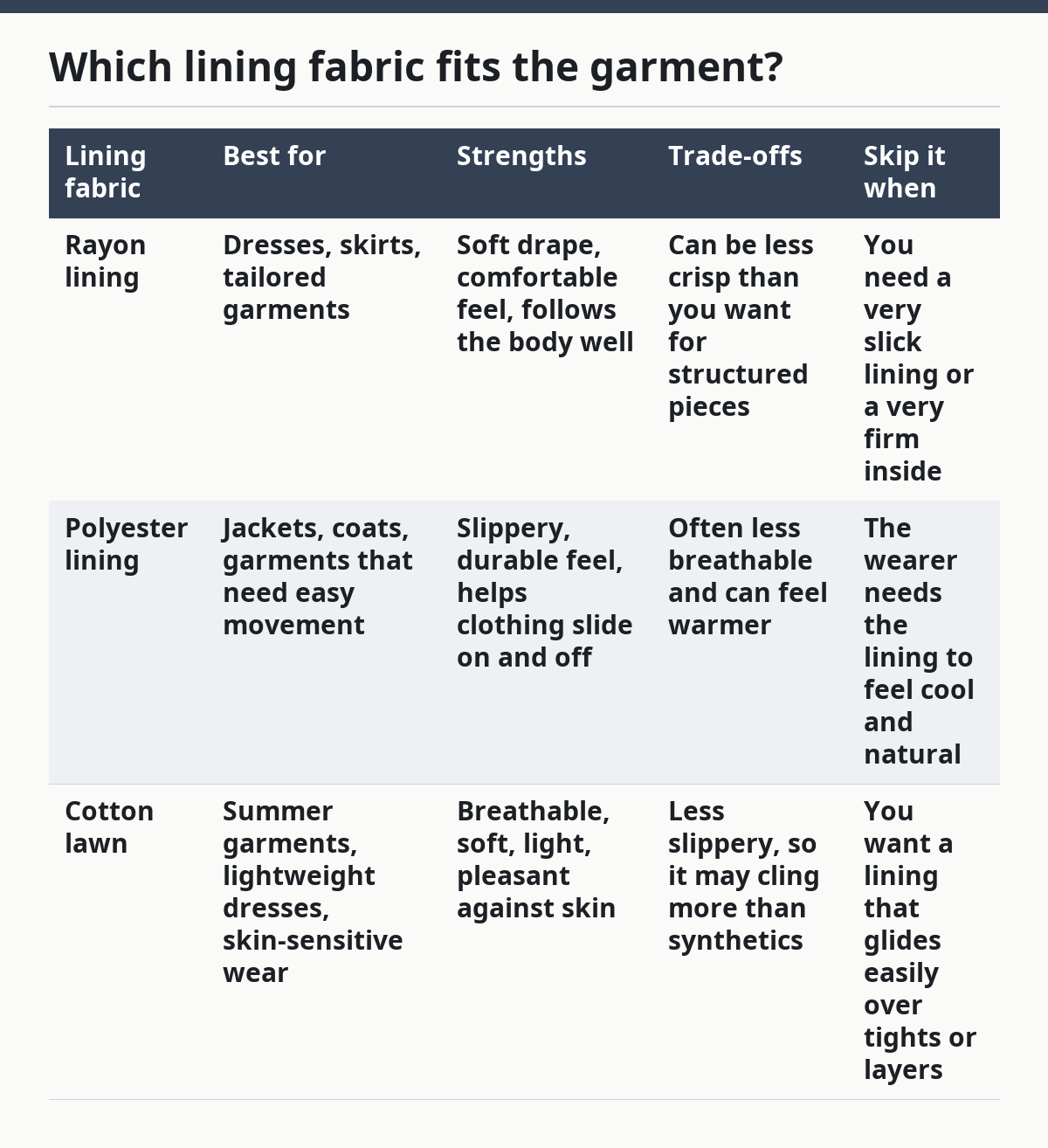
The best fabric often depends on the garment type, the weather, and the feel you want next to the skin. The table below compares the most common choices for garment lining fabric and shows who each one suits best, plus what to skip.
| Lining fabric | Best for | Strengths | Trade-offs | Skip it when |
|---|---|---|---|---|
| Rayon lining | Dresses, skirts, tailored garments | Soft drape, comfortable feel, follows the body well | Can be less crisp than you want for structured pieces | You need a very slick lining or a very firm inside |
| Polyester lining | Jackets, coats, garments that need easy movement | Slippery, durable feel, helps clothing slide on and off | Often less breathable and can feel warmer | The wearer needs the lining to feel cool and natural |
| Cotton lawn | Summer garments, lightweight dresses, skin-sensitive wear | Breathable, soft, light, pleasant against skin | Less slippery, so it may cling more than synthetics | You want a lining that glides easily over tights or layers |
Rayon lining is often a strong starting point for many dress and skirt linings because it tends to hang softly and feels good against the body. It is a useful candidate when the outer fabric already has some body and the lining should disappear into the garment.
Polyester lining is often the better choice when the main goal is glide. It is common in jackets and coats because it helps sleeves slide over shirts and sweaters. It is not the best pick for hot weather or for someone who dislikes a warm, less airy lining.
Cotton lawn is a comfort-first option. It is light, breathable, and pleasant in garments that sit close to the skin. It works well when the lining should not add warmth, but it is not as slick as rayon or polyester, so it may not be right for pieces that need that smooth, slippery feel.
How do drape, breathability, weight, and slip change the result?
These four traits control how the garment feels the moment it is worn. A lining can make the same outer fabric feel elegant, stuffy, fluid, or stiff depending on what sits underneath it.
Drape matters most in skirts, dresses, and soft jackets. If the outer fabric has graceful movement, a lining with similar softness keeps the whole garment flowing. A lining that is too crisp can fight the outer layer and make hems or panels look boxy.
Breathability matters most for warm-weather wear and anything worn close to the skin. Cotton lawn is usually the most comfortable of the three main options here. Polyester lining can hold heat, which is useful in some coats but uncomfortable in a summer dress.
Weight changes the balance of the garment. A lining that is too heavy can drag the outer fabric down and make a lightweight piece feel overloaded. A lining that is too light can cling and show every seam line beneath. The goal is not the thinnest fabric; it is the lining that supports the garment without taking it over.
Slip matters when the garment needs to move easily over tights, shirts, or underlayers. Polyester lining is the clearest winner for glide. Rayon often slips well enough for dresses and skirts, while cotton lawn usually gives more grip, which can be a plus in a loose summer garment and a minus in a fitted one.
How do you choose lining fabric step by step?
Choose lining fabric by starting with the garment’s purpose and then matching the lining to the outer cloth and the wearer’s comfort.
- Identify the garment type and season. A winter coat usually needs more slide, while a summer dress usually needs more breathability. This first choice narrows the field before any fabric shopping starts.
- Hold the outer fabric in mind and look for a lining that changes it in the right direction. If the outer fabric is stiff, a softer lining can calm it down; if the outer fabric is clingy, a slicker lining can help it move.
- Choose the comfort priority first: coolness, softness, or slickness. Cotton lawn leads on coolness, rayon lining on softness, and polyester lining on slickness.
- Check the weight feel in your hand. If the lining feels much heavier than the outer fabric, it may drag the garment down. If it feels much lighter, it may cling or wrinkle oddly inside the piece.
- Match the lining to the garment’s movement. A fluid dress usually needs lining with soft drape, while a lined jacket usually needs a lining that helps the sleeve slide and does not bunch at the armscye.
- Reject any lining that solves one problem by creating a bigger one. For example, a very slippery lining may feel hot in summer, and a very breathable lining may grip too much in a fitted skirt.
Because of that, this process works best when it treats lining as part of the garment design, not an afterthought. A lining is not only there to cover the inside. It changes the way the finished piece feels in motion, against skin, and in warm or cool weather. If you are unsure about a costly or fitted garment, consult a professional tailor or textile specialist, and compare the fiber guidance from Cotton Incorporated and Textile Exchange.
What lining should go with your garment type?
Different garments ask for different lining behavior, even when the outside fabric looks similar. The safest choice for a structured jacket is not the same as the best choice for a floaty dress.
Tailored jackets and coats usually do best with polyester lining or another smooth lining fabric that helps the sleeves slide. These garments need movement inside the sleeve and less friction when layered over shirts. Cotton lawn can feel too grabby in this setting, and rayon may feel too soft if the garment needs more internal control.
Dresses and skirts often benefit from rayon lining because it balances softness and drape. If the garment is meant to skim the body, rayon lining helps the inside hang in a clean line. For a summer dress or a garment worn close to the skin, cotton lawn can be a better answer.
Special-occasion garments often need a lining that disappears into the outer fabric. In that case, choose the lining by how it changes the outer layer, not by the label on the bolt. A satin-like outer fabric usually asks for a smooth lining, while a matte outer fabric can handle a lining with a little more grip.
Very lightweight garments need extra care because the lining can show through or overpower the main cloth. A lining that is too heavy or too opaque can change the look of the whole piece. In those cases, a lighter lining that stays close to the outer fabric usually works better than a lining chosen for convenience.
What mistakes should you avoid?
The biggest mistake is choosing lining fabric by color first. A matching color does not matter if the lining is too hot, too heavy, or too slick for the garment. A beautiful lining that fights the garment is a bad lining.
Another common mistake is using polyester lining in a garment that will be worn in warm weather. The result can feel sticky and warm inside, even when the outside looks fine. If comfort matters more than glide, cotton lawn or rayon lining is often a better fit.
A third mistake is picking a lining that is much heavier than the outer fabric. That can make a light garment hang badly and lose its shape. The cost is often a clumsy feel and extra bulk at seams, so the better move is to keep the lining close in weight to the garment’s needs.
The opposite mistake is choosing a lining with too little body for a garment that needs structure. Very soft lining in a tailored piece can make the inside collapse and wrinkle. In that case, a smoother, firmer lining is usually the better answer.
Finally, do not choose lining fabric without thinking about the wearer’s skin and climate. A lining that feels fine in a cool room can feel wrong in heat. That is especially true for garments worn for long periods, such as coats, dresses, and work clothes.
How do the main options compare on comfort and feel?
The main difference is this: rayon lining usually feels softest, polyester lining usually feels slickest, and cotton lawn usually feels coolest. That simple split covers most lining choices for everyday sewing.
Rayon lining is often the middle-ground option when the garment needs softness and a graceful hang. It is a forgiving choice for pieces that should feel smooth without becoming overly slippery. It is not the strongest choice when the garment must move easily over other layers.
Polyester lining is the choice when low-friction wear matters most. It helps sleeves and skirt layers slide, which is useful in outerwear and structured pieces. The trade-off is comfort in warm weather, since it can feel less breathable than cotton lawn.
Cotton lawn is the comfort-first option. It feels light and pleasant and is easier to live with in warmer conditions. The trade-off is that it has less slip, so it can catch on underlayers instead of gliding over them.
For readers who want a broader fabric-selection framework, the site’s fabric selection hub is the right place to continue after this page. That hub covers the bigger decision tree; this page stays focused on lining fabric and the feel of the finished garment. You can also compare this choice with our guides on comfort fabrics, drape fabrics, and lining supplies.
Where should you get a second opinion on the fabric choice?
A second opinion is worth getting when the garment is expensive, very fitted, or meant to be worn often. Lining affects comfort and how the piece moves, so one bad choice can make a good outer fabric feel wrong.
The most useful outside references are the fabric supplier’s fiber descriptions and the general properties of the fiber itself. Cotton Incorporated’s fabric guidance and the Textile Exchange materials pages are useful starting points for understanding how cotton and other fibers behave in clothing:
- https://www.cottoninc.com/ (fiber and fabric guidance from Cotton Incorporated)
- https://textileexchange.org/ (materials and fiber information from Textile Exchange)
Those sources will not pick the lining for you, but they help confirm the basic trade-offs: breathability, hand feel, and how the fiber tends to behave in wear. That matters more than chasing a trendy label or a pretty bolt end.
The right lining fabric is the one that makes the garment more wearable than it would be without it. If the piece needs softness, rayon lining is often the best place to start. If it needs glide, polyester lining earns its place. If comfort and breathability matter most, cotton lawn is often the safest choice.
Drafted with AI; not yet reviewed by a person.