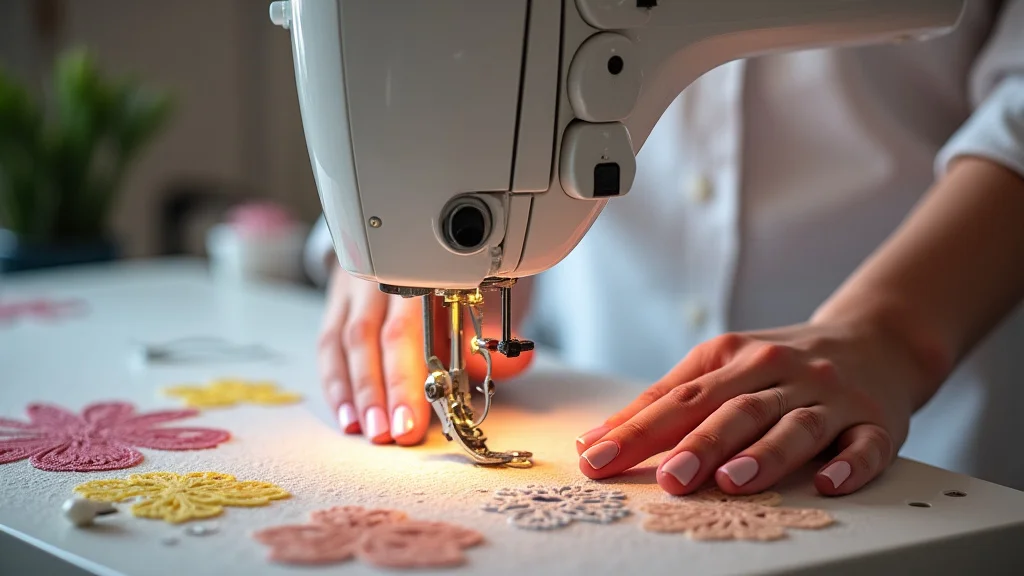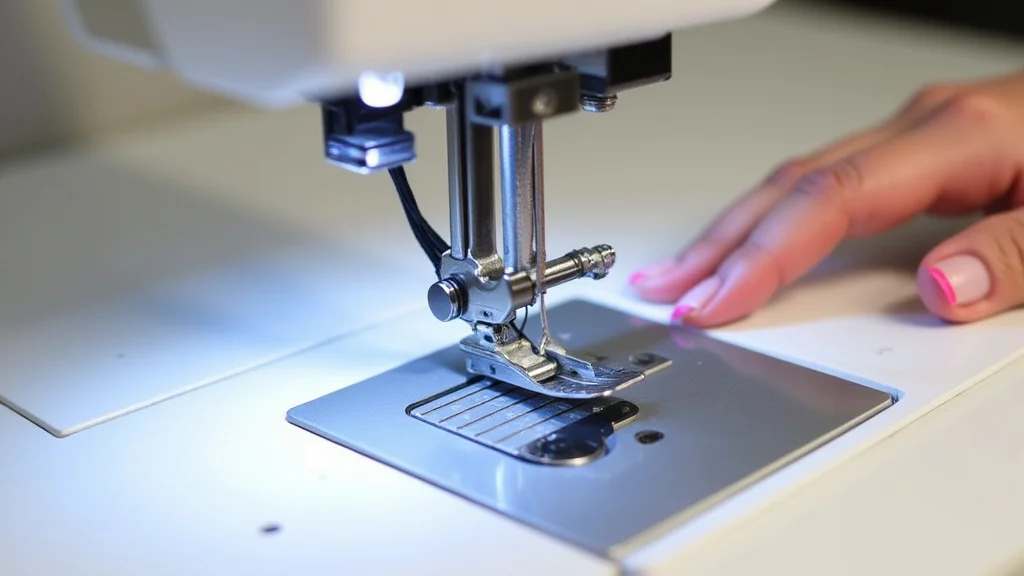
Ever wrestled with vinyl, leather, or other thick fabrics while sewing? I certainly have. The frustration of fabric sticking, bunching, or being unevenly fed is something many sewers experience. It can ruin a project and waste valuable time. But there’s a solution that can make these tasks so much easier: the sewing foot with roller. This post will explore everything you need to know about this handy tool, from how it works to what it’s best used for. You’ll gain practical knowledge to improve your sewing skills and expand your fabric choices. Learn how a sewing foot with roller can transform your sewing experience, allowing you to create smoother, more professional-looking projects. Get ready to enhance your sewing skills!
Key Takeaways
- The primary function of a sewing foot with roller is to facilitate smooth fabric movement.
- It reduces friction, enabling easier sewing of difficult fabrics.
- It is ideal for materials like leather, vinyl, and multiple layers of fabric.
- It ensures even feeding of the fabric, preventing bunching or puckering.
- Different types of roller feet exist, each for specific sewing tasks.
- Using a roller foot can significantly improve the quality and appearance of your finished projects.
The Anatomy of a Sewing Foot With Roller
The sewing foot with roller is a specialized attachment designed to improve the sewing experience, particularly when dealing with challenging fabrics. Unlike standard sewing feet that have a flat bottom that simply glides over the fabric, the roller foot incorporates a small roller at the base. This roller is typically made of metal or plastic and rotates as the fabric moves under the needle. This feature dramatically reduces friction, providing a smoother, more controlled feed.
The Roller and Its Function
The most important part of the sewing foot with roller is, of course, the roller itself. Its primary function is to minimize friction between the foot and the fabric. This is especially helpful when working with materials that tend to stick, such as leather, vinyl, and other coated fabrics. As the fabric passes under the needle, the roller spins, allowing the foot to glide effortlessly. This smooth movement helps the feed dogs underneath the needle plate grab the material and feed it without dragging or bunching the fabric. The design ensures consistent fabric movement, providing a more consistent stitch quality.
Consider sewing a thick leather handbag. Without a roller foot, the material can get stuck, causing uneven stitches and potential damage to the fabric. With a roller foot, the leather slides along effortlessly, which ensures that each stitch is placed correctly, resulting in a clean, professional finish. The difference is immediately noticeable. The roller effectively eliminates the drag and allows for a more even distribution of tension across the fabric surface.
Types of Sewing Feet With Rollers
There are several types of roller feet available, each with minor variations that cater to different sewing needs and machine models. Some feet are designed for general use, while others specialize in particular fabrics or techniques. Choosing the correct type depends on the material you are sewing and the desired outcome. The basic design of a roller foot remains the same across types, with the rotating roller as its key feature. Make sure to consult the manual of your sewing machine and compare it with the sewing foot’s specifications.
- Standard Roller Foot: The most common type, suitable for various fabrics like leather, vinyl, and multiple layers.
- Roller Foot with Guide: This type includes a guide that can be adjusted to help stitch accurately along edges.
- Non-Stick Roller Foot: Often used for extremely sticky materials as the roller may be coated with a non-stick surface.
- Adjustable Roller Foot: Designed to accommodate varying fabric thicknesses, allowing you to adjust the foot’s pressure.
Each of these variations addresses specific sewing challenges. The standard roller foot is ideal for general use, providing a smooth feed for most difficult fabrics. The roller foot with a guide offers extra precision, making it perfect for topstitching or sewing along seams. The non-stick version reduces the friction even further, which helps with very sticky materials. The adjustable roller foot provides increased control when working with heavier, multiple layers.
Compatibility with Sewing Machines
Before purchasing a sewing foot with roller, ensure it is compatible with your sewing machine. Sewing machine manufacturers usually design their machines to work with specific types of attachments. The shank of the foot, which attaches to the machine, must match your machine’s shank type. Consult your machine’s manual to determine the correct foot style for your model. If you are unsure, it is best to check the manufacturer’s website or contact their customer service for assistance. This way, you can avoid buying a foot that doesn’t fit.
Compatibility issues usually stem from differences in the shank design. The shank is the part of the foot that attaches to your machine. Some machines use a low shank, others use a high shank, and some may have a slant shank. The type of shank dictates which sewing feet can be used. Furthermore, certain sewing machines may require an adapter to use specific types of feet. This adapter then attaches to your machine and allows the use of feet that might not be directly compatible with the shank type of your machine. Checking your machine’s manual can save you a lot of time and frustration. The manual will specify the shank type and provide information on compatible feet.
Best Fabrics for the Sewing Foot With Roller
The sewing foot with roller significantly improves sewing results when used with specific fabrics that traditionally cause problems. The reduced friction allows the machine to feed the fabric more smoothly, preventing common issues like sticking, bunching, and uneven seams. Using the correct foot with the right material is essential to achieving professional-looking results. It can transform sewing projects that involve challenging materials, turning them into a simpler and more enjoyable task.
Leather and Faux Leather
Leather and faux leather are two of the most popular materials for which the roller foot is extremely useful. These materials are generally thick, non-porous, and prone to sticking to the standard feet. When leather sticks, it can cause the fabric to bunch up, get damaged by the needle, or cause uneven stitching. The roller foot minimizes friction, which enables the machine to feed the leather smoothly, which ensures that each stitch is placed correctly, resulting in neat and professional seams. The roller foot is a must-have tool for projects involving leather, such as bags, belts, and jackets.
Imagine constructing a leather wallet. Without a roller foot, the leather may require constant manual adjustment and force, leading to potential inaccuracies and frustrations. With a roller foot, the wallet’s leather pieces can be stitched together with precision and ease. This is because the roller reduces the resistance that the leather poses to the machine. This allows for a more consistent seam and a professional-looking end product. The consistent feed also prevents the leather from stretching or distorting during the sewing process, which helps to preserve the shape and integrity of your work.
Vinyl and Oilcloth
Vinyl and oilcloth are other materials that greatly benefit from the use of a roller foot. These fabrics often have a sticky, sometimes rubbery, surface that can cling to the standard foot. This results in the material bunching up, shifting, or getting caught during sewing. The roller foot’s design makes it perfect for these materials. It allows for the fabric to move smoothly under the needle, thus preventing these common issues. By reducing friction, the roller foot ensures that the fabric feeds evenly, producing straight, smooth seams.
Consider sewing a vinyl tablecloth. Without a roller foot, the vinyl might bunch or resist movement, leading to puckered seams. Using a roller foot, the vinyl glides through the machine with ease, which ensures that the tablecloth’s edges remain smooth and the seams are neat. This also makes it simpler to create precise corners and edges, which ensures that the final product looks polished and professional. The roller foot makes sewing these tricky materials easier and more satisfying.
Multiple Layers and Thick Fabrics
The sewing foot with roller also shines when working with multiple layers of fabric or thick materials. When sewing several layers, a standard foot might struggle to maintain consistent fabric feeding, which results in uneven seams or skipped stitches. The roller foot’s design helps it to glide over the layered material without difficulty. This allows for all layers to move together uniformly, which prevents bunching and ensuring that each stitch is placed correctly. The roller foot helps achieve clean, well-aligned seams, even with bulky materials.
Think about sewing a quilt. The roller foot can easily handle the multiple layers of fabric and batting. The consistent feeding prevents the layers from shifting or bunching, which results in a smooth and even quilt top. Furthermore, it helps avoid issues such as the fabric stretching or distorting during the sewing process. This ensures that the finished quilt lays flat and that the seams are straight and neat. The roller foot’s design makes it ideal for tackling projects that involve multiple fabric layers or thick materials.
Techniques and Tips for Sewing With a Roller Foot
Successfully using a sewing foot with roller involves more than simply attaching the foot to your machine. The correct preparation of your machine, fabric, and stitch settings is also crucial for achieving the best results. A few simple adjustments and methods can significantly improve the performance and quality of your sewing projects. Understanding these methods will help you maximize the benefits of the roller foot and avoid common problems.
Preparing the Machine and Fabric
Preparing both your machine and fabric before sewing with a roller foot is the first step toward achieving professional results. These preparations can minimize issues and enhance the smoothness and consistency of your stitches. By following these steps, you will be able to get the most out of your sewing foot with roller and guarantee your work is of the highest quality.
- Check and Adjust Machine Settings: Check your machine’s manual for recommended settings when using a roller foot. Adjust the needle position and thread tension based on the fabric’s thickness and type.
- Choose the Right Needle: Using the correct needle is essential. Choose a needle appropriate for the fabric type. For example, use a leather needle for leather or a universal needle for general fabrics.
- Prepare the Fabric: Ensure your fabric is cut and prepared correctly. If necessary, use clips or pins to hold layers together but avoid pinning too close to the sewing line.
- Test on Scrap Fabric: Before sewing your main project, test the settings and stitch quality on a scrap of the same fabric. This will let you fine-tune the settings and prevent problems.
The proper needle is key to effective sewing. For example, a leather needle has a unique wedge-shaped point that cuts through leather, rather than piercing it, which prevents the leather from tearing. For other fabrics, a universal needle or a denim needle may be more appropriate. Ensuring your machine settings match the fabric you’re using guarantees that your stitches are consistent and the feed is smooth. A trial run on scrap fabric lets you check stitch quality, thread tension, and needle alignment. This ensures that all adjustments are correct before working on your final project. These steps can make a big difference in the results.
Stitch Selection and Tension
Selecting the correct stitch type and adjusting the thread tension are also crucial aspects of using a sewing foot with roller. These settings control the appearance and functionality of your stitches. Selecting the right stitch and tension ensures the fabric is securely sewn and the final product has a professional look.
- Straight Stitch: Usually the best choice for many projects, providing a strong and consistent seam.
- Zigzag Stitch: Suitable for edges that may fray or for decorative purposes, especially on vinyl or leather.
- Thread Tension: Adjust the thread tension carefully. Too loose, and the stitches will look uneven; too tight, and the fabric may pucker.
- Stitch Length: Adjust the stitch length depending on your fabric and project requirements. Shorter stitches are suitable for detailed work.
A straight stitch works well on most fabrics, particularly those that require strong seams, such as leather or multiple layers. A zigzag stitch can provide greater flexibility. Adjusting the thread tension correctly is crucial. Too tight, and the stitches can distort the fabric; too loose, and the seams will lack strength. Always test the stitch on a piece of scrap fabric and make adjustments as needed until you achieve the right balance. Stitch length adjustments depend on the project needs. Shorter stitches work best for precise work, while longer stitches can be used for things like gathering.
Advanced Sewing Techniques
Once you are comfortable with the basic techniques, you can explore more advanced methods to get the most out of your sewing foot with roller. These strategies can help you accomplish more intricate tasks and achieve superior results. By including these techniques, you will be able to take advantage of the roller foot’s full potential.
- Seam Allowance: Maintain a consistent seam allowance. Use the edge of the foot or the markings on your machine’s throat plate as a guide.
- Turning Corners: When turning corners, reduce the speed and carefully pivot the fabric with the needle down. This helps maintain accuracy.
- Sewing Curves: Use a slightly longer stitch length and go slowly when sewing curves to keep the fabric moving smoothly.
- Combining Fabrics: When combining fabrics of different thicknesses, consider using a layer of stabilizer or tissue paper under the thinner fabric.
A consistent seam allowance is important for professional results. Use the markings on your machine or the foot itself as a guide to maintain the right seam allowance. When turning corners, lowering the needle into the fabric and pivoting the material around this point can help maintain accuracy. When sewing curves, slow your machine to ensure that the fabric feeds evenly, which prevents puckering or bunching. When combining fabrics, a layer of stabilizer can help to even out the fabric thicknesses. These methods will allow you to maximize the roller foot’s potential.
Real-Life Examples and Case Studies
The sewing foot with roller has a significant impact in many different sewing projects. From amateur hobbyists to seasoned professionals, the benefits of the roller foot are evident across different applications. By considering these real-world examples and case studies, you can better understand how this tool can improve your work. These examples demonstrate the practical applications and advantages of the roller foot.
-
Case Study: Leather Handbag Design
A small artisan business specializes in custom leather handbags. Their challenge was consistently sewing the thick leather panels, often resulting in skipped stitches or inconsistent seam lines. They began using a roller foot on their industrial sewing machines. The roller foot immediately increased the consistency and quality of the seams, which significantly decreased the need for rework. The business saw a 20% increase in productivity. The finished handbags also looked more professional, leading to more customer satisfaction and increased sales.
-
Example: Vinyl Tablecloths for a Restaurant
A local restaurant wanted to produce custom vinyl tablecloths. Sewing vinyl without a roller foot can be difficult due to its tendency to stick and drag. By switching to a roller foot, the restaurant was able to easily sew tablecloths. They then were able to create precise edges and attractive seams without the material bunching or distorting. The use of a roller foot led to considerable time savings and a more attractive final product. Furthermore, the tablecloths looked professional, which improved their reputation.
These examples display the varied advantages of the sewing foot with roller, from enhanced productivity to better end products. These case studies clearly demonstrate that the tool is useful for hobbyists and professionals alike. The roller foot’s capacity to boost efficiency and enhance the outcome makes it a valuable addition to any sewing toolkit.
Common Myths Debunked
When it comes to the sewing foot with roller, there are a few widespread misconceptions. These myths can cause confusion and prevent individuals from fully utilizing this tool. By clearing up these common misconceptions, we can better understand the true value and application of the roller foot. This will enable sewers to improve their expertise and produce better results.
Myth 1: Roller Feet Are Only for Leather
Reality: While the roller foot is certainly helpful for leather, its usefulness is far more expansive. It also works very well with other challenging materials, such as vinyl, oilcloth, and multiple fabric layers. It reduces friction on any fabric that tends to stick. The roller foot can provide advantages in a wide range of sewing projects.
Myth 2: Roller Feet Are Difficult to Use
Reality: Attaching and using a roller foot is usually very easy. It attaches similarly to other presser feet. Proper machine settings and fabric preparation are critical. Once you understand the basic methods, sewing with a roller foot is usually a very smooth and simple process.
Myth 3: Roller Feet Are Only for Professionals
Reality: Sewing professionals can benefit from this tool, however, the roller foot is useful for sewers of all skill levels. They can be very helpful for beginners who are dealing with difficult fabrics. The roller foot can improve stitch quality and provide a better sewing experience, regardless of skill.
Myth 4: Roller Feet Are a Replacement for a Walking Foot
Reality: While both tools help with fabric feeding, they function differently. A roller foot is best for reducing friction on sticky materials. A walking foot offers a more comprehensive fabric feed and is better for layered and quilted materials. The correct choice depends on the project’s requirements.
Myth 5: Roller Feet Work on All Sewing Machines
Reality: Always check your machine’s manual to ensure compatibility with your machine’s shank type. While most modern machines offer compatible feet, some older or specialty machines may require an adapter. Check for compatibility before purchasing.
Frequently Asked Questions
Question: Can I use a roller foot on any type of fabric?
Answer: A roller foot is best for fabrics that cause issues with friction, such as leather, vinyl, and multiple layers. While it can be used on other fabrics, the benefits may not be as noticeable.
Question: Is it difficult to install a roller foot on my sewing machine?
Answer: It’s typically as simple as replacing your standard foot. Consult your machine’s manual for specific instructions, but generally, it’s very straightforward.
Question: Do I need to adjust the tension when using a roller foot?
Answer: Yes, always adjust the tension based on your fabric. Test on scrap material and make adjustments to get the best stitch quality.
Question: Can I use the roller foot for decorative stitches?
Answer: Depending on your machine and the foot type, you may be able to use decorative stitches. Test on scrap material first.
Question: How do I clean a roller foot?
Answer: Clean the roller foot by removing any lint or fabric particles that may accumulate on the roller or around the foot. Using a soft brush or a small vacuum can help.
Final Thoughts
The sewing foot with roller is a valuable tool for anyone looking to enhance their sewing experience, especially when working with difficult fabrics. Its design reduces friction, allowing for smooth and even fabric feeding. By using a roller foot, you can prevent common problems like bunching, uneven seams, and skipped stitches. This tool opens the door to sewing a wider variety of materials and improves the quality of your finished projects. Whether you are a beginner or an experienced sewer, the benefits are clear. Invest in a sewing foot with roller and explore the possibilities of smooth, professional-looking results. Take the time to experiment and find what works best for your needs. Happy sewing!