Remember that time you tried to bake a cake, and it ended up… less than perfect? It’s okay; we’ve all been there! Learning a new skill takes practice. The same goes for sewing. Luckily, there’s a secret weapon for improving your skills: sewing practice sheets. These handy tools are your personal tutors, guiding you through essential techniques. In this guide, you’ll discover everything you need to know about sewing practice sheets and how they can transform you into a confident seamstress or tailor. Get ready to explore different types, learn how to use them effectively, and watch your skills bloom!
Key Takeaways
- Discover the different types of sewing practice sheets available.
- Learn the essential techniques you can practice on these sheets.
- Find out how to choose the right practice sheets for your skill level.
- Understand the materials commonly used for sewing practice sheets.
- Explore how to use these sheets effectively to improve your skills.
- Gain tips for creating your own sewing practice sheets.
Unlocking Your Sewing Potential with Practice
Sewing is an art, a craft, and a valuable skill. It’s about more than just mending clothes; it’s about creation, self-expression, and the joy of making something with your own hands. However, just like any art form, sewing requires practice. That’s where sewing practice sheets come in. They serve as a training ground, allowing you to hone your skills in a structured and efficient way. These sheets offer guided exercises that help you master fundamental techniques, from straight stitching to intricate curves, and ultimately, build your confidence.
With practice, you’ll become more familiar with your sewing machine. The machine becomes an extension of you, and you’ll find it easier to control the fabric. You’ll gain a better feel for tension, stitch length, and other settings. Each completed exercise builds your confidence and reinforces your skills. And as you become more adept, you’ll start to see your own style emerge. You’ll be able to create unique items that reflect your personality and creativity.
Types of Sewing Practice Sheets
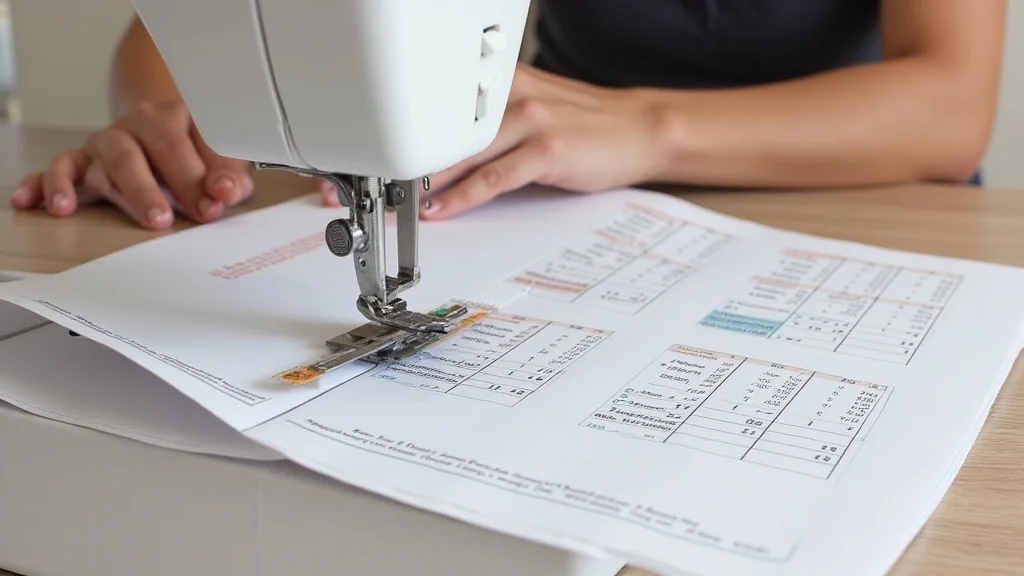
There is a wide variety of sewing practice sheets to choose from, each catering to different skill levels and specific techniques. They provide structured exercises for both beginners and experienced sewists. From simple straight lines to complex curves and patterns, you can refine your skills in a systematic manner. The practice sheets are often designed with clear instructions and helpful visual guides, making it easier to learn and improve.
- Basic Stitching Sheets: These sheets are perfect for beginners. They typically feature lines for practicing straight stitches, curves, and corners. These help you get comfortable with your sewing machine and improve your control over the fabric. Using these sheets is like warming up before a workout, preparing you for more advanced techniques.
- Pattern Reading Sheets: These sheets help you understand how to read and interpret sewing patterns. They often include diagrams and markings that simulate pattern pieces. You can practice identifying different symbols, measurements, and cutting lines. This is important for preparing to follow more complicated patterns.
- Appliqué Sheets: Appliqué is the technique of attaching fabric shapes to a background fabric. These sheets provide outlines and patterns to practice this technique. They often include designs, such as flowers, animals, or letters, for you to sew onto the fabric. Practice with different fabrics and thread colors.
- Quilting Practice Sheets: Quilting involves sewing layers of fabric together to create a padded textile. These sheets are often marked with grids, templates, and patterns to help you practice quilting techniques like free-motion quilting and piecing. These sheets make it easier to practice complex quilting designs.
These sheets focus on the basics. You’ll work on straight lines, curved lines, and turning corners. You’ll learn to maintain a consistent seam allowance, a key skill in sewing. Start with slower speeds. Try to keep your stitches straight and evenly spaced. As you get better, increase your speed gradually. This helps develop a steady hand and a sense of rhythm, essential for more complex projects.
Pattern reading is crucial for successful sewing. You need to understand the different lines, symbols, and markings on a pattern. Practice sheets for pattern reading often include exercises that teach you how to identify these elements. This includes things like grain lines, seam allowances, and different types of stitches. You’ll also learn how to measure fabric and determine the correct size for your project. As you gain skill, you will become more comfortable with different sewing patterns.
Appliqué can be fun. These sheets provide outlines for practicing different appliqué techniques, such as raw edge appliqué and turned-edge appliqué. You can experiment with different stitches to create various effects. You might use a satin stitch for a smooth finish or a blanket stitch for a decorative edge. Appliqué is a great way to personalize your projects. Using different fabrics, colors, and stitch styles adds visual interest and uniqueness.
Quilting is a relaxing activity. These sheets help with quilting techniques such as straight line quilting, curved lines, and different block designs. You can practice following grid lines and templates, essential for creating symmetrical and precise quilts. As you gain skill, you can begin to design your own quilting patterns. Practice using different batting materials and thread weights to achieve desired effects.
Essential Techniques to Master
Learning the various sewing techniques is very important. Sewing practice sheets offer opportunities to practice a wide range of these techniques, helping you build a solid foundation. These exercises build essential skills, enhancing your control, precision, and overall sewing abilities. The more you practice, the more your sewing skills will develop.
- Straight Stitching: This is the foundation of almost all sewing projects. Practice stitching in a straight line, keeping a consistent seam allowance. This builds a steady hand and helps you control the fabric. You’ll learn how to feed the fabric smoothly through the machine. This is the starting point for nearly all sewing projects.
- Turning Corners: This is a key skill for creating precise shapes and neat edges. Practice turning corners smoothly and accurately, without lifting the needle. Learning to control the fabric as you change direction will greatly improve your sewing accuracy. This technique is especially important for garments.
- Sewing Curves: This involves controlling the fabric to create curved lines. Practice sewing smooth curves, both concave and convex. You will learn to manipulate the fabric as it feeds through the machine. This helps with the construction of many items, from sleeves to collars.
- Following Patterns: Sewing patterns involve following specific lines and markings. Practice reading and following pattern pieces, cutting accurately, and matching markings. These patterns are important for making garments or complex projects. You’ll begin to understand how the pieces come together to create a final product.
Straight stitching is all about consistency. The goal is to produce stitches that are uniform in length and distance from the edge of the fabric. You can practice on lines drawn on paper or fabric. Make sure the fabric is lying flat and use the edge of your presser foot as a guide. This technique is important for constructing garments, home décor, and quilting. Mastering straight stitching will significantly improve the quality of your finished projects.
Turning corners involves stopping at the corner point, with the needle down in the fabric. Then, lift the presser foot and pivot the fabric to continue sewing in the new direction. This is a common requirement in clothing and home décor projects. Practice turning both sharp and rounded corners to improve your control. Over time, you’ll develop a sense of rhythm that will allow you to create beautiful, well-defined corners.
Sewing curves requires careful control and attention to detail. This can be tricky and requires patience and a steady hand. You can practice sewing around curved lines on your practice sheets. Try using a slower speed and guiding the fabric smoothly. Use your hands to help the fabric flow along the curve. This skill is required for creating a variety of sewing projects, including clothing and decorative items.
Sewing patterns can sometimes be difficult. Start by practicing on simple patterns with clear instructions. Then you can work your way up to more complex designs. Accurate pattern reading is vital for a good fit and professional finish. You will become familiar with standard pattern markings, seam allowances, and cutting instructions. Learn the meaning of different symbols to become comfortable with a wide variety of patterns.
Materials and Tools for Practice
The materials you choose play a very important role in your learning experience. You will also need to consider your sewing machine and other tools that will help you. Choosing the correct materials and tools will make the practice process easier and more effective. If you set up with the right equipment, you can focus on mastering your sewing skills.
- Fabric: Select fabric that is easy to work with, such as cotton or muslin. These fabrics are forgiving and allow you to see your stitches clearly. Look for fabrics that are tightly woven, so the seams don’t pull apart.
- Thread: Use a good quality thread that matches your fabric. It should be strong enough to withstand the stress of sewing. Consider cotton or polyester thread for their strength and ease of use. This will improve your sewing accuracy.
- Sewing Machine: Ensure your sewing machine is in good working order. Clean and oil it regularly. Make sure it is set up correctly. This will make your practice sessions more effective and enjoyable. Ensure that you have all the necessary parts, like a bobbin and needle.
- Needles: Use the right type of needle for your fabric. Choose a universal needle for general use. Replace needles regularly to ensure smooth stitching and to avoid snags. Be sure the needle is in the correct position for your project.
Start with materials that are easy to manage, like cotton or muslin. These fabrics are versatile and allow for good visibility of stitches. Consider using different fabric weights, from lightweight to medium weight, to practice handling various materials. Experiment with different colors to create high contrast designs. That will allow you to see your stitches more clearly.
Your thread choice matters. It holds your stitches in place and provides the strength needed for your projects. Select a thread that is the appropriate weight for your fabric. Consider the color; choose a thread that matches the fabric. High-quality threads will reduce breakage and improve the overall appearance of your work. Always keep a good supply of essential colors like white, black, and neutral tones.
Keep your sewing machine clean and in good working order. Learn how to thread your machine correctly. Also, be sure you understand the basics of using the various settings. Practice sewing straight lines and curves to get familiar with the machine. Consider the different stitch types offered by your machine and how they can improve your work. A well-maintained machine will lead to a better sewing experience.
Selecting the right needle is vital for good sewing results. Different fabrics require different needle types. For example, a sharp needle is needed for delicate fabrics, while a ballpoint needle is great for knits. Replace your needles after every few projects. That way, you’ll avoid problems such as skipped stitches or fabric damage. Having the correct needle ensures smooth stitching and minimizes thread breakage.
How to Use Sewing Practice Sheets Effectively
Proper use of the sewing practice sheets is essential for success. Setting up your workspace and having a structured approach will help you learn the techniques efficiently. These sheets provide a structure for developing your skills, improving both your accuracy and your speed. If you take the time to set yourself up, you will become much more proficient at sewing.
- Setting up Your Workspace: Make sure you have a well-lit workspace. Ensure you have ample space to work and organize your materials. This will make it easier to focus on your practice. You should also ensure a comfortable seating position.
- Starting Slowly: Begin each practice session by sewing slowly and carefully. Focus on maintaining a consistent stitch length and seam allowance. This builds accuracy and control. Start slowly and get used to how the fabric moves through the machine.
- Repeating Exercises: Repeat exercises until you are comfortable with them. Practice the same lines or patterns multiple times. This reinforces muscle memory and helps you master the techniques. This is essential for building a strong foundation.
- Review and Reflect: After each session, take time to review your work. Identify areas that need improvement. Make notes on what you did well and what could be better. This will enable you to evaluate your progress. It also helps you stay motivated.
Setting up your workspace in the right way will improve your focus. Make sure you have plenty of natural or artificial light. Arrange your tools and materials in a way that is easy to reach. Choose a comfortable chair that supports your back. Clear your work surface of clutter. That will help you stay organized and improve your focus. A well-organized space helps with concentration.
Don’t rush when you’re starting a sewing practice session. Take your time to align the fabric and start at a slow speed. As you gain more confidence, you can gradually increase the speed. Focusing on accuracy first will prevent errors. A slow, steady approach is the best way to develop precision and avoid frustration. Remember, slow and steady will win the race.
Repeat the exercises on your sheets until you’re happy with the results. Practicing the same techniques repeatedly helps you develop consistency and skill. This will reinforce your muscle memory. It also makes you more familiar with the sewing machine’s mechanics. Through repetition, you’ll find that your stitches become straighter, your turns become smoother, and your confidence grows.
When you finish a practice session, take a moment to look at your work and make notes. Ask yourself what went well and where you can improve. This is an important step in the learning process. You’ll gain a greater insight into your strengths and weaknesses. By reflecting on your performance, you can set goals for your next practice session.
Making Your Own Practice Sheets
If you have some experience, you can create your sewing practice sheets to suit your unique needs. Making your own sheets allows you to focus on the techniques that you want to improve, or to customize exercises for particular projects. This is a good way to become a better sewist and sharpen your skills. It gives you the chance to combine creativity with practice.
- Designing Your Own Patterns: You can design your own practice patterns on paper or using a software program. Include lines, curves, and shapes for practicing different techniques. This enables you to focus on the areas that need the most improvement.
- Using Templates: You can create templates for common sewing tasks, such as creating a perfect circle or sewing a straight seam. Use these templates to trace shapes onto fabric and practice your skills. This offers a helpful way to practice different techniques.
- Using Grids: Use graph paper or create your own grids to practice stitching straight lines and maintaining consistent seam allowances. This helps you to develop precision. Grids are also helpful when learning to read patterns.
Designing your own patterns lets you tailor your practice to fit your skill level and goals. You can create lines and shapes for your practice. These can include straight lines, curves, and corners. Try different designs and test different fabrics to improve your versatility. Having the flexibility to design your patterns is a huge benefit.
Using templates offers a structured way to practice specific skills. You can create templates for shapes and curves. Use the templates to trace the outlines onto your practice fabric. Practice stitching along the lines. Templates provide a useful visual guide. They help with accuracy. They also make the process more accessible for all skill levels.
Grids provide a visual guide for precision. You can use graph paper or create your own grids. Practice stitching straight lines and keeping a constant seam allowance. Grids are also important when learning to read patterns. They help you stay organized and improve your accuracy. Grids help with creating consistent results.
Common Myths Debunked
Myth 1: Sewing is too difficult to learn.
Reality: Sewing, like any other skill, can be learned with practice and patience. Start with the basics and gradually work your way up to more complex techniques. Sewing practice sheets are designed to guide you through the initial steps. Break down complex tasks into smaller, manageable pieces, and don’t be afraid to make mistakes. Over time, you’ll develop your skills and confidence.
Myth 2: You need expensive equipment to sew well.
Reality: While high-end sewing machines have features, you don’t need them to get started. A basic, reliable machine will do the job. Concentrate on mastering the fundamental techniques and understanding fabric and thread types. Focus on building your skills. Consider the basic accessories, such as scissors and measuring tape. You can upgrade equipment as needed.
Myth 3: Sewing is only for women.
Reality: Sewing is a useful skill for anyone. In fact, many men are keen sewists and tailors. It’s a creative outlet that can lead to making and repairing clothes, personalizing items, or earning income. Sewing transcends gender roles. You can make unique items for yourself or others.
Myth 4: You have to be perfect from the beginning.
Reality: Mistakes are a part of learning. Every sewist makes mistakes, even the most experienced ones. It is important to embrace them as learning opportunities. Take your time, focus on learning, and don’t be afraid to experiment. With time and practice, your skills will improve.
Myth 5: Sewing is only for making clothes.
Reality: Sewing has many uses beyond clothing. It can be used for home décor, quilting, crafting, and repairing items. You can make accessories, bags, or gifts. Sewing is a skill that offers endless creative possibilities. You can explore different fabrics, patterns, and techniques to create whatever you can imagine.
Frequently Asked Questions
Question: What’s the best fabric for beginners?
Answer: Cotton and muslin are excellent choices for beginners. They are easy to work with, forgiving, and allow you to see your stitches clearly.
Question: How often should I change my sewing machine needle?
Answer: It’s best to change your needle after every few projects, or about every 8 hours of sewing, to ensure optimal performance and avoid snags.
Question: Can I use regular paper for my sewing practice sheets?
Answer: Yes, you can use regular paper. However, it’s best to use a heavier paper or cardstock for durability and to prevent tearing.
Question: How do I know the correct stitch length?
Answer: Start with a medium stitch length (around 2.5 mm). Adjust the stitch length depending on your fabric and the project. Practice different lengths to see what works best.
Question: What do I do if my sewing machine is skipping stitches?
Answer: Check your needle (make sure it’s the right type and size for your fabric). Ensure your machine is threaded correctly. Also, check your bobbin. You may need to replace the needle or adjust the thread tension.
Final Thoughts
So, you’ve explored the world of sewing practice sheets and discovered how they can empower you. These aren’t just paper; they’re your allies in crafting. Start small, set up your practice, and embrace the process. Remember, every stitch brings you closer to your goal. As you practice, you’ll not only master techniques but also boost your confidence. You’ll be able to create your own unique pieces with skill and confidence. Your journey of creation starts with the first stitch, so grab your practice sheets and start!