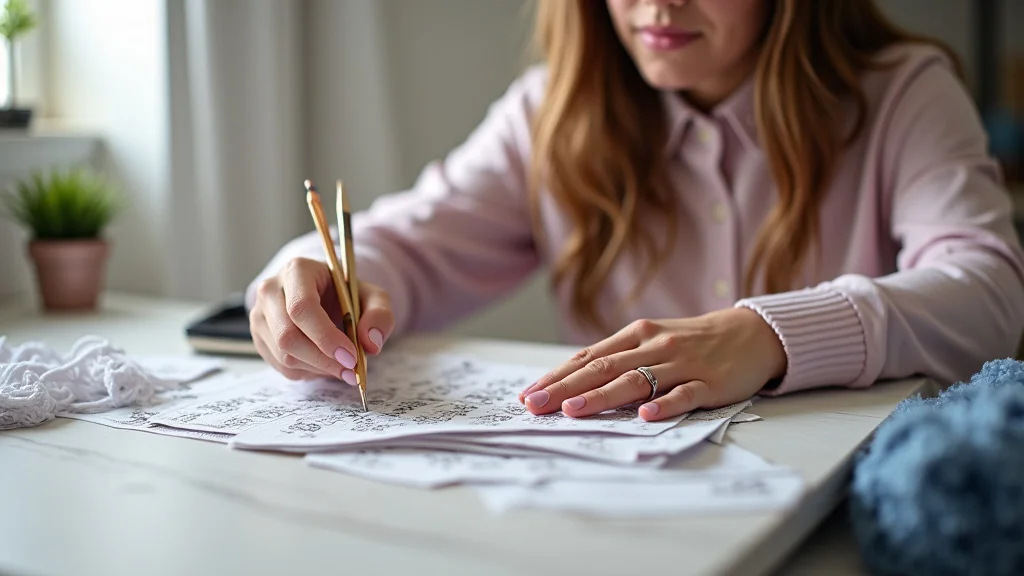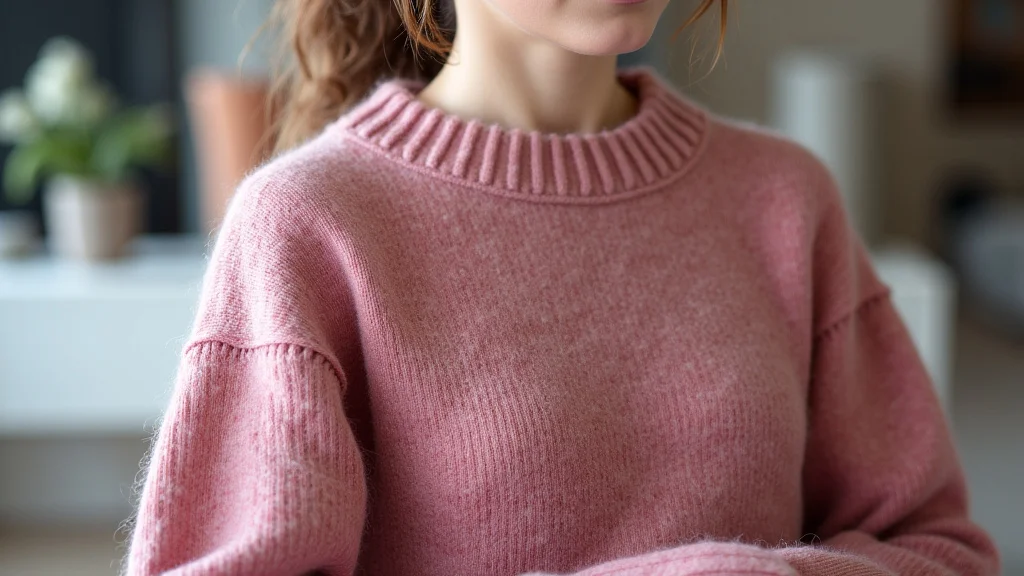
Picture this: you’ve spent weeks, maybe even months, crafting a beautiful hand-knitted sweater. The body is complete, the sleeves are done, and you’re just about to assemble your masterpiece. But then the fear creeps in: How do I join these pieces without ruining all my hard work? This guide explores the art of sewing up knitting, turning a collection of knitted pieces into a wearable garment. You’ll gain the skills and confidence to create beautiful, seamless projects. We’ll explore techniques to create professional-looking joins, and you’ll become confident in sewing up knitting. You’ll also learn to avoid common pitfalls. By the end, you’ll be ready to transform individual knitted parts into a stunning sweater, top, or any other knitted item. Let’s get started!
Key Takeaways
- Learn essential techniques for joining knitted pieces.
- Discover how to create invisible seams for a professional finish.
- Understand the best needle and thread choices for different yarn types.
- Gain confidence in avoiding common mistakes when assembling your knitwear.
- Explore tips for achieving a balanced, comfortable fit.
- Master how to seam knit fabric together so you have a seamless finish.
Getting Started with Sewing Up Knitting
The first step in any sewing up knitting project is preparation. Before you even pick up a needle and thread, take the time to block your knitted pieces. Blocking involves washing and shaping each piece to the correct dimensions. This process helps relax the stitches, making the seams more even and the final garment fit better. Pin each piece to a blocking board, stretching them to your desired measurements. Use rust-proof pins and let them dry completely. This step is like prepping your canvas before painting. It creates a stable base for your sewing up knitting.
Essential Tools and Materials
Gathering the right tools is essential for a successful knitting project. Having the proper equipment allows you to achieve the best results. Here’s a list of the tools you will need before you begin the process of sewing up knitting.
- Tapestry Needle: Also called a yarn needle, a tapestry needle is a blunt-tipped needle with a large eye. This type of needle is designed to pass easily through knitted fabric without splitting the yarn. Use a tapestry needle that is slightly smaller than the weight of your yarn to ensure the yarn passes through smoothly.
- Stitch Markers: Stitch markers help you keep track of where to begin and end your seams. Place them at the edges of the pieces you are joining. Use removable stitch markers so that you can remove them after you are done sewing up knitting.
- Scissors: A pair of sharp scissors are crucial to cut the yarn. Make sure you have a pair that cuts through yarn easily.
- Yarn: Make sure you have the same yarn as your project. The yarn needs to match the weight and color of the knitted pieces. This will help make your seams look invisible.
- Blocking Board and Pins: A blocking board provides a surface to shape and secure your knitted pieces. Rust-proof pins are essential for holding the pieces in place while they dry.
Choosing the correct materials, especially your needle and thread, plays a critical part in a successful sewing up knitting project. The right needle size, thread type, and yarn matching the original project are important for achieving a professional finish. Selecting the proper tools may seem like a small detail, but it makes a big difference in the end result. Consider these factors when choosing your tools for sewing up knitting:
Needle and Thread Selection for Sewing Up Knitting
The needle and thread you select will directly affect the appearance and durability of your seams. A dull needle can snag the yarn or split the stitches, while an unsuitable thread can cause the seams to look bulky or weak. To match the yarn weight for your project, choose a tapestry needle with a blunt tip. This ensures that the needle moves smoothly through the knitted fabric without splitting the yarn. The eye of the needle should be big enough to thread the yarn easily, but not too big that it becomes difficult to maneuver. The best thread is generally a yarn that is identical to the one you used for knitting. This helps your seams blend in, making them virtually invisible.
- Tapestry Needles: Using a tapestry needle with a blunt tip makes it easy to pass through knit stitches without snagging or splitting the yarn. This is essential for a clean and professional finish.
- Matching Yarn: Using the same yarn as your knitting ensures that the seam blends seamlessly with the rest of the project. This is key for an invisible seam.
- Thread Color: Select thread that matches the yarn perfectly. This will prevent your seam from standing out.
- Thread Weight: Choose a thread weight that’s similar to your yarn. This will help keep your seams from becoming too bulky.
For example, using a size 7 tapestry needle with a worsted-weight yarn will create a nearly invisible seam. Conversely, a needle that is too big will create noticeable holes in your work, ruining the effect. Matching the yarn color is also very important. For example, a black yarn will clearly show if used on a white sweater. This will clearly highlight the seam rather than blending it in.
Basic Seaming Techniques for Knitting Projects
There are several different methods for sewing up knitting. Knowing each technique is key to creating neat, durable seams. Each method has its own benefits and is useful for different projects. With practice, you can choose the best method for your project.
The Mattress Stitch
The mattress stitch is perhaps the most popular and versatile of the sewing up knitting techniques. This stitch is used to create an invisible seam that appears to melt away into the knitting. The mattress stitch is also useful for joining large pieces of knitting, like the body of a sweater or the sides of a blanket. This method creates a strong and durable seam that can withstand wear and washing.
- How It Works: The mattress stitch mimics the vertical columns of knit stitches. You insert the needle through the vertical bars on the edge of your work, catching a loop with each pass.
- Steps:
- Lay the two pieces of knitted fabric side by side, with the right sides facing up.
- Thread the tapestry needle with a length of yarn.
- Insert the needle through the first vertical bar on the edge of the first piece of fabric.
- Bring the needle over to the second piece of fabric and insert it through the corresponding vertical bar.
- Repeat this process, alternating between the two pieces of fabric. With each pass, you’ll pick up a loop.
- Pull the yarn through gently, but don’t pull it too tight. This can distort the fabric.
- Continue until the entire seam is complete.
- Weave in the ends securely.
- Best Uses: This stitch is perfect for joining pieces along straight edges, such as the sides or shoulders of a garment.
The key to the mattress stitch is working with the vertical bars and gently pulling the yarn to create an invisible seam. This is one of the more valuable techniques to learn because it can be used on many projects.
The Vertical Invisible Stitch
The vertical invisible stitch is a great method for joining edges when the right side of your work will be visible. This method is often preferred for projects where the seam will be seen. This stitch is ideal for joining parts of garments, especially along the sleeves, where the seam is a part of the design. The vertical invisible stitch creates a professional finish that enhances your project.
- How It Works: This method involves working vertically through the knitted fabric, inserting the needle through the edge stitches to create an almost invisible seam. This stitch mirrors the structure of the knitting.
- Steps:
- Place the two pieces of knitted fabric side by side.
- Thread your tapestry needle with the yarn.
- Insert your needle through the edge stitch of the first piece of fabric.
- Bring the needle across to the edge stitch of the second piece of fabric.
- Repeat, alternating between the two edges, picking up the edge stitch on each side.
- Gently pull the yarn through, taking care not to pull too tightly.
- Continue until the seam is complete.
- Weave in your ends securely.
- Best Uses: This stitch is most useful for joining edges that have a visible right side, such as a sleeve seam.
This technique is effective when joining pieces with different stitch patterns or colors. It is another technique that gives a strong and professional look. Knowing this technique and its variations, allows you to create beautiful projects with high-quality finishes.
The Whip Stitch
The whip stitch is a simple and versatile seam that is excellent for projects of all sizes. This is a very helpful technique for beginners because it’s easy to learn and execute. The whip stitch is excellent for joining pieces with rounded edges, such as the tops of hats or the sides of toys. This will help you create durable and secure seams.
- How It Works: The whip stitch involves wrapping the yarn around the edges of the fabric. This forms a spiral of stitches. The whip stitch is a quick way to secure knitted pieces.
- Steps:
- Place the two pieces of fabric together, with the edges aligned.
- Thread the tapestry needle with yarn.
- Starting at one end, insert the needle from the back to the front through both layers of fabric, catching the edge of both pieces.
- Bring the needle over the edge and back down through the fabric.
- Repeat this process, wrapping the yarn over the edge of the fabric.
- Pull the yarn through, creating a neat seam.
- Continue along the edge, spacing the stitches evenly.
- When you reach the end, secure the yarn and weave in the ends.
- Best Uses: This stitch is perfect for items where the seam will be on the inside or will not need to be invisible.
The whip stitch provides a secure and durable seam. Using this method will add a finished and polished look to your projects.
Sewing Up Knitting Challenges
As you sew up your knitting projects, you may encounter various challenges. There is a learning curve in mastering the art of sewing knitted pieces together. Being aware of these challenges and having strategies to overcome them will ensure that your projects are successful and that you are happy with the results. Practicing these techniques will result in beautiful projects.
Dealing with Uneven Edges
It’s common for knitted edges to be uneven. This can be caused by various factors, such as different tension, dropped stitches, or variations in the yarn. Uneven edges can make it hard to achieve a neat seam. These problems will cause an uneven and distorted look in your completed work.
- Solution: To address uneven edges, blocking is essential. Blocking helps straighten out the edges. Use pins to stretch the fabric until it matches the shape of your pattern. You can also carefully use the mattress stitch. It helps to adjust the tension of the yarn and gently manipulate the edges. If there are minor variations, carefully pick up the necessary stitches to even the edges.
Matching Stitches and Tension
Matching stitches and tension is another common challenge. When the pieces you are joining have different stitch counts, it is difficult to line them up and create a smooth seam. Inconsistent tension across your project can also make it difficult to achieve a uniform appearance. These issues can result in seams that are either too tight or too loose, leading to an unbalanced appearance.
- Solution: Use stitch markers to ensure that you are picking up the same number of stitches along the edge. Adjust your tension as you work, paying attention to the way the fabric feels. For difficult areas, you may need to add or remove stitches along the edge to match the two pieces. Always block your project.
Working with Different Yarn Weights
Working with different yarn weights requires special consideration. When using yarns of different thicknesses, the seam can become bulky. This can be especially true if you are joining a bulky yarn to a thinner one. Bulky seams are not only visually unappealing, but they can also make your garment uncomfortable to wear.
- Solution: Choose the needle size and thread carefully. When you are sewing up knitting, use the appropriate size needle and thread. When joining fabrics with different weights, use a seam that can handle the differences. In some cases, you may need to adjust the tension when working with the thinner yarn.
Common Myths Debunked
There are many myths about sewing up knitting. These myths can cause confusion and discourage knitters from completing their projects. It is very important to get the facts to improve your skills. Here are the myths and the reality.
Myth 1: Sewing is the only method to seam knitted projects.
In reality, there are other methods of joining knitted pieces. Techniques like the three-needle bind-off, grafting, and crochet joins offer alternatives to hand sewing, each with unique advantages. Understanding these methods gives you more options for your projects.
Myth 2: Using a sewing machine is the best method to sew up knitting.
While sewing machines can be used for sewing up knitting, they can create problems. Sewing machines can get caught or damage the knitted fabric. Hand-sewing techniques, such as the mattress stitch, offer greater control and the opportunity to create invisible seams. Hand-sewing techniques are ideal for creating professional-looking finishes.
Myth 3: All yarn types are easily sewn together.
The reality is that some yarns are harder to seam than others. Very fine yarns can be slippery and hard to manage. Textured yarns may be challenging to seam. This will make it important to experiment with techniques and needle and thread combinations.
Myth 4: Blocking is optional.
Blocking is essential for getting the best results when sewing up knitting. Blocking helps even out the fabric, sets the stitches, and makes seaming easier. Skipping blocking can result in uneven seams and an overall unprofessional appearance. Taking the time to block your knitting will improve the appearance of your projects.
Myth 5: It’s impossible to fix mistakes when sewing up knitting.
This is not true! It is possible to fix mistakes. If you make a mistake, carefully undo the seam by snipping the yarn and re-sewing it using the correct technique. A little patience can make any project perfect.
Frequently Asked Questions
Question: What is the best stitch for invisible seams?
Answer: The mattress stitch is a great method for creating invisible seams, especially when joining two pieces with a vertical edge.
Question: How do I choose the correct needle size for sewing up knitting?
Answer: Select a tapestry needle with a blunt tip and a large eye, slightly smaller than the weight of your yarn to ensure it passes through easily without splitting the yarn.
Question: Can I use a regular sewing needle instead of a tapestry needle?
Answer: It is not recommended to use a regular sewing needle. Regular sewing needles are sharp and can split or damage your yarn and fabric.
Question: How can I prevent the seams from being too tight?
Answer: Be careful not to pull the yarn too tightly when you sew. This can distort the fabric. Work at a comfortable tension.
Question: Is it possible to fix a seam if I make a mistake?
Answer: Yes, you can undo a seam. Carefully snip the yarn and re-sew using the correct technique.
Final Thoughts
Sewing up knitting is an important skill that transforms individual pieces into finished garments and accessories. By understanding different techniques, such as the mattress stitch and the whip stitch, you can seamlessly connect your knitted parts. Choosing the right needle, thread, and yarn is as crucial as the chosen technique. Practicing these skills is key to getting better at sewing up knitting. Remember that even the most experienced knitters sometimes face challenges. Take your time, focus on accuracy, and keep practicing. With patience and persistence, you can create beautiful and expertly crafted knitted items. The joy of a finished, handmade piece, perfectly assembled, is an achievement you’ll treasure. Happy knitting!