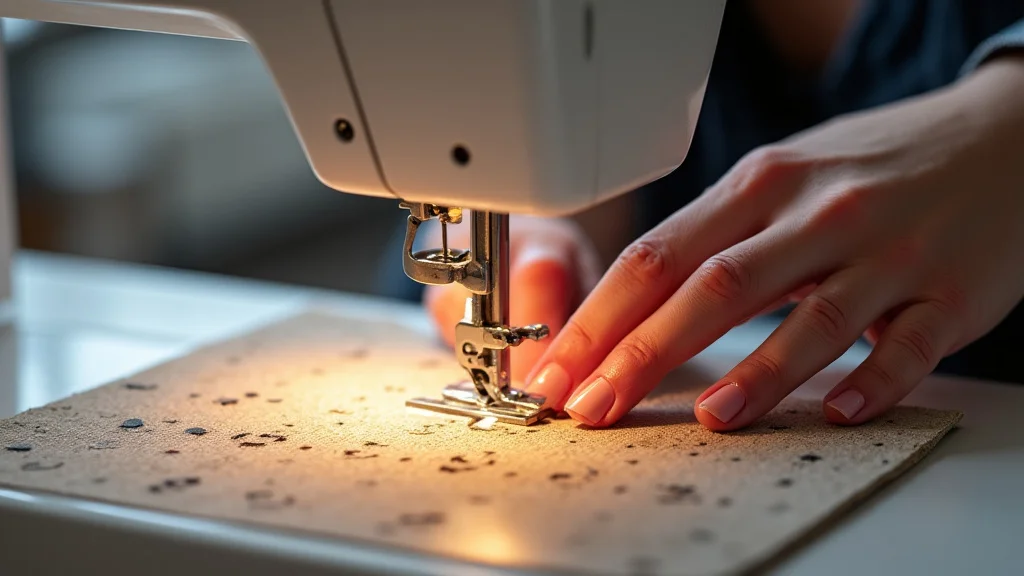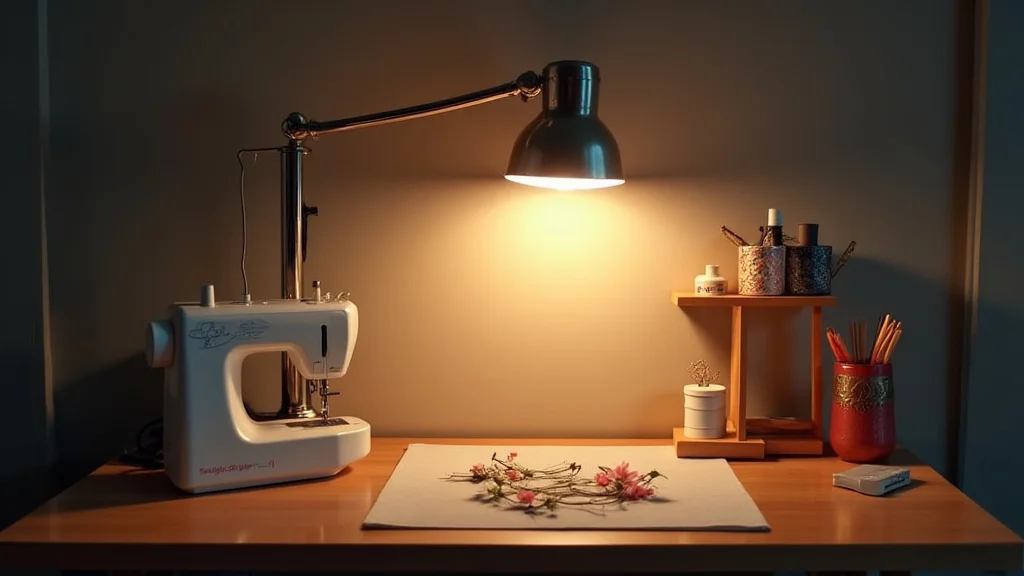
Do you find yourself squinting at your fabric, struggling to see those tiny stitches? Or maybe you’ve spent hours working, only to realize the colors of your creation look completely different under natural light? Many sewing enthusiasts, from beginners to seasoned professionals, often overlook a crucial element: sewing workshop lighting. This post will explore everything you need to know about creating the perfect illuminated space for your projects. You will gain valuable insights on selecting the best light sources, achieving optimal placement, and understanding how lighting impacts your creativity and eye health.
Key Takeaways
- Learn about the importance of proper sewing workshop lighting for visual accuracy and comfort.
- Discover the best types of lights, including LED, fluorescent, and incandescent options.
- Understand color temperature and how it affects how you see fabric colors.
- Find out how to position lights to minimize shadows and provide even illumination.
- Explore tips for choosing the right lamps and bulbs for your workspace.
- Enhance your productivity and reduce eye strain with better lighting solutions.
Choosing the Right Sewing Workshop Lighting
Proper lighting can drastically improve your sewing experience. A well-lit sewing area helps reduce eye strain and ensures you see colors accurately. This is especially important when matching fabrics or following intricate patterns. Poor lighting, on the other hand, can lead to headaches, fatigue, and ultimately, less satisfying results. With the right lighting setup, you can enjoy your hobby or profession more while enhancing the quality of your work.
Types of Lights for a Sewing Space
When selecting lights for your sewing space, it’s beneficial to know the different options available. Each type has its benefits and drawbacks regarding brightness, energy efficiency, and color rendering capabilities. The key is finding a combination that provides ample light without causing glare or excessive heat. Consider how the types of light blend with your work style.
- LED Lights: LEDs (Light Emitting Diodes) are known for their energy efficiency and long lifespan. They produce bright, focused light and come in various color temperatures. LEDs also generate very little heat, making them a safe choice.
- Fluorescent Lights: Fluorescent lights, including compact fluorescent lamps (CFLs), are another energy-efficient option. They provide good general lighting and are available in various color temperatures, but they can sometimes flicker and may not offer the same level of color accuracy as LED lights.
- Incandescent Lights: Traditional incandescent bulbs are becoming less common due to their energy inefficiency and short lifespan. They produce warm light and offer excellent color rendering but generate a significant amount of heat.
LEDs have become extremely popular in recent years, partially due to their eco-friendliness. Because they last for thousands of hours, you won’t have to worry about constantly replacing bulbs. They also come in a variety of styles, from simple task lamps to elegant overhead fixtures, and many models offer dimmable settings.
Fluorescent lights are less expensive than LEDs. They are generally available in long tubes, making them great for overhead fixtures. However, they contain a small amount of mercury, which is a concern for some people. CFLs take a moment to reach full brightness and can have a more limited lifespan than LEDs.
While incandescent bulbs offer great color rendering, they are not ideal for a sewing workspace. They consume a lot of energy and do not last long. The heat they produce can also be uncomfortable, especially during extended sewing sessions. With LED and fluorescent lights now readily available, it makes sense to choose a more efficient option.
Understanding Color Temperature
Color temperature is a crucial factor in choosing lighting for your sewing area. This measures how warm or cool the light appears and is measured in Kelvin (K). The color temperature affects how colors appear to the eye. Selecting the right color temperature for your sewing workshop lighting ensures that your fabrics and threads look true to life, aiding in more accurate color matching and preventing discrepancies in your final projects.
- Warm White (2700K-3000K): This color temperature produces a yellow or orange light, similar to incandescent bulbs. It is cozy and inviting but can distort colors, making it unsuitable for detailed sewing work.
- Cool White (3500K-4100K): This provides a neutral white light and is a better choice for sewing. It is close to daylight and does not cause significant color distortion.
- Daylight (5000K-6500K): Daylight bulbs emit a bright, crisp white light that mimics natural sunlight. This is ideal for sewing as it provides the most accurate color representation.
Warm white light is best for spaces where you want a relaxing atmosphere, such as a living room or bedroom. For sewing, it may make it difficult to distinguish between similar colors. It can also cause eye strain after extended use.
Cool white light provides a balanced and clear illumination. It is a good choice for general use. However, some people may find it a bit harsh for long periods. It is still a decent option for sewing and working with colors.
Daylight color temperature is generally considered the best for sewing tasks. It is especially useful for color matching fabrics and threads accurately. If your space lacks natural light, daylight bulbs are a must-have. They help reduce eye strain and improve the clarity of your work.
Positioning Your Lights
The placement of your lights is as important as the type of bulbs you choose. Poor positioning can create shadows and glare, making it difficult to see and potentially leading to eye strain. The goal is to provide even, shadow-free illumination that reduces eye strain and helps you see your work more clearly.
- Overhead Lighting: Overhead lights provide overall illumination for your sewing area. Choose a fixture that casts light over the entire workspace. Ensure the light fixture is positioned to avoid direct glare.
- Task Lighting: Task lighting focuses on your sewing machine and work surface. It helps provide the necessary brightness for detailed tasks. Use a flexible lamp that you can position directly over your sewing machine or cutting area.
- Avoiding Shadows: Shadows can make it difficult to see what you are sewing. Place lights to minimize the formation of shadows. Consider using multiple light sources to achieve even illumination from all directions.
Overhead lighting is essential for general illumination. It should be bright enough to illuminate the room. Consider using a fixture with adjustable brightness settings. Ensure the overhead light is placed far enough away from your work to avoid harsh shadows or direct light in your eyes.
Task lights are positioned to focus light on a specific area, such as your sewing machine, cutting mat, or ironing board. A lamp with an adjustable neck can be repositioned. Consider using a lamp with an integrated magnifying glass for more detailed work. This will aid in seeing your work.
To avoid shadows, consider a combination of overhead and task lighting. Position the task light to the side of the sewing machine or cutting table, not directly in front. If you sew with your right hand, place the task light on the left side of your machine to avoid creating shadows with your body.
Selecting the Best Lamps and Bulbs
Selecting the correct lamps and bulbs is a critical step in setting up the optimal lighting solution for your sewing workshop. Consider factors like brightness, energy efficiency, and color rendering. Choosing the appropriate bulbs and lamps helps you create a well-lit and comfortable workspace.
- Brightness (Lumens): Lumens measure the brightness of a light bulb. For sewing, aim for at least 1500-2000 lumens in your main work area. Make sure to consider the size of your workspace when choosing the number of lumens.
- Color Rendering Index (CRI): The CRI measures how accurately a light source displays colors. A CRI of 90 or higher is ideal for sewing. A high CRI ensures that colors appear true to life.
- Lamp Types: Choose lamps that allow for flexible positioning of the light source. A gooseneck lamp is an excellent choice for a task light because it allows you to direct light precisely where you need it. Consider the adjustability of the lamp to suit different projects.
The number of lumens you need depends on the size of your space and the type of work you do. If you have a large sewing room or require detailed work, you may need even more lumens. If you’re unsure, it is best to err on the side of more light, as you can always dim the lights if they are too bright.
CRI is an important specification to consider when buying light bulbs. You want the colors of your fabrics to look as accurate as possible. Look for bulbs with a high CRI. This will ensure that the colors you see under artificial light match the colors you see in natural light.
The best type of lamps depends on your specific needs. Adjustable gooseneck lamps provide great flexibility. A clip-on lamp can be used to add light. Using a combination of different lamps allows you to create a well-lit workspace without any dark corners. This will reduce eye strain.
Examples and Scenarios
Let’s illustrate how effective lighting can transform a sewing space and how it impacts work quality and enjoyment. These scenarios highlight the practical benefits of the right sewing workshop lighting.
- Scenario 1: Imagine a sewer struggling to match fabric colors under dim, yellow light. The resulting project has colors that clash. In contrast, with daylight LED lighting, the colors appear accurate, and the final piece looks much better.
- Scenario 2: A sewer experiences eye strain and headaches due to poor lighting conditions. After adding a task light and adjusting the overhead lighting, these issues reduce significantly. As a result, the sewer can enjoy sewing for longer periods without discomfort.
Proper lighting ensures color accuracy and helps prevent mistakes, leading to more satisfactory results. Color is the first impression. With good lighting, the colors are what you intended them to be.
Good lighting significantly improves comfort and productivity. The sewer will feel much better and have more energy to work for longer. This is important for those who sew as a job.
Here’s a comparison table showcasing various lighting setups and their impact:
| Lighting Setup | Color Temperature (K) | Benefits | Drawbacks |
|---|---|---|---|
| Overhead Fluorescent | 4000K | General illumination, energy-efficient | Can be harsh and not ideal for color accuracy |
| Daylight LED Task Light | 5000K | Excellent color accuracy, reduces eye strain, focused light | Requires a power outlet, may be needed in addition to overhead lighting |
| Incandescent with a Shade | 2700K | Warm light, inviting | Poor color accuracy, inefficient, generates heat |
Common Myths Debunked
Misconceptions about lighting can lead to poor choices, ultimately affecting your sewing projects. Let’s look at common myths and the truth behind them.
Myth 1: Any Bright Light Is Good Enough
Many believe that any bright light is sufficient, but brightness alone is not enough. The type of light and its color temperature greatly influence how you perceive colors and the strain it places on your eyes. Proper color rendering and strategic placement are vital.
Myth 2: LED Lights Are Too Expensive
While the initial cost of LED lights may be higher, their long lifespan and energy efficiency often make them more cost-effective over time. LED bulbs last much longer than traditional incandescent bulbs and require less frequent replacement. LED is a good investment in the long run.
Myth 3: Natural Light Is Always the Best
While natural light is ideal, it is not always available or consistent. Relying solely on natural light can lead to inconsistent lighting conditions. Supplementing with artificial light that mimics daylight can ensure consistent illumination for your projects. This will eliminate issues caused by poor light.
Myth 4: Fluorescent Lights Are the Most Energy-Efficient
While fluorescent lights are efficient, LEDs are even more energy-saving and offer better performance in many areas. LEDs now often surpass the efficiency of fluorescents. Many different options are available, so you can find a suitable light. These lights often last longer.
Myth 5: It’s Okay to Sew in a Dark Space if You Have Good Eyesight
Even with good eyesight, sewing in a poorly lit space can strain your eyes. This leads to fatigue and headaches. Over time, it can negatively affect your vision. Adequate lighting is crucial for all sewers. This is true no matter how good your vision is.
Frequently Asked Questions
Question: How often should I replace my sewing room bulbs?
Answer: This depends on the type of bulbs. LED bulbs can last for many years. Incandescent bulbs should be replaced more frequently.
Question: Can I use any desk lamp as a sewing task light?
Answer: Yes, but make sure the desk lamp provides sufficient brightness and has a flexible neck for adjusting the light.
Question: Is it necessary to have both overhead and task lighting?
Answer: Having both types of lighting is highly recommended. It offers overall illumination (overhead) and focused light (task) for detail work.
Question: Can I mix different types of light sources in my sewing room?
Answer: Yes, mixing different light sources can create a well-balanced lighting setup. Combine LED, fluorescent, and task lighting, while considering color temperature and CRI.
Question: What is the best color temperature for sewing?
Answer: Daylight (5000K-6500K) is generally considered the best color temperature because it provides accurate color representation.
Final Thoughts
Creating an ideal sewing space requires thoughtful consideration of the sewing workshop lighting. It is essential to choose the correct light sources and to strategically position them. From understanding color temperature to selecting bulbs with the right lumens and CRI, every decision contributes to improving your work. By investing in proper lighting, you are investing in your eye health, creativity, and the quality of your finished projects. Consider a room’s natural lighting and supplement it with appropriate artificial lights. Take action now and transform your sewing workspace. You will immediately notice a difference in your work. Get ready to see your fabrics and projects in a whole new light!